
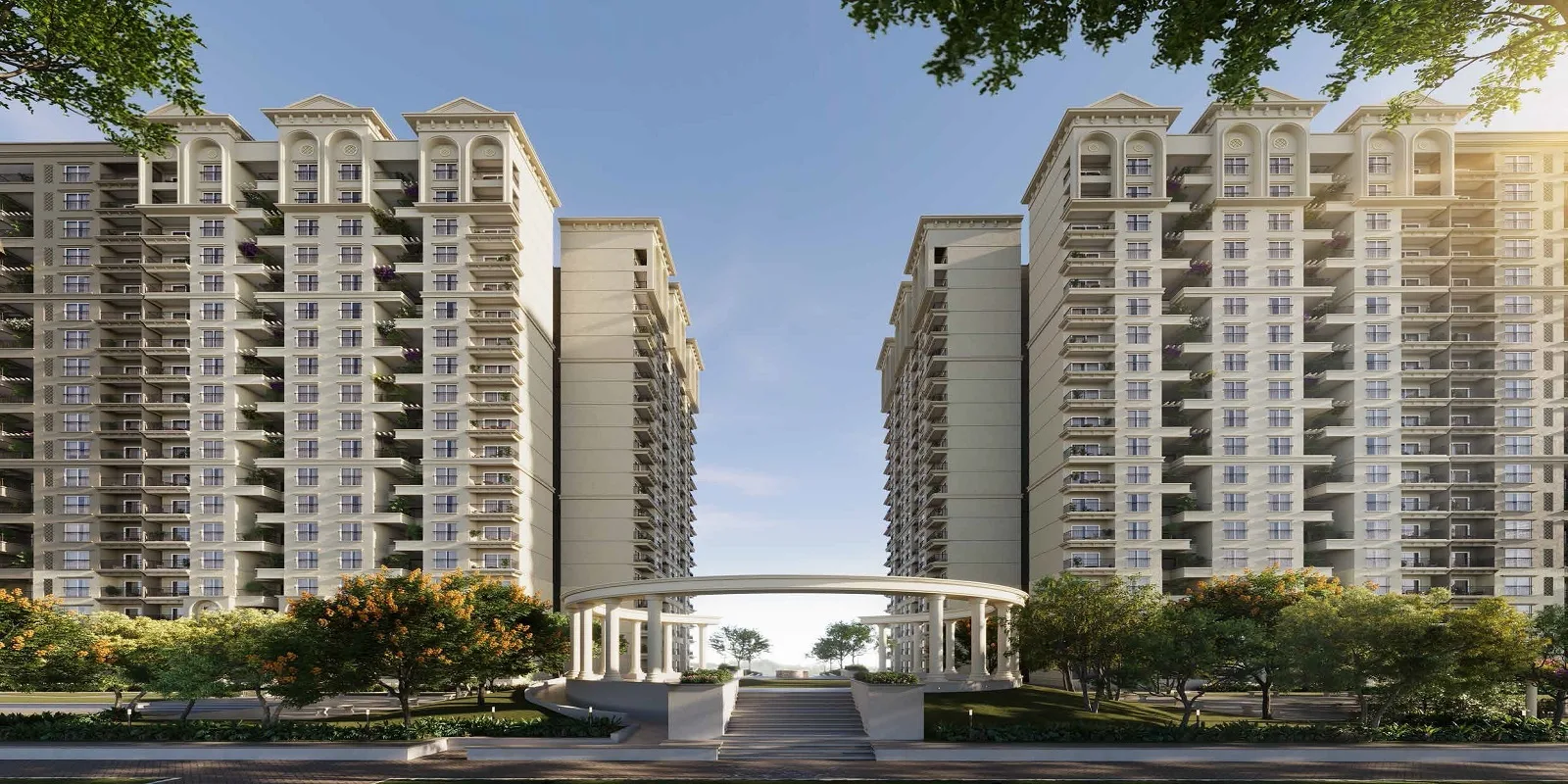
SOBHA in Bengaluru 2026: What Twelve Live Projects Actually Tell You


By L K Monu Borkala — OneCity Property Research Desk. Last updated 27 November 2026.
Every RERA number, price and date in this guide was read from the developer's own project pages and checked against our own project records. Where sources disagree, we say so rather than picking the flattering number. Nothing here is a recommendation to buy; it is the homework we would want done before paying anyone a booking amount.
Why look at a developer's whole portfolio instead of one project
Most buyers arrive at a developer the way you arrive at a restaurant: one dish at a time. You see a hoarding on Sarjapur Road, you search the name, you read a page about that one project, and you form a view of the builder from a single building.
That is a poor way to judge a developer, and an especially poor way to judge SOBHA, because the interesting thing about SOBHA's Bengaluru portfolio is not any single project. It is the spread.
As of today, twelve SOBHA developments are live on our site and featured on our home page. Between them they run from a one-acre site holding 33 apartments to a 300-acre township holding 3,484 homes in its first phase alone. They run from ₹88 lakh to well past ₹3.9 crore. They run from possession in June 2026 to possession in August 2032 — a six-year span. They include apartments, row houses and bare land.
Set side by side, that spread answers questions a single project page cannot:
- What does a SOBHA actually cost, and what changes as you move up the ladder?
- Is the "SOBHA quality" story the same at ₹88 lakh as at ₹4 crore?
- Where is the company actually betting its land bank — and what does that say about which corridors it expects to grow?
- How long will you wait, and how does that wait change your risk?
This guide takes all twelve, puts them against each other, and answers those questions with numbers rather than adjectives.
It is long. It is meant to be. If you only want one project, jump to it — but the comparisons are where the value sits.
How we researched this, and what we could not verify
A word on method, because "research" is a word that gets used loosely in real estate content.
What we did. For each of the twelve projects we read the developer's own project page, pulled the RERA registration numbers, and recorded land area, unit count, configuration, size bands, price and possession as the developer states them. We then compared those against our own project records and against the listing portals carrying the same projects.
What we found, repeatedly. Sources disagree. Not occasionally — routinely. One project is described as 207 units by one source and 290 by another. One project's possession is quoted as November 2027 by some sources and December 2031 by others, a four-year gap. A third is described as 4.7 acres in most places and 6 acres in one. These are not rounding differences; they are differences that change the investment case.
What we did about it. We kept both numbers and told you where the disagreement sits. A guide that quietly picks one number is easier to read and less useful.
What we could not verify. We did not inspect construction at any site for this article. We did not independently audit RERA filings beyond reading the registration numbers — and we say plainly throughout that you should check each number yourself at rera.karnataka.gov.in before any payment, because registration details and construction milestones are updated by the authority on their own schedule, not ours.
One corporate fact worth anchoring. SOBHA Limited's CIN is L45201KA1995PLC018475. Read it and it tells you three things without a brochure: the company was incorporated in 1995, in Karnataka, and the leading "L" marks it as a listed public company. That matters more than any superlative. A listed company files, discloses, and can be looked up by anyone.
The SOBHA difference: what backward integration means, and what it does not
Every SOBHA sales conversation reaches the same two phrases within about ninety seconds: backward integration and Zero Deviation. Both are worth understanding properly, because one is a real structural difference and the other is a promise that still needs checking.
Backward integration, concretely
Most developers in India are, functionally, project managers. They acquire land, obtain approvals, appoint contractors and supervise. The concrete, the joinery, the glazing, the metalwork and the interiors are bought in from whoever won the tender.
SOBHA's model is different in a way that is easy to state and hard to copy: the company owns much of the production chain. Its own teams and facilities handle a large share of concrete, glazing, metalwork, joinery and interior fit-out rather than subcontracting them.
The practical consequences a buyer can actually feel:
- Consistency between units. When the same in-house team makes the windows for tower one and tower four, the odds of the fourth tower feeling cheaper go down.
- Less exposure to contractor failure. A subcontractor going under mid-project is one of the commonest causes of silent delay in Indian real estate. Owning the capability reduces that specific risk.
- Finish quality in the places buyers notice late. Door frames, window seals, joinery alignment — the things you stop seeing in a show flat and start seeing after two monsoons.
What it does not mean
It does not mean a project cannot be delayed. It does not mean approvals arrive faster. It does not mean the price is fair for your particular corridor. And it does not transfer across the catalogue automatically — a plotted development is sold as land, and the quality story there is about infrastructure, titles and approvals, not joinery.
Zero Deviation is SOBHA's own internal quality standard. Treat it the way you would treat any manufacturer's own standard: a meaningful signal of intent, verifiable only by looking at delivered stock. Which brings us to the single most useful piece of advice in this guide, and it costs nothing:
Go and look at a finished SOBHA. Several developments in this portfolio have delivered phases, and the company has been building in this city since 1995. Walk one. Talk to a resident who has lived through a monsoon. Ask about water, the association handover, and what maintenance actually costs. Ten minutes there will tell you more than ten brochures.
The twelve at a glance
| Project | Where | What | Land | Homes | Config | Price (as published) | Possession |
|---|---|---|---|---|---|---|---|
| One World | Hoskote, NH-75 | Township | 300 ac (Ph 1: 48 ac) | 3,484 (Ph 1) | 1, 2, 3, 4 BHK | ₹1.09 Cr – ₹3.90 Cr | Aug 2032 |
| Townpark | Attibele, Hosur Rd | NYC-themed towers | 96 ac | — | Apartments | On request | Manhattan Dec 2026 onward |
| Neopolis | Panathur, East | Greek-themed apartments | 26 ac | 1,875 | 1, 3, 4 BHK | ₹2.3 Cr – ₹3.8 Cr | Phase 1 Dec 2028 (disputed) |
| Sentosa | Balagere | Singapore-themed apartments | 7.5 ac | 533 | 1 & 3 BHK | ₹88 L – ₹1.96 Cr | Ph 1 Jun 2026; Ph 3–4 to Dec 2027 |
| Ayana | Balagere / Panathur | Apartments | 6.28 ac | 683 | 3 BHK | from ~₹2.3 Cr | Nov 2027 – Dec 2031 (disputed) |
| Magnus | Bannerghatta Road | Apartments | 5.85 ac | 294 | 3 & 4 BHK | from ₹3.4 Cr | May 2030 |
| Infinia | Koramangala / HSR | Apartments | 4.7 ac (one source 6) | 196 | 3 & 4 BHK | from ~₹4 Cr | Phased 2028 – Dec 2030 |
| Altair | Sarjapur Road | Apartments | ~3.3 ac | 207 (one source 290) | 3 & 4 BHK | from ~₹3.3 Cr | May 2031 (disputed) |
| Galera | Kannamangala, Whitefield | Row houses | 4.08 ac | 40 | 4 BHK | On request | On request |
| Insignia | Bellandur | Boutique apartments | 1 ac | 33 | 3, 3 + office, 4 BHK | On request | On request |
| Chartered Birdsong | Rajanukunte | Villa plots | ~19 ac | 265 plots | Plots | ₹1.2 Cr at launch | Not applicable — land |
| Sacred Grove | Chikka Tirupathi | Premium plots | — | — | Plots | ₹96 L at launch (~₹8,000/sq ft) | Not applicable — land |
Prices and dates are as published by the developer at the time of writing and change without notice. Verify every RERA number at rera.karnataka.gov.in before paying anything.
Three things jump out of that table before we go near a single project.
First, the ladder is real. Sentosa starts at ₹88 lakh. Infinia starts near ₹4 crore. That is not two products; it is a company deliberately covering a 4.5× price range in one city.
Second, East Bengaluru is where the bet is. Three of the twelve — Neopolis, Ayana and Sentosa — sit within a few kilometres of each other around Panathur and Balagere. That is not coincidence, and it has direct consequences for you as a buyer.
Third, the possession spread is enormous. You can take keys in June 2026 or in August 2032. Those are completely different financial products wearing the same brand.
The Panathur–Balagere cluster: three projects, one postcode
Here is the single most useful observation in this guide, and you will not find it on any individual project page.
SOBHA is running three separate developments inside one small pocket of East Bengaluru. Neopolis and Ayana both carry Panathur addresses. Sentosa and Ayana both carry Balagere addresses. All three sit in the 560087 postcode belt. Between them they account for 3,091 homes — Neopolis 1,875, Ayana 683, Sentosa 533.
Three thousand homes from one developer in one pocket is a strategic position, not a coincidence. It tells you the company has conviction about this corridor. It also creates a specific situation for you as a buyer that nobody selling you a flat will raise.
What the cluster means for you, honestly
The good part. A developer with 3,000 homes in one area has every reason to make the area work. Infrastructure commitments, maintenance standards and the long-term reputation of the pocket are all tied to its own balance sheet. You are not the only person depending on them getting it right.
The part nobody mentions. When you come to sell or let, your competition will often be another SOBHA. If 1,875 homes at Neopolis complete around the same window as 683 at Ayana, the resale and rental market in that pocket absorbs a large volume of near-identical, same-brand stock at once. That is not a reason to avoid the corridor. It is a reason to be realistic about your exit, and to prefer the project and the phase with something actually differentiated — a view, a size band that is scarce, a possession date that is not shared with 2,000 other units.
The practical consequence. If you are choosing within this cluster, choose on the differences, not the brand — because the brand is identical across all three.
Neopolis, Panathur — the big one
- Scale: 1,875 homes on 26 acres, wings of 2 basements + ground + 18 floors
- Configuration: 1, 3 and 4 BHK
- Theme: Greek, specifically Santorini — three Santorini-styled clubhouses, 35+ amenities
- Price: ₹2.3 crore to ₹3.8 crore
- RERA: PRM/KA/RERA/1251/446/PR/200923/006269, /220923/006283, /200923/006270 (multiple phases)
Neopolis is the volume play. At 1,875 homes it is the largest apartment count in this portfolio after One World Phase 1, and it is the one most people mean when they say "the big SOBHA at Panathur."
The Greek theme is executed, not merely claimed — whitewashed forms, blue accents, bougainvillea, and a colonnaded, Santorini-styled village square at the heart of the scheme. Whether that appeals is a matter of taste. What matters commercially is that it is distinctive, and distinctiveness is an asset when 3,000 same-brand homes are competing for the same tenant.
The thing to check. Possession is where this project needs care. Phase 1 is commonly cited as 31 December 2028. Other material points to December 2031. Those are different decisions. Before you pay, establish in writing which phase your unit sits in and what the RERA-filed completion date for that phase is — not the project's earliest date.
Ayana, Balagere — the 3 BHK specialist
- Scale: 683 homes across 12 wings, 2 basements + ground + 14 floors, on 6.28 acres
- Configuration: 3 BHK only, 1,553 to 1,789 sq ft
- Price: from approximately ₹2.3 crore
- RERA: PRM/KA/RERA/1251/446/PR/030824/006958
Ayana is the most focused product in the East cluster: one configuration, a narrow size band, nothing else. For a certain buyer that is a feature. You are not paying for a 1 BHK tower you will never use, and the community is demographically coherent — broadly, families at a similar life stage.
It also sits immediately adjacent to SOBHA's own long-established Dream Acres township, which is an unusually useful fact: you can walk into a delivered SOBHA community next door and see how the landscaping, the roads and the common areas have aged. Very few buyers get that opportunity before committing.
The thing to check — and it is serious. Ayana's possession date is reported anywhere from November 2027 to December 2031 depending on source. That is a four-year spread, and it is the widest discrepancy we found anywhere in this portfolio. A four-year difference changes your rent-versus-EMI maths, your tax position and your entire financing plan. Do not accept a verbal date. Get the RERA-filed completion date for your specific wing, in writing, and verify it on the portal yourself.
Sentosa, Balagere — the entry point
- Scale: 533 homes across 7 wings in 4 phases, on 7.5 acres
- Configuration: 1 and 3 BHK
- Price: ₹88 lakh to ₹1.96 crore, at roughly ₹12,960 per sq ft
- Possession: Phase 1 June 2026; Phases 3–4 December 2026 to December 2027
- RERA: PRM/KA/RERA/1251/446/PR/310322/004796 (one of four phase registrations)
Sentosa is the cheapest way into this portfolio, and in some ways the most interesting.
At ₹88 lakh for a 1 BHK it is the only project here that a single professional on a strong salary can realistically buy without a second income. It is also the nearest to completion of anything in this guide — Phase 1 lands in June 2026, with later phases through December 2027.
That near-term possession is the real argument for Sentosa. Everything else in this portfolio asks you to wait between two and six years. Sentosa asks you to wait months. If you are paying rent today, that difference is worth real money, and it removes most of the execution risk that makes under-construction property uncomfortable.
The theme here is Singapore, and again it is executed rather than asserted: a Merlion-replica fountain by the pool, a "Sands" deck, a rain court, a butterfly garden. The architecture is more restrained than Neopolis, which some buyers will prefer.
One honest caveat. A 1 BHK is a different asset from a 3 BHK. It lets well and it sells to a narrower pool. In a pocket where SOBHA alone is delivering 3,000 homes, the 1 BHK is the unit most exposed to rental competition. That is survivable — it is also the reason the entry price is what it is.
Choosing between the three
| If you want… | Look at |
|---|---|
| Keys soonest, lowest entry price | Sentosa — Phase 1 June 2026, from ₹88 L |
| One configuration, families, adjacency to a delivered township | Ayana — 3 BHK only, next to Dream Acres |
| Scale, amenity depth, the most distinctive design | Neopolis — 1,875 homes, 3 clubhouses, 35+ amenities |
| To avoid competing with 3,000 same-brand units at exit | Look outside this cluster entirely |
The south-east corridor: Altair and Townpark
Move south-east along Sarjapur Road and down Hosur Road and the portfolio changes character completely — from clustered volume to two very different standalone bets.
Altair, Sarjapur Road — small, premium, and the one with the most disputed numbers
- Scale: approximately 3.3 acres, ground + 18 floors
- Units:207 — or 290, depending on which source you read
- Configuration: 3 and 4 BHK, roughly 1,850 to 2,570 sq ft (some listings add a 3.5 BHK)
- Price: from approximately ₹3.3 crore
- Possession: most commonly May 2031; at least one source differs
- RERA: PRM/KA/RERA/1251/446/PR/070126/008388
Altair is a compact, high-specification development on one of Bengaluru's most established premium corridors. On 3.3 acres with units up to 2,570 sq ft, it is firmly a low-density, large-format product.
It is also the project in this portfolio where published sources diverge most on physical facts. One source says 207 units; another says 290. That is not a typo — a 40% difference in unit count changes density, amenity load, lift waiting times and the character of the community you would live in. It is exactly the sort of thing a buyer should settle before paying, and exactly the sort of thing a brochure will not settle for you.
How to settle it. The RERA filing carries the sanctioned unit count and tower configuration. Look up PRM/KA/RERA/1251/446/PR/070126/008388 on the Karnataka RERA portal and read the approved plan details. That is the number that is legally binding; everything else is marketing.
Townpark, Attibele — the biggest canvas in the south
- Scale: 96 acres
- Theme: New York — Manhattan Towers and Brooklyn Towers, by name
- Possession: Manhattan Towers from December 2026; Brooklyn Towers from December 2027
- RERA: PRM/KA/RERA/1251/308/PR/230125/007418 (latest phases), with earlier registrations including /210518/004150
Townpark is the portfolio's most ambitious design statement and one of its most mature projects — it has been building through multiple RERA registrations since 2018, and its earliest towers reach possession in December 2026.
Ninety-six acres on Hosur Road at Attibele places it firmly in the Electronic City–Hosur industrial and manufacturing belt rather than the IT-services corridors east of the city. That is a genuine distinction. The employment base here is different: manufacturing, automotive and the Hosur industrial cluster rather than Whitefield-style tech parks. Whether that suits you depends entirely on where you work and where you expect to work in ten years.
What to weigh. Attibele is a long way from central Bengaluru, and the commute is the single factor that decides whether this project is right for you. Drive it at 9 am on a weekday before you decide anything. A 96-acre township can be excellent and still be wrong for your life.
South Bengaluru: Magnus on Bannerghatta Road
- Scale: 294 homes on 5.85 acres
- Configuration: 3 and 4 bedroom, averaging roughly 2,004 sq ft per home
- Price: "starting at ₹3.4 crore" per SOBHA's own project page
- Possession: May 2030
- RERA: PRM/KA/RERA/1251/310/PR/131025/008160
Magnus is SOBHA's South Bengaluru entry, on the Bannerghatta Road corridor at Kalena Agrahara.
The headline number worth sitting with is 2,004 sq ft average per home. Divide 294 homes into 5.85 acres and you get a development that has chosen large units over unit count. For a family that wants genuine space in South Bengaluru — a part of the city where older stock often means smaller, dated floor plates — that is the pitch.
Bannerghatta Road has a particular profile: established, dense, well-served by schools and hospitals, and congested at peak. It is not an emerging corridor and it does not price like one. Buyers here are usually choosing proximity to existing South Bengaluru life — Jayanagar, JP Nagar, the hospital cluster — over the newness of the east.
The thing to check. Our research on this project turned up more cross-source disagreement than most: sources differ on land area, tower count, floor count, sizes, whether 2 BHK homes exist at all, and price. That is an unusual amount of noise. The practical response is the same as everywhere else in this guide, just more urgently: read the RERA record for PRM/KA/RERA/1251/310/PR/131025/008160 and take the promoter name, land details, tower-wise unit counts and completion date from there rather than from any listing.
On the possession date. May 2030 is what SOBHA's project page and most portals agree on. One portal differs. Note which one your agent is quoting from.
The city-core boutique plays: Infinia and Insignia
Two projects in this portfolio are deliberately small. They are the most interesting products here for a particular kind of buyer, and the least suitable for everyone else.
Infinia, Koramangala / HSR Layout — the top of the ladder
- Scale: 196 units across 3 wings, ground + 13 floors each
- Land: reported as 4.7 acres by most sources; one source says 6 acres
- Configuration: 3 and 4 BHK including duplex options, roughly 1,880 to 3,264 sq ft super built-up
- Price: from approximately ₹4 crore
- Possession: phased, targeted between 2028 and December 2030
- RERA: PRM/KA/RERA/1251/446/PR/030824/006957 and /006956
Infinia is the most expensive project in this guide and the one with the most valuable address. Koramangala and HSR Layout are among the few Bengaluru locations where land simply does not become available — the area is built out, and new large-format apartment stock arrives rarely.
That scarcity is the entire investment thesis. You are not buying growth in an emerging corridor; you are buying a position in an area that is already finished and already expensive, on the assumption that scarcity holds. Historically in Bengaluru it has. That is not a guarantee.
Three wings at ground + 13 is low-rise by current standards, and 196 units on 4.7 acres is very low density. With duplex options and units up to 3,264 sq ft, this is a product aimed at buyers who have outgrown a standard 3 BHK and do not want to leave the centre to get space.
The thing to check. The site area disagreement (4.7 versus 6 acres) matters more here than it would elsewhere, because density is a large part of what you are paying for. And "phased, 2028 to December 2030" means your specific wing could be at either end of a two-year range. Establish which wing, and which date, before paying.
Insignia, Bellandur — 33 homes on one acre
- Scale: 33 homes on a single acre, off GEAR School Road
- Configuration: 3 BHK, 3 BHK with home office, and 4 BHK
- Unit sizes: not published at the time of writing
- RERA: PRM/KA/RERA/1251/446/PR/030922/005212
Insignia is the smallest development in this portfolio by a wide margin, and the most unusual.
Thirty-three homes is not an apartment complex in the normal Bengaluru sense; it is a single building. There is no 2,000-home amenity deck, no three clubhouses, no retail plaza. What you get instead is scarcity of neighbours — and in a city where "luxury" usually means a tower with 400 flats sharing four lifts, that is a real differentiator for some buyers.
The 3 BHK with a dedicated home office configuration deserves a note. It is a post-2020 product that most Bengaluru developers describe rather than design. A purpose-planned office room, properly sized and positioned away from living space, is worth considerably more to a hybrid worker than a study nook carved out of a bedroom.
Two honest caveats.
First, unit sizes are not published. We could not find them stated by the developer at the time of writing. For a 33-home building that is unusual, and it means you cannot compare price per square foot against alternatives until the sales team gives you a number in writing. Ask for carpet area as well as super built-up.
Second, the locality name is contested. Material we reviewed for this project describes the location variously as Bellandur and as Bhoganahalli. These are adjacent but administratively distinct, and the distinction matters for khata, for registration and for how the address reads on a title document. Get the revenue village and khata details confirmed in writing before you pay anything. This is a specific, checkable thing, and it is the kind of detail that becomes expensive years later.
And a structural point about small buildings. With 33 homes, the maintenance economics are different. Fixed costs — lift AMCs, security, a generator, water — are spread across 33 owners rather than 500. Per-home maintenance is usually higher in small buildings, not lower. Ask for the projected monthly figure and sanity-check it before you fall in love with the exclusivity.
Galera, Kannamangala — the row house outlier
- Scale: 40 row houses on 4.08 acres
- Format: 32 duplexes (ground + 1) and 8 triplexes (ground + 2)
- Configuration: all 4 BHK
- Location: Whitefield–Hoskote Road, near Kannamangala, Bengaluru 560067
- RERA: PRM/KA/RERA/1251/446/PR/050123/005601
Galera is the only row house development among the twelve, and it answers a question a lot of Bengaluru families ask and rarely get a good answer to: how do I get a house, with my own front door and my own roof, without moving to a plot two hours away and building it myself?
Forty homes on 4.08 acres is low density by any measure. All are 4 BHK. Thirty-two are duplexes over ground plus one floor; eight are triplexes over ground plus two.
The appeal of a row house over an apartment is specific and worth stating plainly: no shared lift, no shared lobby, your own entrance, vertical space you control, and usually some private outdoor area. The trade-off is equally specific: fewer shared amenities than a large apartment scheme can fund, and a smaller community.
What to weigh here.
Maintenance works differently. In a 40-home scheme the association handles the gate, security and internal roads, but the building itself is yours. The roof is yours. The external walls are yours. In an apartment, a leak in the terrace is the association's problem; in a row house it is your problem and your cost. Budget for it.
Triplex versus duplex is not just extra space. A ground + 2 house means stairs, every day, for the life of the home. That is a feature in your forties and a question in your seventies. Eight of the forty are triplexes; think about which you actually want to live in rather than which has the bigger number.
The Whitefield–Hoskote Road location. Kannamangala sits on the corridor between the established Whitefield tech belt and the newer Hoskote growth that SOBHA is itself betting on heavily with One World. That is a reasonable place to own a low-density house — close enough to Whitefield employment, far enough out that 4 BHK houses on 4 acres are economically possible at all.
The land plays: Chartered Birdsong and Sacred Grove
Two of the twelve are not buildings at all. They are land — and land behaves so differently from an apartment that most of the comparison in this guide stops applying.
What changes when you buy a plot
Before the specifics, the structural differences, because buyers routinely under-estimate them:
- No construction risk, but no construction either. You are not waiting for a tower. You are also not getting a home until you build one, which is a separate project with its own budget, timeline and stress.
- Maintenance is minimal. A plot does not leak. Holding costs are typically far lower than an apartment's monthly maintenance.
- Financing is harder. Plot loans generally carry lower loan-to-value ratios and shorter tenures than home loans. Budget more cash up front.
- Approvals are everything. With an apartment you are largely buying the developer's execution. With a plot you are buying the approvals and the title. Release of plan, khata, conversion status and the RERA registration are not paperwork details; they are the asset.
- The upside is different. Land has historically appreciated well in Bengaluru's growth corridors, but it generates no rent while you hold it. An apartment pays you something monthly; a plot pays you nothing until you sell or build.
Chartered Birdsong, Rajanukunte
- Scale: 265 villa plots across 18 acres 38 guntas — just under 19 acres
- Amenities: clubhouse and swimming pool among others
- Price: ₹1.2 crore as advertised at launch
- RERA: PRM/KA/RERA/1251/472/PR/210325/007605
Rajanukunte sits in North Bengaluru, on the broad corridor that has been reshaped over the last decade by Kempegowda International Airport and the employment that followed it.
Two hundred and sixty-five plots across nineteen acres with a clubhouse and pool is a gated plotted development rather than a bare land sale — the distinction matters. You are buying into shared infrastructure and an association, not just a rectangle on a survey map.
The honest position on North Bengaluru. The airport corridor's growth is real and has been for a decade. It is also, by now, widely understood and substantially priced in. Buyers expecting the kind of multiple that early Devanahalli buyers saw in 2012 are extrapolating from a very different starting point. Treat this as a solid plotted holding in an established growth corridor, not a lottery ticket.
Sacred Grove by the Lake, Chikka Tirupathi
- Type: premium plots
- Price: ₹96 lakh as advertised by the developer at launch
- Implied rate: roughly ₹8,000 per sq ft of land for a 1,200 sq ft plot
- RERA: PRM/KA/RERA/1265/347/PR/020226/008445
Sacred Grove sits east of the city near Chikka Tirupathi, on the corridor that runs out past Sarjapur toward the Satellite Town Ring Road.
That ₹8,000 per sq ft figure is the number to hold on to, because it makes the comparison concrete. A 1,200 sq ft plot at ₹96 lakh is, per square foot of land, cheaper than the per-square-foot rate of built apartment space in this portfolio — Sentosa is around ₹12,960 per sq ft and One World around ₹14,720. But you are comparing different things: land you must still build on, against a finished home you can move into. The right comparison is not plot rate versus apartment rate; it is total cost of a finished home on that plot versus the apartment, plus the years and effort of building it.
Who a plot here actually suits. Someone with a long horizon who wants to build to their own design, is comfortable managing a build, and does not need the asset to produce rent in the meantime. If any of those three is untrue, an apartment in this same portfolio is probably the better instrument.
One World, Hoskote: the biggest bet in the portfolio
- Scale: 300 acres total; Phase 1 alone is 48 acres with 65% open space
- Phase 1: 14 towers, 3 basements + ground + 45/46 floors, 3,484 units
- Configuration: 1, 2, 3 and 4 BHK, 740 to 2,425 sq ft
- Price: ₹1.09 crore to ₹3.90 crore, at a base rate around ₹14,720 per sq ft
- Possession:August 2032, RERA-committed
- RERA: PRM/KA/RERA/1250/304/PR/080526/008634 (Phase 1)
One World is a different order of thing from everything else in this guide, and it deserves to be understood on its own terms.
Three hundred acres. Towers rising to 45 and 46 residential floors. Three thousand four hundred and eighty-four homes in the first phase alone, with more phases to follow. By any measure available, it is among the largest residential launches East Bengaluru has seen.
The case for it
Price. At ₹1.09 crore for an entry unit it is markedly cheaper per home than the city-core projects in this portfolio, and the ₹14,720 per sq ft base rate buys you a brand-new, high-specification home in a township that will have its own retail, schools and amenity infrastructure.
Self-sufficiency. A 300-acre township is not a building; it is a small town. At that scale the developer can fund infrastructure that no 5-acre project can — proper internal roads, large open space (65% in Phase 1), serious amenity provision. If you are buying into an area that is still developing, a self-contained township insulates you from the surrounding area's slower progress.
The Hoskote corridor. NH-75 toward Hoskote is one of the more active industrial and logistics corridors east of the city, and it is far less saturated with residential supply than Whitefield or Sarjapur.
The case against it, stated plainly
August 2032. That is the number that should dominate your thinking. From today, that is close to six years. Six years is long enough for interest rates to cycle, for your job to change city, for a corridor's infrastructure promises to slip, and for your family's space needs to change entirely. A RERA-committed date is a meaningful protection and far better than a verbal estimate — but it is a long time to hold an under-construction asset.
The supply question. 3,484 homes in Phase 1 is a lot of homes arriving at once. Whatever the rental and resale market at Hoskote looks like in 2032, it will absorb a very large tranche of near-identical stock in a short window. Plan your exit on the assumption that you will not be the only seller.
It is early. Phase 1 RERA registration dates from 2026. A project at this stage has, by definition, more execution ahead of it than behind it.
Who One World actually suits
Someone with a long horizon who is comfortable being early, wants township scale rather than a standalone building, and is buying a home to live in rather than a short-hold investment. If you need possession inside three years, look at Sentosa or Townpark instead — the same developer, a fraction of the wait.
What your money actually buys: the price ladder
Put the published numbers in order and the portfolio resolves into a clear ladder.
| Budget | What it buys in this portfolio |
|---|---|
| ₹88 L – ₹1.2 Cr | Sentosa 1 BHK (Balagere, Phase 1 June 2026) · One World entry units (Hoskote, 2032) · Chartered Birdsong plot at launch pricing |
| ₹1.2 – ₹2.3 Cr | Sentosa 3 BHK (to ₹1.96 Cr) · mid One World configurations · Sacred Grove plot at ₹96 L |
| ₹2.3 – ₹3.3 Cr | Neopolis (₹2.3–3.8 Cr) · Ayana 3 BHK from ~₹2.3 Cr |
| ₹3.3 – ₹3.9 Cr | Altair from ~₹3.3 Cr · Magnus from ₹3.4 Cr · upper One World to ₹3.90 Cr |
| ₹4 Cr and above | Infinia, Koramangala / HSR, from ~₹4 Cr |
Read down that ladder and the logic of the portfolio becomes obvious. The price is overwhelmingly a function of location, not of brand or specification. The same developer, the same backward-integrated construction and the same quality standard appear at ₹88 lakh in Balagere and at ₹4 crore in Koramangala. What you pay the extra ₹3 crore for is the postcode, the scarcity and the commute.
That has a practical implication for anyone fixed on "I want a SOBHA." You can have one at almost any budget from ₹88 lakh upward. The question is not whether you can afford the brand; it is which location your money reaches, and whether that location suits your life.
Rate per square foot, where published
- Sentosa: ~₹12,960 per sq ft
- One World: ~₹14,720 per sq ft base
- Sacred Grove: ~₹8,000 per sq ft of land (not built area — not a like-for-like comparison)
Where a rate is not published, ask for it, and ask whether it is on carpet area or super built-up. The difference between those two on a 2,000 sq ft home is routinely 25 to 30 percent of the number you think you are paying.
The possession ladder, 2026 to 2032 — and why it is really a risk ladder
Sort the portfolio by when you get keys and you are really sorting it by how much can go wrong.
| Possession | Project | What you are accepting |
|---|---|---|
| June 2026 | Sentosa Phase 1 | Almost none. The building is effectively there. |
| Dec 2026 | Townpark, Manhattan Towers | Minimal. Late-stage construction. |
| Dec 2026 – Dec 2027 | Sentosa Phases 3–4 | Short wait, visible progress. |
| Dec 2027 | Townpark, Brooklyn Towers | Short-to-medium. |
| Nov 2027 – Dec 2031 | Ayana | Unknown — the range is the problem. |
| Dec 2028 (or 2031) | Neopolis Phase 1 | Medium, with a disputed date. |
| 2028 – Dec 2030 | Infinia | Medium, phase-dependent. |
| May 2030 | Magnus | Long. |
| May 2031 | Altair | Long. |
| Aug 2032 | One World | Longest — close to six years. |
Why this ladder matters more than most buyers think
Rent you keep paying. If you are renting at ₹45,000 a month, a six-year wait is roughly ₹32 lakh in rent before your keys arrive, on top of EMIs if you are servicing a loan during construction. That cost rarely appears in any comparison a sales team shows you. Run it yourself.
Your life changes. Six years is long enough for a job to move, a family to grow, parents to need to move in, or a city to stop being the right city. The shorter the wait, the less you are betting on your own circumstances staying still.
Interest-rate exposure. A long construction period means a long period of drawing down a loan whose rate may move more than once.
What a RERA-committed date actually gives you. It is a legally filed completion date with consequences for the developer if missed — real protection, and far better than a verbal estimate. It is not a guarantee of occupation on that date, and it does not refund your rent.
The practical rule. The closer to completion, the less you are betting on execution and the more you are simply buying a home. If you are risk-averse, the top of that table is where you should be looking — and conveniently, it is also where the cheapest entry price in this portfolio sits.
Where sources disagree — the chapter we would want to read
This is the most useful section in this guide, and the one no brochure will ever contain.
Across twelve projects we found the following live contradictions between published sources. These are not our doubts; they are disagreements between sources that are all presenting themselves as authoritative.
| Project | The disagreement | Why it matters |
|---|---|---|
| Ayana | Possession: Nov 2027 vs Dec 2031 | A four-year gap. Changes financing, rent maths, and whether the purchase makes sense at all. |
| Altair | Units: 207 vs 290 | A 40% density difference. Changes lift waits, amenity load, community character. |
| Infinia | Site area: 4.7 vs 6 acres | Density is much of what you are paying for at this price. |
| Neopolis | Phase 1 possession: Dec 2028 vs Dec 2031 | Three years, on the largest-volume project in the cluster. |
| Magnus | Land area, towers, floors, sizes, whether 2 BHK exists, price | An unusual amount of noise on basic facts. |
| Insignia | Locality: Bellandur vs Bhoganahalli | Affects khata, registration and the title document. |
| Insignia | Unit sizes not published | You cannot compute price per sq ft without them. |
What to do about it — a checklist that costs you nothing
1. Treat the RERA record as the only authority. Every project in this guide has a registration number, printed in its section above. Go to rera.karnataka.gov.in, enter the number, and read the record. The promoter name, land area, tower-wise unit counts and the filed completion date are all there. Where a listing disagrees with RERA, RERA wins.
2. Get the phase in writing. Several of these projects are registered in multiple phases with different completion dates. "Possession 2028" is meaningless if your wing is in the phase filed for 2031. Ask: which phase is my unit in, and what is the RERA completion date for that phase? Get the answer in writing.
3. Ask for carpet area, not just super built-up. Then recompute the price per square foot yourself.
4. Confirm the revenue village and khata. Particularly where a locality name is contested, as at Insignia. The address on the hoarding is marketing; the revenue record is the asset.
5. Ask what maintenance will actually cost per month. Small buildings often cost more per home, not less. Township amenities are not free to run.
6. Visit a delivered project by the same developer. The single highest-value hour you can spend. Ask a resident about water, about the association handover, and about what has needed fixing.
7. Have an advocate read the agreement. Independently of the developer, however strong the brand. This is standard practice everywhere and skipped constantly in India.
Who each project actually suits
| You are… | Look at | Why |
|---|---|---|
| A first-time buyer wanting keys quickly | Sentosa | From ₹88 L, Phase 1 June 2026, lowest execution risk here |
| A family wanting a house, not a flat | Galera | 40 row houses, all 4 BHK, your own front door |
| Fixed on a central address | Infinia | Koramangala/HSR, scarce land, from ~₹4 Cr |
| Wanting exclusivity over amenities | Insignia | 33 homes on one acre; confirm sizes and khata first |
| A 3 BHK family buyer in East Bengaluru | Ayana | Single configuration, next to a delivered SOBHA township |
| Wanting scale, amenities and a distinctive scheme | Neopolis | 1,875 homes, three clubhouses, Santorini theme |
| South Bengaluru-rooted, wanting space | Magnus | ~2,004 sq ft average, Bannerghatta Road |
| Premium, low-density, Sarjapur-focused | Altair | Large formats; settle the unit-count question first |
| Long-horizon, township-minded | One World | 300 acres, from ₹1.09 Cr — but August 2032 |
| Working in the Hosur/Electronic City belt | Townpark | 96 acres, possession from Dec 2026 |
| Wanting to build your own home | Sacred Grove or Chartered Birdsong | Plots, lower holding costs, no rent in the meantime |
And, stated plainly: if you need possession within two years and a central address, this portfolio may not have your answer. The near-term stock here is in the east and south-east. That is a function of where land was available, not of what buyers want, and it is worth knowing before you spend three weekends on site visits.
The four corridors this portfolio sits on
Twelve projects, but only four real stories about Bengaluru. Understanding the corridor is more useful than understanding any single project, because the corridor is what you cannot change after you buy.
East: Panathur, Balagere, Sarjapur Road, Whitefield
Projects here: Neopolis, Ayana, Sentosa, Altair, Galera — five of the twelve.
East Bengaluru is the city's IT-services heartland, and it is where this portfolio is most heavily committed. The employment base is Outer Ring Road's tech parks, Whitefield's campuses, and the Sarjapur corridor's newer offices. The tenant pool is large, well-paid and renews constantly.
What that gives you. The deepest rental market in the city, the shortest commutes to the largest concentration of high-paying jobs, and the most liquid resale market — there is always a buyer for a well-located 3 BHK in this belt.
What it costs you. Congestion that is seriously difficult, and the highest supply pressure in Bengaluru. Every major developer is building here. Your 3 BHK will be competing with thousands of others, including — as we have noted — around 3,000 from SOBHA alone in the Panathur–Balagere pocket.
The honest read. East Bengaluru is the safe choice and the crowded choice at the same time. You are unlikely to be badly wrong here. You are also unlikely to see the kind of appreciation that comes from being early somewhere.
South: Bannerghatta Road
Projects here: Magnus.
South Bengaluru is the city's established residential heart — Jayanagar, JP Nagar, BTM, and the Bannerghatta corridor running down past the hospital cluster.
What that gives you. Mature social infrastructure that the east is still building: schools with decades of history, hospitals, markets, parks, and neighbourhoods that feel like neighbourhoods rather than construction sites. For families with school-age children or elderly parents, this is not a small thing.
What it costs you. Bannerghatta Road congestion is serious, and new large-format supply is scarce, which keeps prices firm. You are buying into something finished rather than something growing.
The honest read. If your life is already rooted in South Bengaluru, Magnus is the portfolio's only answer, and its large average unit size — around 2,004 sq ft — is aimed precisely at the family that wants to stay south but has outgrown older stock.
South-east: Hosur Road, Attibele, Electronic City belt
Projects here: Townpark.
This is a different economy from the east. The employment here is Electronic City's tech campuses plus the Hosur industrial and manufacturing belt across the Tamil Nadu border — automotive, electronics, engineering.
What that gives you. Diversification away from IT services, which matters more than most buyers think. A corridor whose jobs do not all depend on one sector's hiring cycle is structurally more stable. Land is also cheaper, which is why a 96-acre township is possible here and would be unthinkable in Koramangala.
What it costs you. Distance. Attibele is a long way from central Bengaluru, and if your work or family life pulls you north or west regularly, the commute will dominate your experience of living there.
The honest read. Excellent if your life sits in the Electronic City–Hosur belt. Difficult if it does not. Drive the route at peak hour before deciding.
North: Rajanukunte, and the Hoskote exception
Projects here: Chartered Birdsong at Rajanukunte; One World sits east at Hoskote but shares the "new corridor" character.
North Bengaluru's story is the airport. Kempegowda International has pulled infrastructure, employment and aerospace-adjacent industry up that corridor for over a decade, and plotted development has been the dominant residential product.
What that gives you. Genuine infrastructure-led growth, a diversified employment base that is not purely IT, and land-based products that suit buyers who want to build.
What it costs you. The growth is now widely understood and substantially priced in. Buyers hoping to repeat the gains of early Devanahalli investors are starting from a very different base. And North Bengaluru infrastructure timelines — metro extensions, ring roads — have historically run behind their announced dates, which is a pattern worth assuming rather than hoping against.
Putting the corridors side by side
| Corridor | Projects | Strength | Weakness |
|---|---|---|---|
| East | Neopolis, Ayana, Sentosa, Altair, Galera | Deepest job and rental market; most liquid resale | Heaviest supply; worst congestion |
| South | Magnus | Mature social infrastructure; scarce new supply | Congested; buying finished, not growing |
| South-east | Townpark | Employment diversification; land affordability | Distance from the city |
| North / new east | Chartered Birdsong, One World | Infrastructure-led growth; diversified jobs | Growth priced in; timelines slip |
The costs nobody puts in the brochure
The price on the hoarding is not what the home costs. Before you compare any two projects in this guide, add these.
Registration and stamp duty in Karnataka
Karnataka charges stamp duty, a registration fee, and a cess and surcharge on top of the stamp duty. Stamp duty is slab-based — the higher slab applies above ₹45 lakh, with lower slabs for cheaper properties — and the combined cost for a property in this portfolio's price range commonly lands somewhere in the region of 6.5% to 7.6% of the agreement value.
We are giving you a range rather than a single figure deliberately, because slabs, cess and surcharge change, and because the base on which they are computed can differ between the agreement value and the guidance value. Confirm the current rates and compute on your actual figure before you budget. Your sub-registrar's office and the Kaveri portal are the authorities, not a developer's cost sheet.
What that means in practice, on this portfolio's own numbers:
- On Sentosa at ₹88 lakh, registration costs plausibly add ₹5.7 to ₹6.7 lakh
- On Neopolis at ₹2.3 crore, roughly ₹15 to ₹17.5 lakh
- On Infinia at ₹4 crore, roughly ₹26 to ₹30 lakh
That last figure is close to a third of the entire purchase price of the cheapest home in this portfolio. It is not a rounding error, and it is cash — lenders generally do not finance it.
The other line items
- GST, where applicable on under-construction property. Ask whether the quoted price includes it.
- Floor rise, preferred location and view charges. Often quoted separately and often substantial on a tall tower. One World's Phase 1 towers reach 45 and 46 floors; floor rise on a high unit is not trivial.
- Car parking, where charged separately.
- Club or amenity membership, a one-time charge in many large schemes. On a project with three clubhouses and 35+ amenities, expect it.
- Maintenance deposit, usually a lump sum at handover, plus ongoing monthly maintenance.
- Khata transfer and legal fees.
- Interiors. The gap between a handed-over apartment and a home you can live in is routinely ₹15 to ₹40 lakh depending on size and taste. For a plot, it is the entire cost of construction.
A rule of thumb worth adopting
Take the quoted price. Add roughly 10% for registration, statutory charges and the extras above, before interiors. If the total still works for you, the purchase is viable. If it only works at the headline number, it does not work.
Financing, briefly
Apartments are financed conventionally; most lenders fund 75–80% of the agreement value above the smaller-ticket thresholds, meaning you need 20–25% plus all of the costs above in cash.
Plots — Sacred Grove and Chartered Birdsong — are different. Plot loans typically carry lower loan-to-value ratios and shorter tenures than home loans. Budget substantially more cash, and confirm your lender finances plotted development in that specific project before you commit.
A point specific to long-dated projects. If you are buying One World for August 2032, you will be servicing a loan through construction for close to six years. Model that cash flow — construction-linked payments plus your existing rent — before you fall in love with the entry price.
For NRI buyers
NRIs can buy residential property in India without RBI approval under standard FEMA rules, paying through an NRE or NRO account. Two points matter more for this portfolio than the general rules:
Remote monitoring over long timelines. A project completing in 2031 or 2032 is one you cannot easily inspect. Appoint someone local and independent to verify construction progress against the RERA-filed milestones, rather than relying on the developer's own updates.
Power of attorney and documentation. Arrange it properly and early. Registration windows are not flexible, and a flight is an expensive way to sign a document.
How to compare any two of these projects properly
Most buyers compare projects the way the industry invites them to: two brochures side by side, counting amenities. That method reliably picks the project with the better marketing budget.
Here is a method that does not.
Step 1: Normalise the price
Get price per square foot on carpet area for both. Not super built-up — carpet. The ratio between the two varies by project, and comparing a super-built-up rate against a carpet rate can make a more expensive home look cheaper by a quarter.
Then add the roughly 10% of statutory and incidental costs from the section above. You now have two numbers that can honestly be compared.
Step 2: Normalise the wait
Convert the possession gap into money. If project A delivers in June 2026 and project B in May 2031, and you currently pay ₹45,000 a month in rent, project B costs you roughly ₹26 lakh in rent that project A does not — before any interest-rate or life-change risk.
Add that to project B's column. Long-dated projects frequently stop looking cheap at this step, which is exactly why this step is rarely shown to you.
Step 3: Check the density
Divide units by acres.
- Insignia: 33 homes on 1 acre
- Infinia: 196 on 4.7
- Magnus: 294 on 5.85
- Altair: 207 (or 290) on 3.3
- Ayana: 683 on 6.28
- Sentosa: 533 on 7.5
- Neopolis: 1,875 on 26
- One World Phase 1: 3,484 on 48
Density drives lift waits, parking pressure, amenity queuing and how the place feels on a Sunday evening. Neither high nor low is correct — a dense scheme funds amenities a small one cannot — but you should know which you are buying, and the number is never in the headline.
Step 4: Read both RERA records side by side
Not the brochures. The records. Compare the filed completion dates, the sanctioned unit counts, and the promoter entity. Where a brochure and a RERA record disagree, you have learned something important about the seller.
Step 5: Ask the two questions nobody volunteers
"What will monthly maintenance be, per square foot, at full occupancy?" Get it in writing. A three-clubhouse scheme costs more to run than a 33-home building, and amenity-heavy projects can surprise owners years later.
"Which phase is my unit in, and what is that phase's RERA completion date?" We found projects in this portfolio where published dates differ by three and four years. The answer must name a phase.
Step 6: Visit at the worst time
Not Sunday morning when the sales gallery is calm. Go on a weekday at 9 am and drive the commute you would actually drive. Then go back at 7 pm. A project that is lovely at 11 am on a Saturday and unbearable on a Tuesday evening is a project you will resent for a decade.
A note on what this guide deliberately does not do
It does not rank the twelve. We have been asked to, and we have declined, for a reason worth stating.
A ranking implies one best answer. There is not one. A ₹88 lakh 1 BHK completing in June 2026 and a ₹4 crore duplex in Koramangala completing in 2030 are not competitors — they are answers to different questions asked by different people. Ranking them would mean inventing a single scale, usually "value for money," that quietly encodes assumptions about your budget, your commute, your family and your risk appetite that we know nothing about.
What we have tried to do instead is give you the numbers in a form where your priorities can do the sorting: the price ladder, the possession ladder, the density figures, the corridor trade-offs, and an honest list of the places where published sources contradict each other.
If you want a recommendation, the only responsible one is procedural rather than specific: decide your corridor first, your possession window second, and your budget third — then look at what remains. In this portfolio that usually leaves two or three candidates, which is a workable shortlist. Starting from the brand and working outward leaves you with twelve, which is not.
Frequently asked questions
Is SOBHA a reliable developer?
SOBHA Limited is a listed public company incorporated in Karnataka in 1995 — its CIN, L45201KA1995PLC018475, confirms all three facts. It is backward-integrated, meaning it manufactures much of what goes into its buildings rather than subcontracting. That is a structural advantage for consistency and reduces exposure to contractor failure. It does not make delay impossible. The best check available to you is free: visit a delivered SOBHA and talk to residents.
Which SOBHA project is cheapest?
On published pricing, Sentosa at Balagere, from ₹88 lakh for a 1 BHK. It is also the nearest to possession, with Phase 1 in June 2026.
Which is the most expensive?
Infinia at Koramangala / HSR Layout, from approximately ₹4 crore.
Which SOBHA project will be ready first?
Sentosa Phase 1, June 2026, followed by Townpark's Manhattan Towers from December 2026.
Why are three SOBHA projects in the same area?
Neopolis, Ayana and Sentosa all sit in the Panathur–Balagere pocket of East Bengaluru, together accounting for about 3,091 homes. It reflects the company's conviction about that corridor. For buyers it cuts both ways: a developer heavily invested in an area has strong reasons to make it work, but at resale or letting you will often be competing against another SOBHA.
What does Zero Deviation mean?
It is SOBHA's own internal quality standard, tied to its backward-integrated manufacturing. Treat it as a statement of intent that you verify by inspecting delivered stock, not as an independent certification.
Is a plot better than an apartment?
Different, not better. A plot has minimal maintenance, no construction risk and no rental income, and generally needs more cash because plot loans carry lower loan-to-value ratios. An apartment gives you a finished home and the possibility of rent, with construction and delivery risk attached. Choose by what you need the asset to do.
How do I verify a project's RERA registration?
Go to rera.karnataka.gov.in and enter the registration number — every project in this guide has its number listed in its section above. Check the promoter name, land area, approved unit counts and the filed completion date. Do this before any payment, and do it again if there is a long gap between enquiry and booking.
Should I believe the possession date I was given?
Only if it is the RERA-filed date for the specific phase your unit sits in, and you have seen it in writing. We found two projects in this portfolio where published possession dates differ by three and four years respectively.
Which project is best for rental income?
We have deliberately not ranked them, because rental yield depends on the rate you actually pay, your unit's size band, and local supply at the time you let. The structural point worth knowing: in the Panathur–Balagere pocket, roughly 3,000 same-brand homes will be competing for tenants, which is a factor in your favour as a buyer negotiating and against you as a landlord setting rent.
A closing note on how to use this guide
We have tried to write the document we would want if we were spending a crore of our own money: numbers where numbers exist, the disagreements left visible, and no adjective doing the work of a fact.
Three things to carry away.
One. The brand is not the variable. The same developer, the same construction model and the same standard appear across a 4.5× price range. What changes between ₹88 lakh and ₹4 crore is almost entirely location. Decide where you need to be, then find the project — not the reverse.
Two. Possession date is the risk dial. June 2026 and August 2032 are not the same purchase wearing different prices. Everything about your exposure — rent paid, rate risk, life changes, execution risk — scales with that wait.
Three. Verify the specifics yourself. The contradictions we found are not unusual; they are what the Indian property information ecosystem looks like. The RERA record is free, public, and authoritative. Fifteen minutes there is the best-value work you will do in this entire process.
Prices, configurations, approvals and possession dates stated here are as published by the developer at the time of writing and are subject to change without notice. This article is independent research and general information, not investment advice, and OneCity Property is not affiliated with SOBHA Limited. Verify all RERA registration details at rera.karnataka.gov.in and have an independent advocate review all documents before any transaction.
Researched and written by L K Monu Borkala for the OneCity Property Research Desk. Last updated 27 November 2026. If you spot something here that has changed or that we have got wrong, tell us and we will correct it.



News insight
 14/11/2026
Off-Grid Bargain or Hidden Cost? How Gas Connection Fees Affect Property Investment Returns
No mains gas can look like a discount. What a gas connection actually costs, how it changes rental r...
 11/11/2026
Sell First or Buy First? Timing an Upgrade Without Getting Caught Between Two Properties
Selling first locks in your price but means waiting. Buying first needs bridging funds. How to work...
 20/10/2026
How to Protect Your Belongings During a Home Renovation
Practical guide to protecting furniture, fragile items and valuables during a home renovation: work...