






Selling
Sobha Sacred Grove by the Lake: Premium Plots at Chikka Tirupathi Near STRR, East Bangalore
Contact
Description
Published: 24 November 2026 | By L K Monu Borkala | OneCity Property Research Desk
Sobha Sacred Grove by the Lake: Overview
Sacred Grove by the Lake is a premium integrated plotted development by SOBHA Limited at Chikka Tirupathi, near the STRR corridor in East Bengaluru's fast-emerging growth belt. Spread across 26.14 acres, the project offers 388 RERA-approved residential plots in dimensions of 30'×40', 30'×50' and 30'×55', along with unique plots, ranging from about 1,200 to 2,540 sq ft. Pricing starts from ₹96 lakh (as advertised by the developer; confirm current pricing before booking), and the project is slated for completion by September 2028.
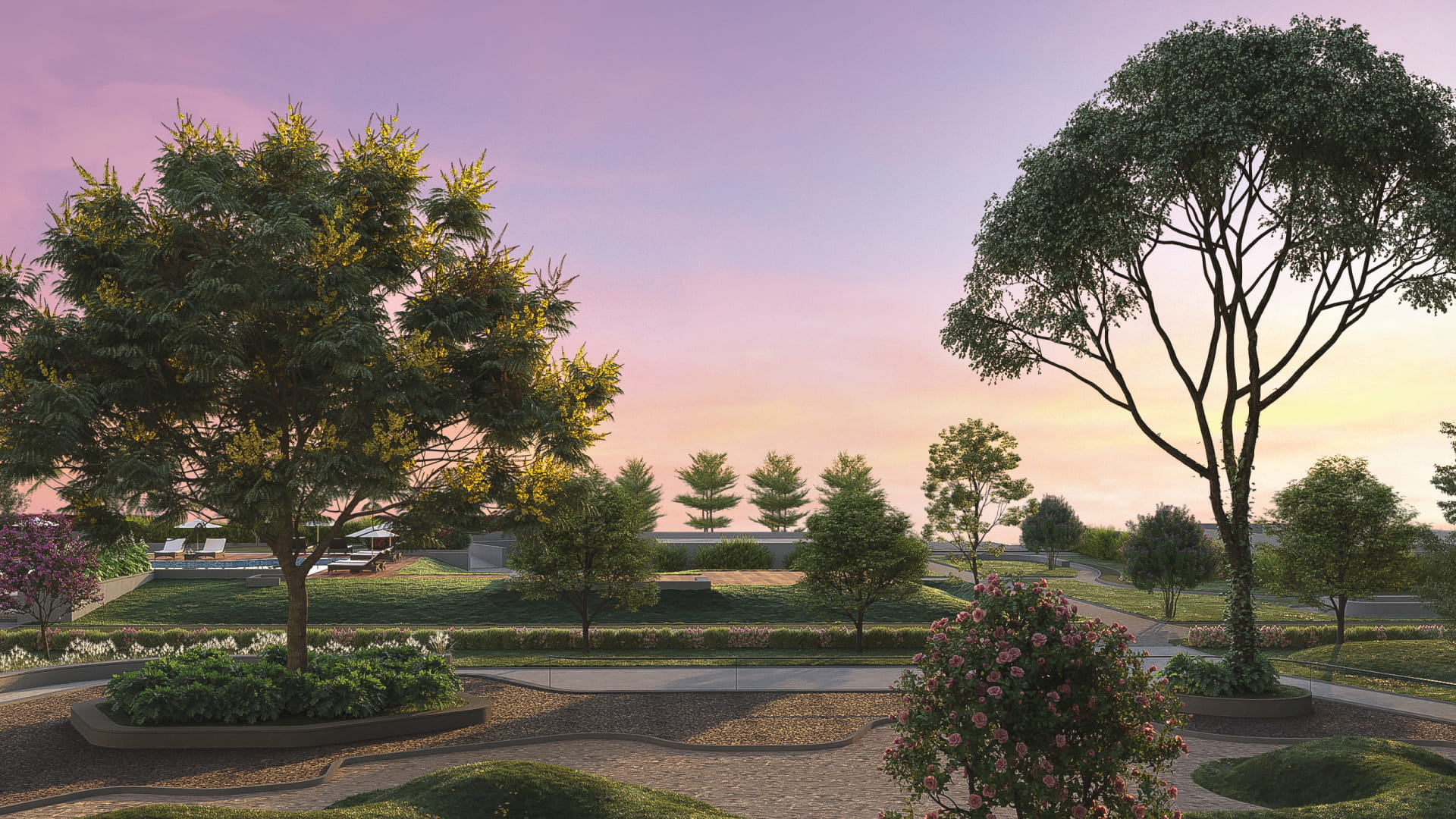
What separates this launch from a conventional plotted layout is the word integrated: alongside the residential plots, the master plan includes dedicated commercial spaces, a full clubhouse, a 10,000-tree Miyawaki forest and the IUSTUS Sports Academy developed in association with the Padukone School of Badminton. In plain terms, Sobha is building neighbourhood infrastructure into the layout rather than leaving buyers to wait for it to grow around them.
The project is registered with Karnataka RERA under PRM/KA/RERA/1265/347/PR/020226/008445. As with every project we list, we recommend verifying the registration yourself on rera.karnataka.gov.in before making any payment — valid Karnataka RERA numbers start with PRM/KA/RERA/.
Key Facts at a Glance
| Project name | Sacred Grove by the Lake |
| Developer | SOBHA Limited |
| Type | Integrated plotted development with dedicated commercial spaces |
| Location | Chikka Tirupathi Village, near STRR, Mallur Taluk, Kolar District – 563160, Karnataka (East Bengaluru corridor) |
| Total land area | 26.14 acres |
| Total plots | 388 |
| Plot dimensions | 30'×40' (1,200 sq ft), 30'×50' (1,500 sq ft), 30'×55' (1,650 sq ft) and unique plots up to 2,540 sq ft |
| Plot size range | approx. 1,200 – 2,540 sq ft |
| Starting price | ₹96 lakh* (developer-advertised) |
| Completion | September 2028 |
| RERA number | PRM/KA/RERA/1265/347/PR/020226/008445 |
| Signature features | 10,000-tree Miyawaki forest, IUSTUS Sports Academy (with Padukone School of Badminton), clubhouse, commercial spaces |
*Pricing as published on the developer's official project page at the time of writing. Prices, availability and payment plans change; call us at 99023 30233 for the current price sheet.
What "Integrated Plotted Development" Actually Means
A standard plotted layout gives you a road grid, utility connections and little else. An integrated plotted development is planned more like a small township: the developer commits, inside the same master plan, to social and commercial infrastructure that would otherwise take a decade to appear organically. At Sacred Grove by the Lake that commitment takes four concrete forms:
- Dedicated commercial spaces inside the development, so daily-needs retail does not depend on the surrounding village market developing first.
- A full clubhouse — swimming pool, gymnasium, multi-purpose hall, cafeteria/social lounge and an indoor sports arena.
- A 10,000-tree Miyawaki forest. The Miyawaki method plants dense, multi-layered native species that grow into self-sustaining woodland far faster than conventional planting — inside a plotted layout it functions as a permanent green lung that cannot later be "redeveloped" away.
- A professional sports academy (more on this below), which is rare infrastructure for any residential project, let alone a plotted one.
For a plot buyer, the practical significance is simple: you get apartment-township amenities while still owning land outright — the asset class most Bangalore buyers say they want but increasingly cannot find inside the city. Our guide on plots vs apartments as investments covers that trade-off in detail.
Location: Chikka Tirupathi, Near STRR

Sacred Grove by the Lake sits at Chikka Tirupathi Village, Mallur Taluk, Kolar District – 563160, on Bengaluru's eastern edge. Chikka Tirupathi is best known for its historic Venkateshwara temple and sits beyond the Sarjapur–Varthur belt that has driven East Bengaluru's growth over the last decade. The developer positions the project on the STRR (Satellite Town Ring Road) corridor — the ring road network connecting Bengaluru's satellite towns — which is the main infrastructure story for this micro-market.
Two honest observations our team would make on a site visit:
- This is a corridor play, not a city-centre play. You are buying early into an emerging belt where land parcels of 26+ acres are still assemblable — which is exactly why a developer of Sobha's scale can deliver 388 plots with this amenity load at this price point. Buyers wanting walk-to-work proximity to the ORR tech corridors should read our Sarjapur Road plot investment guide for the closer-in (and pricier) alternative.
- The address is Kolar district, not BBMP Bengaluru. That has no bearing on the project's legitimacy — it is RERA-registered like any Bengaluru launch — but it does change the revenue paperwork you should expect (panchayat-side khata records rather than BBMP khata). We explain exactly what to ask for in the documents section below, and our Form 9 vs Form 11 guide covers the khata forms used outside municipal limits.
East Bengaluru's plotted-development momentum is part of a wider pattern we track across the metro region — see our North Bangalore plotted development guide for how the same playbook unfolded on the airport side of the city.
The East Bengaluru Context: Why Developers Are Building Here

To understand why a developer of Sobha's calibre is assembling 26 acres at Chikka Tirupathi, look at what happened one ring closer to the city. Through the 2010s, Whitefield and the Sarjapur–ORR belt absorbed Bengaluru's technology workforce and their housing demand; through the 2020s, land inside that belt became scarce, fragmented and priced for apartments rather than plots. Plotted supply — the product Karnataka buyers culturally prefer when they can get it — migrated outward along each arterial corridor: north along Doddaballapura and Devanahalli roads, and east past Sarjapur and Varthur toward the Kolar border.
That outward migration is not a compromise story; it is how every established Bengaluru suburb began. The buyers who took plots in then-remote Sarjapur in the early 2010s were making the same corridor bet that an east-side buyer makes at Chikka Tirupathi today — and our Sarjapur Road analysis records how that earlier bet played out. The variables worth watching for this belt are the ones that de-risked Sarjapur: arterial road execution (here, the STRR corridor), organised-developer entry (this project itself is that signal), and the slow eastward creep of social infrastructure — schools, healthcare, retail — that follows rooftops.
Chikka Tirupathi itself adds a character most new corridors lack: it is an established temple town, known for its Venkateshwara temple, with a settled identity rather than a bare crossroads. Weekend footfall and the small-town economy around the temple give the area a base of activity that pure greenfield locations take years to develop.
Plots, Dimensions and Pricing
The 388 plots break down into Karnataka's three classic site dimensions plus a set of unique plots:
| Dimension | Area | Best suited for |
| 30' × 40' | 1,200 sq ft | Compact independent home (G+1/G+2), the most liquid resale size in Karnataka |
| 30' × 50' | 1,500 sq ft | Larger family home with garden or extra parking |
| 30' × 55' | 1,650 sq ft | Spacious duplex with generous setbacks |
| Unique plots | up to 2,540 sq ft | Corner/premium positions, larger custom homes |
At the advertised starting price of ₹96 lakh for the smallest plots, the implied entry rate works out to roughly ₹8,000 per sq ft of land (₹96,00,000 ÷ 1,200 sq ft). When you compare plotted options, always compare on this per-square-foot-of-land basis — and remember that plots attract no GST, unlike under-construction apartments, which changes the like-for-like math more than most buyers expect. Our editorial on under-construction investments walks through that comparison.
Amenities: Forest, Clubhouse, Commercial

The official amenity set, as published by the developer:
- 10,000-tree Miyawaki forest — dense native woodland planted using the Miyawaki afforestation method
- IUSTUS Sports Academy, developed in association with the Padukone School of Badminton
- Clubhouse with swimming pool, gymnasium, multi-purpose hall, cafeteria/social lounge and indoor sports arena
- Outdoor sports courts
- Dedicated commercial spaces for daily conveniences

Amenity promises in plotted projects deserve one extra verification step that apartment buyers rarely think about: because you take possession of land (often years before you build), the clubhouse and common infrastructure timeline is governed by the RERA completion date — here, September 2028. Ask the sales team which amenities are delivered in which phase, and get the phasing in writing.
The Sports Academy Angle

The IUSTUS Sports Academy, in association with the Padukone School of Badminton, is the project's most distinctive feature. Professional-grade sports coaching infrastructure inside a residential layout is genuinely uncommon in the Bengaluru plotted market, and it does two things for owners: it anchors weekend life inside the community rather than a 40-minute drive away, and it gives the development a destination identity that typically supports resale interest. For families with school-age children weighing this against an apartment in the Sarjapur belt, it is a differentiator no compact clubhouse can match.

About SOBHA Limited
SOBHA Limited, founded in 1995 by P.N.C. Menon and headquartered in Bengaluru, is one of India's most respected listed real-estate developers, known for its backward-integrated model — the company runs its own contracting, interiors, glazing and concrete-products divisions rather than outsourcing construction. In the Bengaluru market Sobha's reputation was built on delivery quality, and that reputation extends to its plotted portfolio: its Sobha Meadows plotted development in Mysore is already delivered, and the company has multiple active Bengaluru projects we track, including Sobha Royal Pavilion on Sarjapur Road, Sobha Altair the Sobha One World township at Hoskote, and the companion plotted launch Chartered Birdsong at Rajanukunte in North Bengaluru.
For a plot purchase — where you are essentially buying the developer's land-title work, layout approvals and infrastructure execution — developer pedigree matters more, not less, than in an apartment deal. It is the difference between a layout where internal roads, drainage and the promised forest actually materialise, and one where they remain on the brochure.
The Real Cost: Stamp Duty and Registration on a ₹96 Lakh Plot
Most buyers budget the sticker price and forget the government's share. For a plot bought at the ₹96 lakh starting price in Karnataka, the current structure (registration fee 2% since 31 August 2025 under the Karnataka Registration (Amendment) Act, 2025) works out as follows:
| Component | Rate | Amount on ₹96,00,000 |
| Stamp duty (above ₹45 lakh) | 5% | ₹4,80,000 |
| Cess | 10% of duty | ₹48,000 |
| Surcharge (urban) | 2% of duty | ₹9,600 |
| Registration fee | 2% | ₹1,92,000 |
| All-in government charges | ≈7.6% | ₹7,29,600 |
Three fine-print points: duty is charged on the higher of your agreed price and the government guidance value — check the current guidance value for the survey numbers on the Kaveri portal (our step-by-step guide); the surcharge applied can differ for panchayat-area property (commonly cited at 3% rural versus 2% urban — confirm with the jurisdictional sub-registrar); and many online calculators still show the old 1% registration fee, understating your outgo by nearly ₹1 lakh at this price. Use our Karnataka stamp duty calculator for your exact plot.
Financing a Plot: What Banks Do Differently
Plot purchases are financed through a plot loan (land loan), which banks treat differently from a regular home loan, and the differences matter for your budgeting:
- Lower funding ratio. Lenders typically finance a smaller share of a plot's value than they would for a constructed home, so plan for a larger down payment than an apartment buyer with the same budget.
- Shorter tenures and slightly higher rates. Plot loans generally run shorter than 25–30 year home loans and price a little above home-loan rates. The exact spread varies by bank and borrower profile — we obtain current quotes from SBI, HDFC, ICICI and Axis for every buyer we work with rather than relying on published rate cards.
- Tax treatment. A pure plot loan does not carry home-loan income-tax benefits. Those benefits generally become available when you take a composite loan (plot + construction) and complete construction — a structural reason many buyers at projects like this plan their build within a few years of possession. Confirm specifics with your CA; tax rules change.
- RERA registration helps. Banks lend far more readily against plots in RERA-registered projects from reputed developers than against standalone revenue sites — one more way the developer's pedigree translates into practical buyer economics here.
Our loan desk coordinates the entire process — eligibility checks, documentation, bank follow-ups — at no cost to buyers; banks pay us a referral fee, which we disclose upfront.
How We Evaluate Any Plotted Development: The 10-Point Framework
This is the checklist our team applies on the ground before OneCity lists any plotted project, and it is a useful lens for comparing Sacred Grove by the Lake against anything else on your shortlist:
- Title depth — can the developer show a clean mother-deed chain for every survey number, not just the marketing brochure's headline parcel?
- Conversion status — is there a DC conversion order for the whole layout, or only part of it?
- Planning approval — which authority sanctioned the layout, and does the sanctioned plan match what is being sold?
- RERA substance — not just a registration number, but the declared completion date, the quarterly updates the developer files, and whether the amenity list in the RERA documents matches the brochure.
- Internal infrastructure spec — road widths, storm-water drains, underground electrification and STP provision; these determine whether the layout still looks good ten monsoons later.
- Amenity phasing — which facilities arrive before possession and which are promised "later". Get it in writing.
- Developer delivery record — has this developer actually delivered plotted layouts before? (Sobha has — its Mysore plotted project is delivered and occupied.)
- Corridor logic — is there a real infrastructure driver (here, the STRR corridor), or only a story?
- Exit liquidity — standard dimensions like 30'×40' resell far more easily than odd-shaped parcels; a layout dominated by standard sites protects your exit.
- Total cost honesty — sticker price plus the ~7.6% government charges, maintenance deposits, and clubhouse/corpus charges, compared like-for-like across your shortlist.
Ask us for our filled-in version of this framework for Sacred Grove by the Lake when you enquire — we share it before the site visit, not after.
Documents to Verify Before You Book
Sacred Grove by the Lake is a RERA-registered project from a top-tier listed developer, which de-risks most of this list — but our standing advice is the same for every plot purchase in Karnataka, and a good developer's sales team will produce these without friction:
- RERA registration — match PRM/KA/RERA/1265/347/PR/020226/008445 on rera.karnataka.gov.in, and read the registered project documents there (sanctioned layout plan, declared completion date, land title documents).
- Mother deed and title flow for the underlying survey numbers.
- Encumbrance certificate (EC) for the last 30 years on the project land.
- RTC/Pahani extracts for the survey numbers — our guide shows how to download RTC/Pahani records online yourself in minutes.
- DC conversion order converting the land from agricultural to residential use — the single document that separates a legitimate converted layout from a revenue-site layout.
- Layout plan approval from the competent planning authority for this belt.
- Khata record — in Mallur Taluk (outside municipal limits) expect panchayat records; understand the difference between Form 9 and Form 11 before you sign.
- Post-registration: ensure khata transfer to your name and the plot's own EC showing your sale deed.
If you are buying for the first time, start with our first-time buyer's guide to Bangalore property — it walks the full sequence from shortlist to Sub-Registrar Office.
Plot Ownership Economics vs an Apartment
Buyers shortlisting at this budget are usually choosing between a plot here and a 2–3 BHK apartment closer in. The two assets behave differently enough that the comparison deserves its own ledger:
- What appreciates. In an apartment you own a depreciating structure plus a small undivided share of land; in a plot you own only the appreciating component. Over long holds this is the single biggest structural difference between the two assets.
- Tax at purchase. Registered plots attract no GST; under-construction apartments do. On like-for-like budgets that difference alone can cover most of your registration costs.
- Holding costs. A plot in a maintained layout costs you property tax plus association charges — no interiors, no repairs, no vacancy risk, no tenant management. An apartment's gross rental yield (typically modest in Bengaluru) comes with all four.
- Income. The apartment earns rent from day one; the plot earns nothing until you build. If monthly income is the goal, the apartment wins — run your numbers against our rental yield calculator before deciding.
- Flexibility. The plot lets you build exactly the home you want, when you want, at construction costs you control — or never build and simply hold land in a managed environment. The apartment is fixed the day you buy it.
- Financing. As covered above, plot loans fund less and run shorter; apartment home loans remain the cheapest consumer credit in India. Factor the down-payment difference into your comparison.
Our full editorial on plots vs apartments works through these trade-offs with worked examples.
Who This Project Suits (and Who It Doesn't)
It suits: buyers who want to own land with township-grade amenities; families planning a custom-built home on a 3–5 year horizon aligned with the 2028 completion; sports-focused households drawn by the academy; and long-horizon investors who prefer land's zero-GST, low-maintenance holding economics in an infrastructure-led corridor.
Think twice if: you need rental income from day one (plots yield nothing until built on), you need daily proximity to the ORR/Whitefield tech corridors right now, or your budget is better matched to a ready apartment — compare on our current resale and ready listings before deciding.
After Possession: Owning and Building on Your Plot
A plot is the lowest-maintenance real estate you can hold — no interiors to refresh, no tenant turnover, no society disputes — but ownership still has a rhythm, and knowing it in advance avoids expensive surprises:
- Immediately after registration: apply for khata transfer into your name with the jurisdictional authority, and a few weeks later pull a fresh encumbrance certificate to confirm your sale deed is the latest entry on the plot. Keep paying property tax in your name every year — an unbroken tax receipt trail is the quiet hero of every smooth resale.
- Holding period: inside a gated, maintained layout like this one, holding costs are limited to property tax and the association/maintenance charges — ask the sales team for the maintenance structure and any corpus fund amount before booking, and factor both into your yield math.
- When you build: you will need a sanctioned building plan from the competent local authority before construction, and your house must respect the layout's design guidelines and setback rules for your plot dimension. Gated Sobha layouts typically publish architectural guidelines that protect the streetscape — read them before you brief your architect, because they shape what you can build more than the plot size does.
- The composite-loan clock: if you financed with a composite plot-plus-construction loan, your bank will expect construction to start within its stipulated window — align your build timeline with the loan terms on day one.
- If you never build: that is a legitimate strategy too. Land in a maintained, RERA-delivered layout with a living Miyawaki forest is a very different resale proposition from an empty revenue site — the layout's upkeep is doing your asset-management for you.
Whenever you decide to sell, our resale desk handles valuation, buyer sourcing and the full transfer paperwork — see how we work with sellers on our services page.
On the Site Visit: What to Actually Inspect
Brochures show masterplans; site visits show reality. When we accompany buyers to plotted developments, these are the checks we run on the ground — bring this list even if you visit without us:
- Walk your shortlisted plot, not just the sales gallery. Note its orientation (east- and north-facing sites command premiums in this market), its level relative to the internal road, and what adjoins it — a park edge and a drainage reserve are very different neighbours carrying the same plot price.
- Stand on the layout's lowest point. Ask where storm water exits the layout. Monsoon behaviour is decided by this answer, and it is far easier to judge on land than on a plan.
- Check development progress against the RERA timeline. Roads, electrification, drainage and the clubhouse each have a stage; what you see should be consistent with a September 2028 completion.
- Time the drive at commute hours. Do the run from the project gate to your actual anchor points — workplace, school, airport road — at 8:30 am, not 11 am on a Sunday.
- Ask for the plot-wise price sheet. Starting price applies to specific plots; corner sites, park-facing sites and larger dimensions carry premiums. Negotiate from the sheet, not the headline.
We schedule verified site visits for this corridor through the week — one call, and the paperwork summary reaches you before you travel.
How OneCity Property Helps
We are a Karnataka-focused real estate services firm, established 2015, working across Bangalore, Mangalore and Mysore. For builder projects like this one, buyers pay us nothing — our fee comes from the developer, and you get our verification work, accompanied site visits, negotiation support and loan coordination (SBI, HDFC, ICICI, Axis) at zero cost. We verify RERA status, title documents and approvals before recommending any project, and we will tell you plainly when a competing project fits your requirement better. Browse all ongoing projects, read our guides and market insights, see everything we do, or talk to us — call or WhatsApp 99023 30233.
Frequently Asked Questions
Where exactly is Sobha Sacred Grove by the Lake located?
At Chikka Tirupathi Village, near the STRR corridor, Mallur Taluk, Kolar District – 563160, Karnataka — on East Bengaluru's emerging eastern edge beyond the Sarjapur belt.
What is the total land area and how many plots are there?
The development spans 26.14 acres with a total of 388 plots.
What plot sizes are available?
30'×40' (1,200 sq ft), 30'×50' (1,500 sq ft) and 30'×55' (1,650 sq ft) standard dimensions, plus unique plots ranging up to 2,540 sq ft.
What is the starting price?
₹96 lakh, as advertised by the developer at launch. Contact us for the current price sheet and plot-wise availability.
Is the project RERA approved?
Yes — Karnataka RERA registration PRM/KA/RERA/1265/347/PR/020226/008445. Verify it independently on rera.karnataka.gov.in before any payment.
When will the project be completed?
The developer's declared completion is September 2028.
What amenities does the project offer?
A 10,000-tree Miyawaki forest, the IUSTUS Sports Academy in association with the Padukone School of Badminton, outdoor sports courts, dedicated commercial spaces, and a clubhouse with swimming pool, gymnasium, multi-purpose hall, cafeteria/social lounge and indoor sports arena.
Do I pay GST on a plot here?
No. Registered plots do not attract GST; your government charges are stamp duty, cess, surcharge and the 2% registration fee — roughly 7.6% all-in at the ₹96 lakh price point.
Do buyers pay OneCity Property any brokerage on this project?
No. On builder projects our commission comes from the developer — buyers pay us nothing for verification, site visits, negotiation and loan coordination.
Can NRIs buy a plot in this project?
Yes. NRIs can purchase residential plots in India under FEMA rules, and we support NRI buyers with Power of Attorney, remote documentation and registration coordination.
Is Chikka Tirupathi part of Bangalore?
Administratively the project address falls in Mallur Taluk of Kolar District, just beyond Bengaluru's eastern boundary — which is why the developer describes it as East Bengaluru's fast-emerging corridor rather than a city address. Practically, buyers treat this belt as an extension of East Bengaluru's growth along the STRR corridor; on paperwork, expect panchayat-side revenue records rather than BBMP khata.
Can I get a bank loan for a plot here?
Yes — banks finance plots in RERA-registered projects from reputed developers through plot loans or composite plot-plus-construction loans. Expect a larger down payment and shorter tenure than a home loan; we coordinate quotes from SBI, HDFC, ICICI and Axis at no cost to buyers.
Disclaimer: Project details, prices, areas and dates on this page are drawn from the developer's official project page and Karnataka RERA records as on 24 November 2026 and may change. This page is for information only and is not an offer. Verify all details with the developer and on rera.karnataka.gov.in before transacting. OneCity Property is an independent real estate services firm and project channel partner.
Overview
Share:



Write A Review
0 Reviews
0 out of 5
 Selling
Sobha Sacred Grove by the Lake: Premium Plots at Chikka Tirupathi Near STRR, East Bangalore
PLOT
Bangalore, Karnataka