
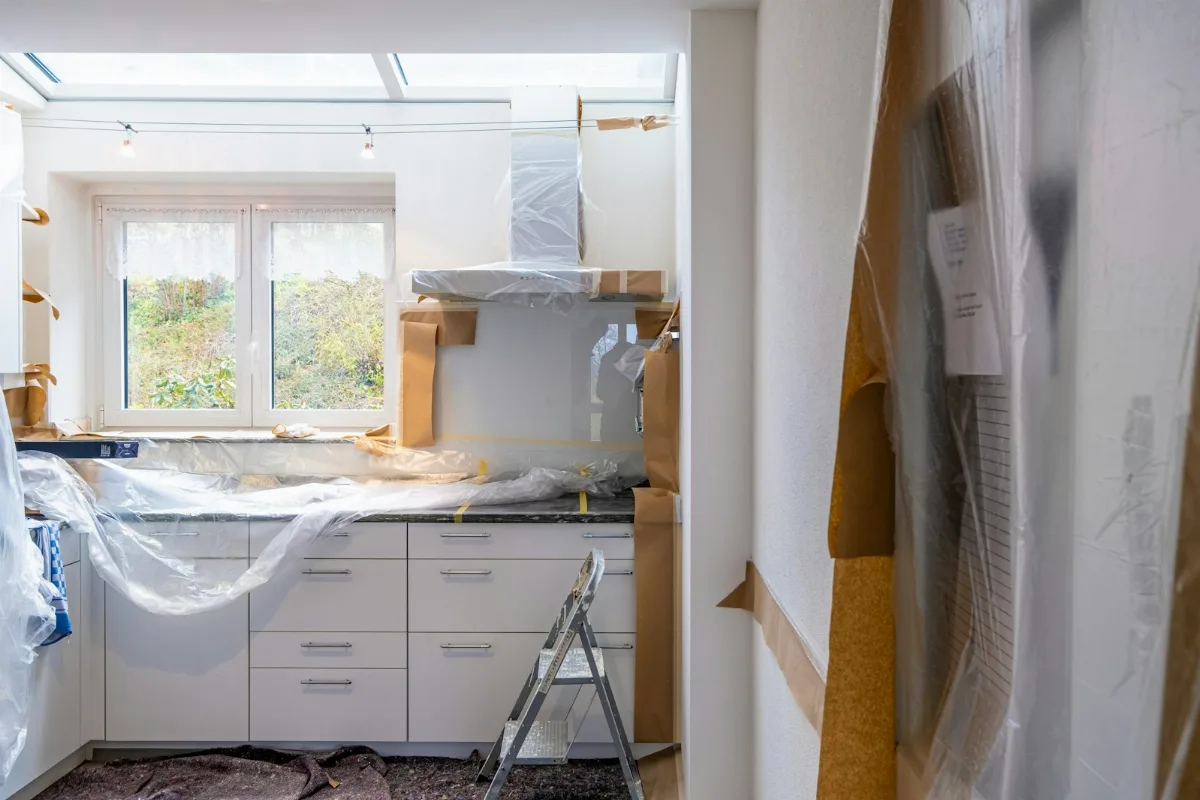
How to Protect Your Belongings During a Home Renovation

Picture a family that spends three months planning a kitchen remodel. They pick the cabinets, haggle over countertops, and book the contractor. Then demolition starts, and the dining table is still in the next room, the good dishes are in an open cabinet, and a fine layer of drywall dust is settling on the couch.
It happens more often than you'd think. Renovations get plenty of attention for the finished result, but the belongings sitting in the middle of the project rarely get a plan. Dust, vibration, foot traffic, and tight hallways can chip, scratch, or ruin things that were fine a week earlier.
The fix isn't complicated. It comes down to deciding early what stays, what gets protected, and what leaves the house entirely. Here's how to do that without losing your sanity or your furniture.
Why Renovations Put Belongings at Risk
Contractors are careful, but construction is messy by nature. Knowing the main risks helps you decide where to focus.
Dust and debris. Cutting drywall, sanding floors, and removing old tile release fine particles that settle on everything. They can get into closets, drawers, and even sealed boxes. Fabric, electronics, and books take the worst of it.
Vibration and impact. Hammering and demolition shake walls and floors. Framed art, mirrors, and glassware on shelves can shift or fall. A heavy item near a work zone can also be hit by a stray tool or a falling board.
Moisture and temperature swings.Plumbing work, roof repairs, and open walls can expose your home to humidity or cold. Wood furniture, musical instruments, and photographs react poorly to those changes.
Foot traffic. Workers carry materials through your house all day. Narrow hallways and tight corners become hazards for both people and furniture.
None of these problems is dramatic on its own. Together, they add up to a lot of small damage that is easy to prevent.
Start With a Room-by-Room Plan
Before anything moves, take a walk through your home with the project scope in hand. Ask your contractor which rooms will be affected and how, and which paths workers will use to get in and out.
Map the Work Zones
Sort your home into three areas:
Direct work zones: the rooms being renovated.
Pass-through zones: hallways, stairs, and entryways workers will use daily.
Safe zones: rooms that should stay clean and untouched.
Everything in a direct work zone needs to be removed or fully protected. Pass-through zones need clear paths and covered floors. Safe zones are where you can keep the items you plan to use during the project.
A quick sketch on paper works fine. Label each area and keep a copy for your contractor so everyone is on the same page.
Decide What Stays, Goes, or Gets Stored
Once you know the zones, go through each room and place every item in one of three categories.
Keep in use. Daily essentials such as clothes, kitchen basics, work gear, and medications. These go in a safe zone.
Protect in place. Large furniture that is hard to move and sits outside the heavy work areas.
Move out. Anything fragile, valuable, or not needed for the next several weeks.
This is also a good time to get rid of what you no longer want. Renovations are a natural reset. If you haven't touched something in two years, ask whether it needs to go back into your newly finished space.
Protecting Items That Stay in the House
Some things can't leave, such as a built-in cabinet, a heavy sofa, or a piano. Protect them properly and they will be fine.
Use the right covers. Plastic sheeting keeps dust off, but it can trap moisture against wood and fabric if left on for weeks. Breathable drop cloths or moving blankets work better for long projects. Use plastic only as an outer layer and check underneath now and then.
Seal doorways. Ask your contractor to hang zip-style plastic barriers between work zones and living areas. They cost little and cut down dust a great deal.
Cover vents and returns. Dust gets pulled into the HVAC system and spreads through the house. Cover supply and return vents in work areas, and change your filter more often than usual.
Pad corners and edges. Furniture along pass-through routes should have padding on the corners. Foam sleeves or folded blankets held with tape do the job.
Lift things off the floor. If water is part of the project, raise furniture on blocks or move it to another room. Even a small leak can ruin a wooden leg or a rug.
When It's Time to Move Things Out
For anything fragile, valuable, or bulky, moving it out of the house entirely is often the cleanest answer. You have a few options, and each fits a different situation.
Storing Items on Site
If you have a garage, basement, or spare room outside the project area, you can use it as a staging space. It costs nothing and keeps your belongings close.
The trade-off is that on-site spaces are still part of a working home. Garages collect dust and swings in temperature. Basements can be damp. If you go this route, stack boxes on pallets or shelves, cover everything with breathable material, and keep the space away from where contractors store materials.
Using a Portable Container
A portable storage container, delivered to your driveway, gives you a lockable space without leaving the property. This works well when you need regular access to your belongings.
Check your local rules first. Some neighborhoods and homeowners' associations limit how long a container can sit on a driveway or street, and some require permits.
Moving Items to an Off-Site Facility
For larger renovations such as a full kitchen remodel, a second-story addition, or a whole-house project, off-site storage is usually the safest choice. Your furniture sits in a clean, secure space, and you get your rooms back to work in without obstacles.

This is where some homeowners bring in a professional. A company that offers moving and storage services, such as Cullen Moving & Storage, a licensed and insured moving company in Aston, PA, can handle the heavy lifting out of the house and keep everything in one place until the work is finished. The benefit is mostly practical. You don't have to rent a truck or recruit friends, and your items travel and stay in one coordinated process.
How to Choose
A few questions can point you toward the right option:
How long will the project last? Short jobs may only need on-site storage. Longer ones usually call for off-site space.
How much are you moving? A few pieces fit in a garage. A whole floor of furniture does not.
How often will you need access? If the answer is "rarely," off-site works well.
What is the condition of the space? Climate and security matter more for wood, electronics, and upholstery.
Packing Items for Temporary Storage
How you pack matters as much as where things go. Poor packing is the main reason belongings come out of storage damaged.
Use sturdy boxes and fill them completely. Half-empty boxes collapse under weight. Fill gaps with packing paper or towels so contents can't shift.
Pack heavy items in small boxes. Books and tools go in small boxes. Lighter things like linens and pillows can go in larger ones. A box you can't lift safely is a box that will get dropped.
Wrap fragile items one by one. Dishes, glassware, and decor need individual wrapping. Stand plates on their edges instead of stacking them flat.
Protect furniture, not just boxes. Disassemble large pieces when you can, and wrap wood surfaces in moving blankets. Keep screws and hardware in labeled bags taped to the furniture itself.
Label everything clearly. Write the room name and a short description on at least two sides of each box. A simple inventory list on your phone helps you track what went where.
Skip risky items. Don't store anything perishable, flammable, or sensitive to heat, such as paint, propane tanks, or candles. Take important documents, jewelry, and irreplaceable photos with you.
Moving Out and Back In Without the Stress
The move out is the easy part. The move back in is where people get tired and careless, so plan for both.
Schedule the move out at least a few days before work starts, not the morning of. Rushed packing leads to broken items and forgotten drawers. Give yourself a buffer.
Build a similar buffer into the return. Renovations often run behind, so don't book your move back for the exact day the contractor says they will finish. Wait until floors are fully cured, paint is dry, and the final cleaning is done. Bringing furniture into a room that still has dust or wet paint undoes much of the protection you worked for.
When your belongings come back, check them against your inventory list and inspect furniture for damage right away. Report any problems quickly, while the details are fresh.
Common Mistakes to Avoid
A few errors show up again and again:
Leaving valuables in the work zone. Small items disappear and break easily on a busy job site.
Covering furniture with plastic for weeks. Trapped moisture can cause mold and warping.
Skipping the conversation with the contractor. They know the schedule and the dust-heavy phases. Ask early.
Underestimating the timeline. Storage plans fall apart when the project runs long. Choose an option that can extend.
Forgetting about insurance. Check what your homeowner's policy covers during construction, and ask any storage provider what coverage applies to your items.
Final Thoughts
A renovation is hard enough without worrying about the things inside your house. The good news is that protecting your belongings doesn't take special skill, just a bit of planning before the first wall comes down.
Walk through your home and map the work zones. Sort items into keep, protect, and move out. Cover and pad what stays, and pack carefully what goes. Choose a storage option that matches the length and size of your project, and give yourself extra time on both ends.
Do that, and the day the work finishes can be a good one. Your rooms look new, and your belongings are in the same condition you left them.
Need expert property advice?
OneCity Property offers independent advisory across Bangalore, Mangalore and Mysore. Zero commission for buyers on projects under ₹1 Cr.
💬 WhatsApp Us📞 Call 076768 70876


News insight
 31/08/2026
What Homebuyers Should Look for in a Modern Apartment Security System
A guide to evaluating apartment security systems before buying, covering access control, cameras, pa...
 25/07/2026
Water Damage and Its Long-Term Impact on Property Value
Water damage can quietly slash a home's resale value. A look at why it happens, the real cost of ign...
 13/07/2026
Bangalore Property Dictionary: Every Term, Process, Measurement, Khata and Registration Rule Explained
The reference for Bangalore real estate in 2026: 60+ terms, Khata system, Bhu Guarantee deadline, me...