
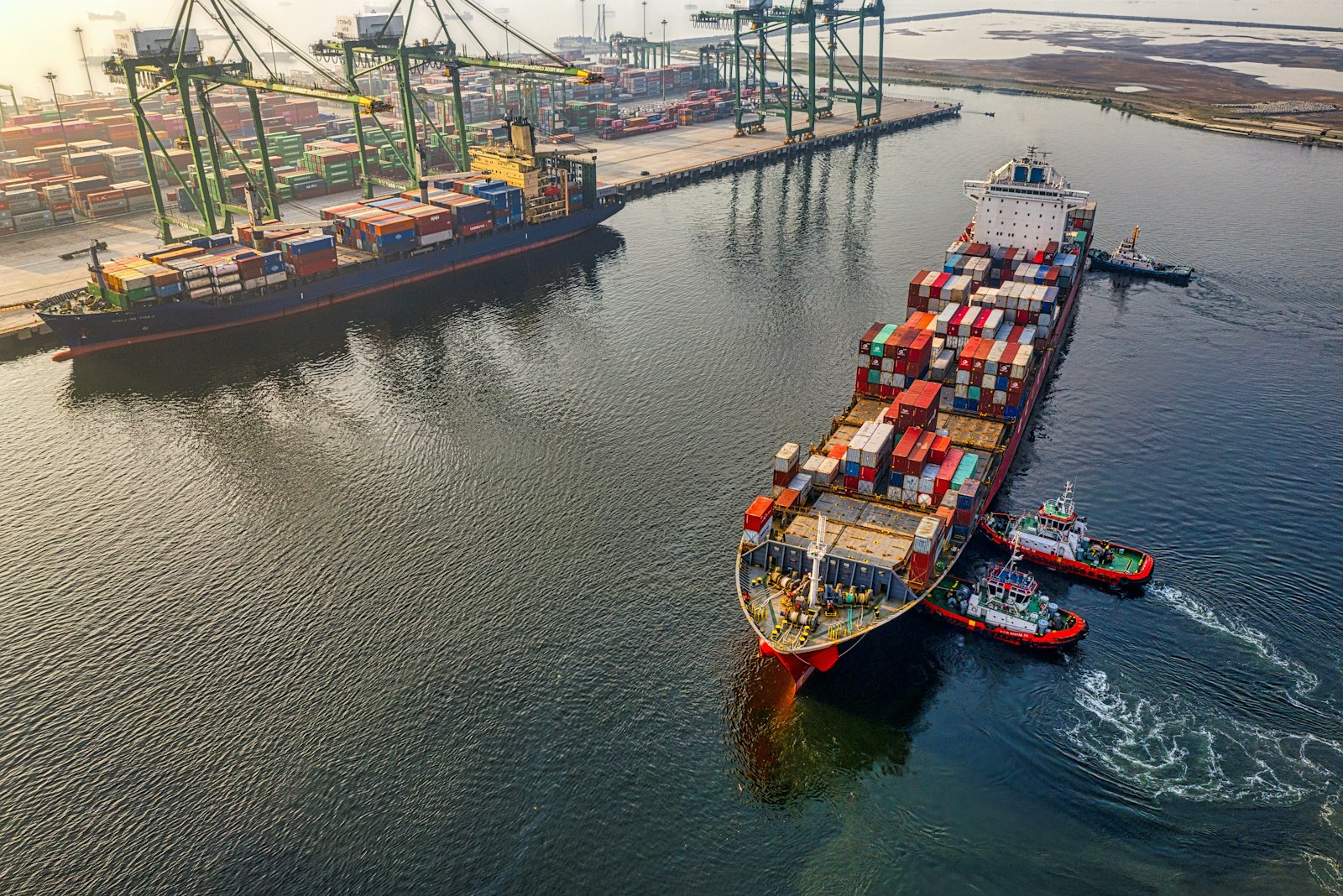
Port Expansion and Its Impact on Property Prices in Mangalore

Published: 30 July 2026 | Updated on: 30 July 2026 | By L K Monu Borkala, CEO & Founder, OneCity Property - 15 years of property consultancy experience and over 20 years in marketing and management at OneCity Technologies Pvt. Ltd.
Quick Answer: Does Port Expansion Actually Move Mangalore Property Prices?
The Government approved redevelopment of Berth No. 9 at New Mangalore Port Authority in March 2026, deepening the berth draft from 10.5 metres to 14 metres, with future-ready provision up to 19.8 metres, allowing vessels of up to two lakh deadweight tonnage. This actually strengthens the port's liquid bulk handling capacity. Whether this translates directly into higher property prices nearby is a more honest, harder question than most articles on this topic admit: the port has historically operated well below its capacity due to road connectivity constraints, and the localities most plausibly affected, Panambur, Baikampady, and the Surathkal-NH66 corridor, are also benefiting from separate, larger infrastructure projects at the same time, making it actually difficult to isolate the port's specific contribution to price movement from everything else happening in that corridor.
Port expansion gets cited constantly as a property-price driver in Mangalore content, usually as a single line in a longer list of "growth factors" without much scrutiny of what's actually being expanded or whether the mechanism linking port activity to housing demand is as direct as implied. This guide takes the claim seriously enough to actually examine it: what the current redevelopment involves, why the port has a documented history of underperforming its stated capacity, and what buyers considering the port-adjacent corridor should realistically expect.
What's Actually Being Expanded: The Berth No. 9 Redevelopment
In March 2026, the Ministry of Ports, Shipping and Waterways approved redevelopment of Berth No. 9 at New Mangalore Port Authority, specifically to boost liquid bulk handling capacity. The project deepens the berth draft from its existing 10.5 metres to 14 metres, with a future-ready design provision allowing further deepening to 19.8 metres, and will allow the port to accommodate vessels up to two lakh deadweight tonnage, including Very Large Gas Carriers. This is a specific, government-confirmed infrastructure commitment, distinct from the more general "port expansion" language that circulates in property marketing, and it targets energy and liquid bulk cargo capacity specifically rather than general containerised trade.
From NMPT to NMPA: A Naming Change Worth Knowing
Long-standing Mangalore residents and older property listings still commonly refer to the port as New Mangalore Port Trust, or NMPT, but the port's official name changed to New Mangalore Port Authority, or NMPA, following the Major Port Authorities Act reforms that restructured India's major ports nationally. Both names refer to the same facility at Panambur, and buyers researching this topic online should expect to see both terms used, sometimes even within the same source, without this indicating two different institutions.
The Historical Underperformance Problem, in practice Stated
Before assuming port expansion automatically translates into rising property demand nearby, it's worth being direct about the port's actual track record. Industry reporting on New Mangalore Port has specifically noted that capacity utilisation at the port has ranked among the lowest of India's major ports, and that this underperformance traces largely to inadequate road connectivity rather than a lack of underlying cargo demand. Industry figures interviewed on this specific issue have described the port's situation as beset by slow-moving infrastructure decisions and rising tariffs pushing some importers to use other ports instead. This history matters directly for how much weight to put on new berth capacity alone: adding deeper draft and higher-tonnage handling capability addresses one bottleneck, but if road connectivity to and from the port remains the binding constraint on how much cargo actually moves through it, the practical, on-the-ground impact of Berth No. 9's redevelopment on surrounding economic activity may take longer to materialise than the announcement itself suggests.
Why Road Connectivity Was the Real Constraint, and What's Changing
This is precisely where the port-expansion story connects to Mangalore's broader Smart City infrastructure push, and where the two threads actually reinforce each other rather than operating independently. The widening of NH-66, the Panvel-Kochi highway, specifically improves connectivity for Surathkal, Kuloor, and Baikampady, the same industrial-residential corridor that sits closest to the port itself. The proposed 10-lane Bengaluru-Mangalore Expressway, cutting travel time between the two cities to roughly 4.5 hours, addresses a different but related connectivity gap, improving Mangalore's attractiveness for businesses and professionals more broadly rather than the port specifically. Peripheral ring roads and city flyovers connecting developing areas like Kulur, Pumpwell, and Thokkottu round out this infrastructure picture. Taken together, these projects address the road-connectivity bottleneck that has historically limited the port's utilisation, which means the port's own capacity upgrade and the surrounding road infrastructure actually need to be considered as a combined package rather than the port's expansion being evaluated in isolation. 
Which Localities Actually Sit in the Port's Orbit
Geographically, Panambur, where the port itself is located, and Baikampady, home to the New Mangalore Port's industrial and SEZ belt, sit most directly within any plausible port-driven demand catchment. Surathkal, further along the same NH-66 corridor and separately covered elsewhere on this site for its NITK-driven rental demand, benefits from the same road connectivity improvements, though its residential demand is arguably driven more by the institute than by the port itself. Kuloor sits at a connecting point between these areas and the rest of the city. Buyers specifically targeting the port-adjacent corridor should understand that Panambur and Baikampady carry a more industrial, logistics-oriented character than a purely residential locality, which shapes what kind of property demand actually exists there, more oriented toward worker housing, warehousing-adjacent commercial space, and industrial-support residential stock than premium residential development. 
The Honest Mechanism: How Port Activity Actually Translates to Housing Demand
The realistic chain of causation, when it works, runs through employment rather than through some direct, automatic price effect: expanded port capacity, if actually utilised, supports more logistics, shipping, and industrial employment in the immediate area, and that employment growth is what eventually shows up as increased demand for nearby housing, whether rental or purchase. This is a distinctly different and slower mechanism than headlines suggesting port expansion will directly boost property values, and it depends on the expanded capacity actually being used at meaningfully higher utilisation than the port's historical pattern, not simply on the redevelopment being approved and completed. Buyers should treat the employment-growth link as the thing to actually watch for, tracking whether logistics and industrial hiring in the Baikampady-Panambur belt actually increases over the coming years, rather than assuming the berth redevelopment itself is the complete story.
A Realistic Timeline: What to Actually Watch For
Buyers weighing this corridor for its port-driven upside should have a realistic sense of how long this kind of infrastructure story typically takes to show up in employment and housing data, rather than expecting an immediate effect once construction on Berth No. 9 completes. Port redevelopment projects of this scale typically run through a multi-year construction and commissioning window before the additional capacity is actually operational, and even once operational, shipping lines and cargo operators need time to actually shift volume toward the newly available capacity, particularly for a liquid bulk and energy-cargo-focused upgrade like this one, where contracts and long-term offtake agreements with specific companies matter more than general capacity availability. A realistic way to track this rather than relying on announcements alone is to watch three concrete indicators over time: reported cargo throughput figures for New Mangalore Port Authority in its annual and quarterly reports, any specific new tenant or offtake announcements tied to the redeveloped berth, and hiring activity from logistics and shipping companies operating in the Baikampady industrial belt. Movement on these three fronts is a more reliable signal that the port's redevelopment is translating into real local economic activity than the initial approval announcement itself, which reflects a government decision rather than an operational outcome.
How This Compares to Port-Driven Growth Stories in Other Indian Cities
Mangalore's situation is not unique, and looking at how port-adjacent growth has played out in other Indian coastal cities offers a useful, honest benchmark rather than treating Mangalore's case as an isolated story. Port cities generally do see genuine, sustained property demand growth in their industrial hinterland when port capacity utilisation rises alongside road and rail connectivity improvements, since this combination is precisely what allows a port's economic activity to actually radiate outward into surrounding employment and housing markets. Where port-adjacent growth stories have disappointed in other Indian cities, the pattern has often been similar to what New Mangalore Port has already experienced: capacity additions approved and completed on schedule, while road, rail, or last-mile connectivity lagged behind, meaning the port itself struggled to reach the utilisation levels needed to generate the surrounding economic activity that property marketing had anticipated. This is precisely why this guide treats the current NH-66 widening and Bengaluru-Mangalore Expressway progress as a meaningfully important indicator to track alongside the berth redevelopment itself, rather than assuming the port upgrade alone tells the whole story.
What Baikampady's Industrial Character Means for Different Buyer Types
Baikampady's status as Mangalore's primary port-adjacent industrial and SEZ belt shapes what kind of property investment actually makes sense there, and this differs meaningfully depending on what a buyer is trying to achieve. An investor specifically interested in commercial or industrial-support property, warehousing, logistics-adjacent office space, or worker accommodation aimed at the industrial workforce, has a distinctly different and arguably clearer thesis here than a buyer looking for a premium residential purchase, since Baikampady's character is fundamentally industrial rather than residential-lifestyle-oriented. A family specifically prioritising a quiet residential setting, good schools, and a lifestyle-oriented neighbourhood would generally be better served looking at localities covered in our broader Mangalore locality guides rather than Baikampady itself, while a buyer specifically building a portfolio around Mangalore's logistics and industrial growth story should treat Baikampady as a distinctly relevant, if narrower, opportunity worth researching in more depth, ideally with direct site visits to see the actual current state of industrial occupancy and activity rather than relying on general growth narratives alone.
Due Diligence Specific to Port-Adjacent Property
Property near an active industrial port and SEZ belt carries a few due diligence considerations that don't apply the same way to a purely residential locality elsewhere in Mangalore. Buyers should check whether a specific plot or property falls within any Coastal Regulation Zone classification given Panambur's coastal location, a distinction covered in more depth in our dedicated CRZ guide linked below. It's also worth directly confirming the zoning classification of any property in or near Baikampady, since industrial and SEZ zoning carries different construction and usage rules than standard residential zoning, and a property that appears residential on the surface may sit within a zone with restrictions a buyer wouldn't expect. Noise, air quality, and heavy vehicle traffic considerations are also more relevant near an active industrial and port corridor than in most other Mangalore localities, and buyers specifically prioritising a quiet residential environment should factor this in directly, ideally through an actual site visit at different times of day, rather than assuming a locality's general growth narrative means it's equally suited to every kind of buyer.
Separating Port-Specific Impact from Broader Infrastructure Hype
This is the section most property content on this topic skips entirely, and it's worth being explicit about the difficulty involved. Panambur, Baikampady, and Surathkal are simultaneously benefiting from the port redevelopment, the NH-66 widening, the broader Smart City infrastructure push, and general Mangalore-wide growth in IT and services employment discussed elsewhere in this series. Isolating how much of any future price movement in this corridor is specifically attributable to the port, as opposed to the highway widening or the city's general growth trajectory, is actually difficult even for someone tracking the market closely, and any source presenting a precise, port-specific price-impact percentage for this corridor should be treated with real scepticism, since disentangling these overlapping factors with that kind of precision isn't something the available data actually supports, and any claim to the contrary is more likely to reflect marketing confidence than genuine analytical rigor.
What This Means for Buyers Considering the Port-Adjacent Corridor
A buyer specifically drawn to Panambur, Baikampady, or the Surathkal-NH66 corridor because of the port narrative should treat the port redevelopment as one contributing factor among several rather than a standalone reason to buy, and should weigh it alongside the area's more immediate, verifiable draws: Surathkal's NITK-driven rental demand, covered in our rental yield guide, and Panambur's established appeal covered in our guide to Mangalore's beaches, since Panambur Beach sits directly adjacent to the port itself. Buyers should also directly ask any seller or broker citing "port expansion" as a value driver to specify which actual infrastructure project they mean, since the term gets used loosely enough that it's worth confirming whether a listing is actually referencing the Berth No. 9 redevelopment or simply borrowing the general phrase from marketing content elsewhere. A useful practical test is asking the seller or broker to point to the specific government notification, news source, or project timeline they're relying on, since a genuine reference to the Berth No. 9 redevelopment should be traceable to public documentation, while a vaguer claim that can't be tied to anything specific is worth discounting accordingly.
Common Mistakes When Weighing Port Expansion as a Buying Factor
Most of the errors buyers make on this specific topic come from treating a single infrastructure announcement as the complete investment case, rather than checking it against the port's own track record and the broader set of overlapping projects happening in the same corridor. A healthy default is to treat any port-related claim as a hypothesis worth testing against the three concrete indicators described earlier in this guide, rather than as a settled fact simply because it appeared in a news report or a listing description.
- Assuming "port expansion" automatically means increased property demand, without checking what's actually being expanded and whether it addresses the port's historical underperformance issue
- Not distinguishing between the port's own capacity upgrade and the separate NH-66, expressway, and Smart City infrastructure projects happening in the same corridor at the same time
- Trusting a precise, port-specific price-appreciation percentage for Panambur or Baikampady, when isolating the port's specific contribution from broader infrastructure improvements is actually difficult
- Overlooking that Panambur and Baikampady carry an industrial, logistics-oriented character rather than a purely residential one, which shapes what kind of property demand actually exists there
- Assuming the berth redevelopment's approval itself is the outcome, rather than watching whether actual port utilisation and logistics employment actually increase over time
Which Mangalore Properties Sit in This Corridor
Among projects tracked on this site, Rohan Marina One in Surathkal sits along this same NH-66 corridor, benefiting from the road connectivity improvements discussed in this guide alongside its separately-covered NITK-driven rental demand. Buyers weighing this broader corridor should also read our locality-wise price trends guide for current positioning across the tracked projects in this and other Mangalore corridors, and our CRZ Rules guide for anyone considering a property near Panambur specifically, given its coastal and port-adjacent location. Coastal Regulation Zone rules apply based on genuine physical proximity to the shoreline rather than on a property's general "coastal Mangalore" marketing positioning, and a property near Panambur specifically warrants this check regardless of whether the port narrative is the primary reason for the purchase, since CRZ classification affects what can actually be built or renovated on a given plot independent of any infrastructure story.
Who This Guide Serves
This guide is written for buyers specifically weighing whether the New Mangalore Port Authority's ongoing development is a genuine reason to prioritise the Panambur, Baikampady, or Surathkal corridor, and for anyone who has encountered "port expansion" cited as a property-price driver and wants to understand what's actually behind that claim rather than accepting it at face value. This kind of scrutiny matters more here than for most infrastructure claims in Mangalore property marketing, precisely because the port's own documented history of underutilisation makes it a specific case where the gap between an announcement and its actual on-the-ground effect has already played out once, and there's no particular reason to assume this cycle behaves differently without the road-connectivity fixes actually being completed and the port's utilisation actually rising as a result. It draws on our Senior Property Advisor's two decades tracking Mangalore's real estate market, detailed on the author profile page.
Frequently Asked Questions
What exactly is being expanded at New Mangalore Port?
Berth No. 9 is being redeveloped to boost liquid bulk handling capacity, deepening the draft from 10.5 to 14 metres, with future provision to 19.8 metres, allowing vessels up to two lakh deadweight tonnage, approved by the Government in March 2026.
Is New Mangalore Port Trust the same as New Mangalore Port Authority?
Yes. The port's official name changed to New Mangalore Port Authority following national port-sector reforms, though NMPT remains in common use, including on older listings and content.
Does port expansion directly increase property prices nearby?
Not automatically, and not in isolation. The realistic mechanism runs through increased logistics and industrial employment, which takes time to materialise, and the port has a documented history of operating below capacity due to road connectivity constraints that are only now being addressed.
Which localities are actually affected by the port?
Panambur, where the port is located, and Baikampady, its industrial and SEZ belt, sit most directly in its orbit. Surathkal benefits from the same NH-66 corridor improvements, though its residential demand is driven more by NITK than the port itself.
Can I trust a specific price-appreciation percentage attributed to port expansion?
Treat such figures with scepticism. The port-adjacent corridor is simultaneously benefiting from NH-66 widening, the proposed Bengaluru-Mangalore Expressway, and general city growth, making it actually difficult to isolate the port's specific contribution.
Considering a property in Mangalore's port-adjacent corridor and want an honest read on the actual state of the underlying infrastructure before deciding? Call 7676870876 or WhatsApp your details to 9606230962, or email reach@onecityproperty.com.



News insight
 22/08/2026
Namma Metro Station Guide: Every Line, Every Stop, and What's Actually Around It
A station-by-station guide to all 86 Namma Metro stops across Purple, Green, and Yellow Lines, with...
 21/08/2026
Banaswadi Bangalore: Complete Locality Guide for Buyers
Banaswadi (560043) is a well-connected North East Bangalore locality split into Dodda/Chikka Banaswa...
 20/08/2026
Kammanahalli Bangalore: Complete Locality Guide for Buyers
Kammanahalli, nicknamed Kammanhattan, is a cosmopolitan North East Bangalore locality with close met...