

CRZ Rules for Coastal Property in Mangalore: Complete Guide

Updated on: 24 July 2026
Coastal Regulation Zone rules affect a genuinely wide swath of Mangalore's real estate market, given the city's position directly on the Arabian Sea coastline in Dakshina Kannada district. This guide goes beyond the general Karnataka-wide CRZ overview already on this site to cover the specific classification, enforcement reality, and buyer implications for Mangalore and Dakshina Kannada specifically — including recent, documented violation data that any coastal property buyer here should know about.
What CRZ Actually Means for Mangalore
The Coastal Regulation Zone framework is currently governed by the CRZ Notification 2019, which superseded the earlier 2011 notification, issued by the Ministry of Environment, Forest and Climate Change (MoEFCC). Karnataka's Coastal Zone Management Plan under this notification was approved by MoEFCC based on the National Coastal Zone Management Authority's recommendation at its 45th meeting on 1 September 2022, meaning all CRZ clearance proposals in Karnataka — including Mangalore — are now considered under the 2019 notification framework rather than the older 2011 rules.
Mangalore falls specifically under CRZ-II classification, the category applied to developed municipal areas along the coast. Under CRZ-II, construction is permitted on the landward side of existing structures, but new buildings must still comply with height restrictions, mandated setback distances, and sewage disposal norms specific to coastal construction. This is meaningfully different from CRZ-III, which applies to less-developed rural coastal stretches and imposes a stricter 200-metre no-development zone from the high tide line, or CRZ-I, which covers ecologically sensitive areas like mangroves and river mouths where construction is almost entirely restricted.
The High Tide Line: Why It Matters More Than a Map
The High Tide Line, or HTL, is the reference point used to delineate where CRZ restrictions actually apply — the regulated zone extends 500 metres from the shoreline and 50 metres from rivers under current CRZ guidelines. In principle this sounds like a fixed, easily-verifiable boundary. In practice, along Dakshina Kannada's coastline specifically, this has become a genuinely contested issue: residents report the sea gradually encroaching inland in places, blurring the HTL boundary and complicating regulatory oversight in a way that a static map simply cannot capture.
This is not a hypothetical concern. At least 55 instances of unauthorized coastal development have been officially recorded in Dakshina Kannada over a recent two-year period, with breaches concentrated particularly along riverbanks and coastal belts. Authorities have specifically flagged the indiscriminate clearance of homestays and guesthouses by local governing bodies, granted without adequate regard for CRZ norms, as a key contributing factor to this enforcement gap.
What This Means for a Coastal Property Buyer in Mangalore
If you are considering any property in Mangalore marketed with a "sea view," "sea-facing," or coastal-proximity selling point — a genuine and legitimate draw in localities like Kadri Hills, Mannagudda, or parts of Surathkal — the CRZ classification and current HTL distance for that specific property deserve independent verification before you treat any marketing claim as settled fact. Given the documented HTL boundary uncertainty along this coast, and the real violation history recorded in the district, this is not a box-ticking formality — it is a genuine due diligence step with real legal and financial consequences if skipped. As we cover in our Mangalore Gulf NRI guide, any coastal or elevated "sea view" claim deserves independent verification of the specific floor and unit before you treat it as settled.
Ask the developer or seller directly for the specific CRZ classification (CRZ-I, II, or III) applicable to the exact plot, and for documentation showing the property's current HTL clearance status. A verbal assurance that a property is "well within limits" is not sufficient — request this in writing, and independently cross-check with the Karnataka State Coastal Zone Management Authority where the transaction size or your own risk tolerance warrants it.
Who Regulates This: The Karnataka State Coastal Zone Management Authority
The Karnataka State Coastal Zone Management Authority, headquartered in Bangalore, holds the power to examine proposals for CRZ classification changes, investigate alleged violations of the Environment Protection Act, and review cases involving CRZ notification breaches. The Authority functions under the chairpersonship of the Additional Chief Secretary to the Forest, Ecology and Environment Department, with the Special Director of the Technical Cell serving as Member Secretary.
District Coastal Management Committees exist specifically in each of Karnataka's three coastal districts — Dakshina Kannada, Udupi, and Uttara Kannada — to assist the state Authority in discharging its functions locally. For a Mangalore-specific CRZ query or concern, the Dakshina Kannada District Coastal Management Committee is the more immediate, locally-relevant point of contact than the state-level Authority in Bangalore, though both are part of the same regulatory structure.

Coastal Tourism Development: A Genuine but Constrained Growth Area
Karnataka's Coastal Zone Management Plan includes a Tourism Plan spanning 92 beaches across the three coastal districts, with Dakshina Kannada, Udupi, and Uttara Kannada all designated Focus Tourism Destinations under the state's Tourism Policy 2020-26. Permissible activities under this plan include hotels, resorts, jetties, shacks, and water sports infrastructure, but strictly subject to the applicable CRZ classification for each specific stretch — CRZ-III areas permit hotel or resort construction only beyond the 200-metre no-development zone and with eco-friendly design mandates, while CRZ-II areas like central Mangalore itself follow the landward-construction and height-restriction rules described above.
State officials have publicly acknowledged that CRZ restrictions have posed a genuine hindrance to coastal tourism development in Dakshina Kannada specifically, and have pursued relaxation requests through the CRZ notification process — though as of this writing, any such relaxation remains a proposal working through approval stages rather than a confirmed, implemented change. Treat any project's marketing claims about "upcoming CRZ relaxation" as speculative until an actual gazette notification confirms it, not as a current fact affecting your purchase decision.
Environmental Impact Assessment Requirements
Any large-scale property development in Mangalore's coastal areas — resorts, hotels, or sizeable housing complexes — must undergo an Environmental Impact Assessment before proceeding, regardless of CRZ classification. This EIA requirement exists specifically to confirm that a proposed project will not harm marine life, coastal ecosystems, or the livelihoods of local fishing communities who depend on this coastline. For a buyer evaluating a larger coastal development in Mangalore, confirming that this EIA has genuinely been completed and approved — not merely initiated — is a meaningful due diligence step distinct from standard RERA verification.
How CRZ Rules Evolved: From 1991 to the Current 2019 Framework
India's coastal regulation framework has gone through three major iterations. The original CRZ Notification of 1991 first established coastal construction restrictions nationally. This was superseded by the CRZ Notification 2011, which introduced the current CRZ-I through CRZ-IV classification system with an explicit goal of balancing fisher community livelihood security against sustainable coastal development. The current CRZ Notification 2019 further refined this framework, and Karnataka's specific Coastal Zone Management Plan under the 2019 notification received MoEFCC approval only in September 2022 — meaning the specific classification maps governing Mangalore's coastline today are genuinely recent, not a decades-old, potentially outdated designation.
This matters practically: a property that may have been correctly classified under the 2011 framework could carry a different classification or setback requirement under the current 2019 maps. Buyers should not assume that CRZ information from older sources, articles, or even developer documentation predating September 2022 necessarily reflects the current, legally-binding classification.
Setback and Height Rules in Practice
Within CRZ-II, which governs Mangalore's developed coastal municipal area, the core practical rules are threefold: construction must occur on the landward side of existing authorized structures rather than seaward of them, height restrictions apply that are generally calibrated to the surrounding street's existing building line, and sewage disposal must meet standards specifically designed to prevent coastal water contamination rather than following generic inland municipal norms. A developer's compliance with standard Mangalore City Corporation building bye-laws does not automatically guarantee CRZ compliance — these are two distinct regulatory layers, and a buyer's due diligence needs to independently confirm both rather than assuming one implies the other.

Legal Consequences of CRZ Violations
CRZ violations are not merely administrative paperwork issues — they carry genuine legal exposure under the Environment Protection Act, and the Karnataka State Coastal Zone Management Authority holds explicit power to investigate and review such violations. In practice, this can mean demolition orders for structures found to violate CRZ norms, regardless of how long the structure has stood or how legitimate its other paperwork appears. Given Dakshina Kannada's documented 55-plus violation count, this is a real, non-theoretical risk in this specific market, not a generic regulatory disclaimer copied from a national template.
For a buyer, this means that a property's clean Khata and registration documents do not, by themselves, confirm CRZ compliance. These are separate verification tracks. See our Khata registration guide for standard title verification, understanding that CRZ clearance sits alongside this as an additional, distinct requirement for coastal properties specifically.
Monsoon and Climate Exposure: A Related but Separate Consideration
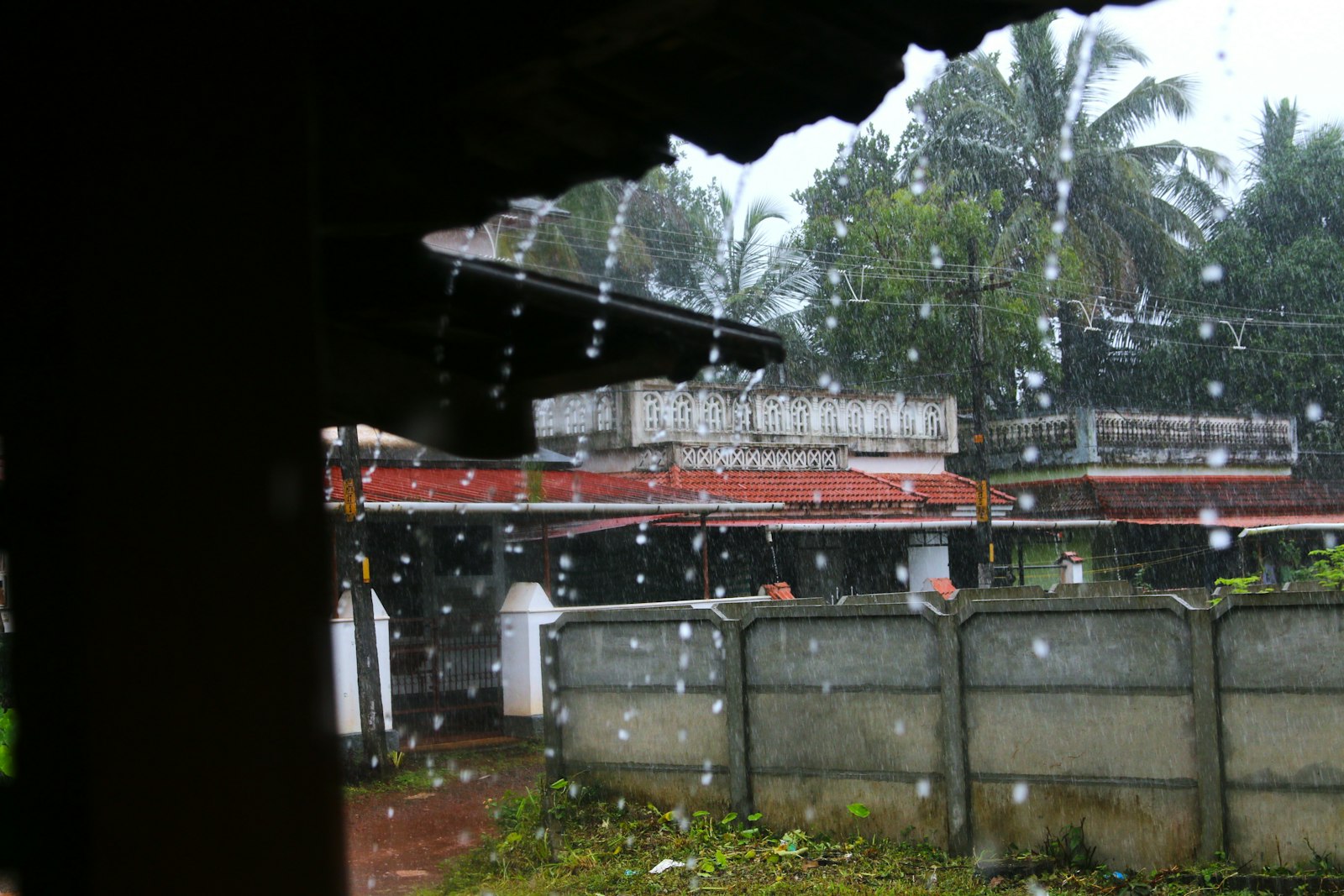
Beyond regulatory CRZ compliance, Mangalore's coastal properties face genuine monsoon-season exposure given the city's position on the Arabian Sea and its documented heavy annual rainfall. Coastal erosion — the same phenomenon contributing to the HTL boundary uncertainty discussed above — is itself partly a climate and monsoon-driven process, meaning today's HTL-compliant property could face a genuinely different coastline configuration in coming years. Buyers should ask developers directly about coastal erosion mitigation measures for any immediate-shoreline project, and should not treat a property's current HTL distance as a permanently fixed, unchanging fact.
Practical Due Diligence Checklist for Coastal Mangalore Property
- Request the specific CRZ classification (I, II, or III) for the exact plot in writing from the developer or seller, not a general locality-level assurance
- Independently verify current HTL distance and classification through the Karnataka State Coastal Zone Management Authority or the Dakshina Kannada District Coastal Management Committee where the transaction size warrants it
- Cross-check underlying land records directly on the Bhoomi RTC portal before relying solely on developer-provided documentation
- Treat any marketing claim of upcoming CRZ relaxation as speculative rather than settled, since any such change requires central government gazette notification
- For larger developments, confirm Environmental Impact Assessment approval status directly rather than assuming it based on RERA registration alone
- Independently verify RERA registration for any specific project on the Karnataka RERA portal
- For any coastal or elevated "sea view" project specifically, verify the claim applies to your specific floor and unit, not just the building's general location, since view quality can vary meaningfully between towers on the same site
How This Affects Specific Mangalore Localities
Not every Mangalore locality marketed with sea-adjacent appeal carries the same CRZ exposure. Mannagudda's limited, specific sea-facing tower stock makes individual project CRZ verification particularly important given how few genuinely sea-facing options exist there. Kadri Hills' elevated positioning gives it Arabian Sea views without necessarily sitting within the tightest CRZ setback bands that apply to ground-level, immediate-shoreline construction — though this should still be verified per project rather than assumed from elevation alone. Buyers should treat CRZ verification as a per-project requirement across any Mangalore locality with coastal proximity, not as a concern limited to one specific named area.
Comparing Mangalore's CRZ Exposure to Udupi and Uttara Kannada
Dakshina Kannada shares its coastal regulatory framework with Karnataka's two other coastal districts, Udupi and Uttara Kannada, under the same 2019 CRZ notification and the same state Coastal Zone Management Plan. However, the specific CRZ classification mix differs by district — under the earlier 2011-era planning, only around 60 percent of Dakshina Kannada's CRZ area fell under the more permissive CRZ-II classification, compared with roughly 10 percent in Udupi, reflecting Dakshina Kannada's more urbanised coastal stretch relative to Udupi's comparatively less-developed coastline. This means a buyer comparing coastal property between Mangalore and, say, Udupi's Malpe or Kaup areas should not assume identical CRZ treatment simply because both districts share the same overarching notification — the underlying classification mix, and therefore practical construction flexibility, genuinely differs.
Insurance Considerations for Coastal Property
Beyond CRZ compliance itself, coastal property in Mangalore carries insurance considerations worth addressing separately from standard structural coverage. Given the documented coastal erosion and monsoon exposure discussed above, buyers should specifically confirm whether a standard home insurance policy's flood and water-damage coverage extends to storm-surge or coastal-erosion-related damage, since some standard policies exclude these as a distinct peril requiring separate rider coverage. This is a genuinely different consideration from the structural defect liability period a developer provides, and buyers should raise it directly with their insurer rather than assuming standard coverage is comprehensive for a coastal address specifically.
Property Tax and Registration: Not Affected by CRZ Status Directly
A property's CRZ classification does not itself change the standard Karnataka registration process — stamp duty, registration fee, and cess still apply at the standard rates through the Kaveri Online portal regardless of CRZ status. What CRZ classification does affect is whether a specific construction was legally permitted in the first place — a genuinely more serious concern than a registration technicality, since an unauthorized CRZ-violating structure carries real legal exposure regardless of how cleanly its registration paperwork appears on the surface.
Who This Guide Is Most Relevant For
This guide matters most directly for buyers specifically considering property within a few hundred metres of Mangalore's actual shoreline or its major rivers, where CRZ classification and HTL distance genuinely determine what can legally be built or modified. It matters less for buyers considering inland Mangalore localities with no meaningful coastal or riverine proximity, where standard MCC building bye-laws and Karnataka registration processes apply without the additional CRZ layer discussed here. If you are uncertain whether your specific shortlisted property falls within a CRZ-regulated distance, that uncertainty itself is a signal to verify directly with the Karnataka State Coastal Zone Management Authority or the Dakshina Kannada District Coastal Management Committee before proceeding, rather than assuming either way.
NRI buyers specifically drawn to Mangalore's coastal properties for their sea-view appeal — a genuine and common draw given the size of Mangalore's Gulf-connected NRI population — should treat CRZ verification as an essential addition to the standard FEMA and registration checks covered in our Gulf NRI guide, not a replacement for them. Both verification tracks matter independently for any coastal purchase.
Closing Summary
CRZ compliance for Mangalore coastal property is a genuinely more consequential due diligence step here than in many other Indian coastal markets, given the documented violation history, the HTL boundary uncertainty tied to ongoing coastal erosion, and the recency of the current 2019-notification classification maps. Treat any coastal property's CRZ status as requiring the same independent verification rigor as RERA registration and title documents — not a secondary concern to address only if time permits, but a core part of the purchase decision for any property genuinely close to Mangalore's shoreline or its rivers.
Frequently Asked Questions
What CRZ classification does Mangalore fall under?
Mangalore falls under CRZ-II, the classification applied to developed municipal coastal areas, permitting landward-side construction subject to height, setback, and sewage disposal rules.
How far does the CRZ regulated zone extend from the shoreline?
500 metres from the shoreline and 50 metres from rivers under current CRZ guidelines, though the exact High Tide Line boundary can be genuinely contested along parts of the Dakshina Kannada coast due to coastal erosion.
Have there been real CRZ violations in Dakshina Kannada?
Yes. At least 55 instances of unauthorized coastal development have been officially recorded in the district over a recent two-year period, particularly along riverbanks and coastal belts.
Who regulates CRZ compliance in Mangalore?
The Karnataka State Coastal Zone Management Authority, headquartered in Bangalore, with the Dakshina Kannada District Coastal Management Committee assisting at the local level.
Does every sea-view property in Mangalore require CRZ verification?
Yes. Given documented HTL boundary uncertainty and recorded violations in the district, independent CRZ and HTL verification is a genuine due diligence step for any coastal or sea-view property, not a formality to skip.
Is CRZ relaxation coming to Mangalore's coastline?
State officials have pursued relaxation requests to support coastal tourism development, but any such change requires central government gazette notification. Treat this as a pending proposal, not a confirmed current fact.
Does Mangalore have the same CRZ classification mix as Udupi?
No. Dakshina Kannada has historically had a considerably higher proportion of its coastal area under the more permissive CRZ-II classification compared with Udupi, reflecting Dakshina Kannada's more urbanised coastline.
Does standard home insurance cover coastal erosion damage in Mangalore?
Not always. Some standard policies exclude storm-surge or coastal-erosion damage as a distinct peril. Confirm this specifically with your insurer for any coastal Mangalore property rather than assuming standard coverage is comprehensive.
What happens if a property is found to violate CRZ norms?
CRZ violations carry genuine legal exposure under the Environment Protection Act and can result in demolition orders, regardless of how long a structure has stood or how clean its other paperwork appears.
Considering a coastal property purchase in Mangalore? Send your budget and priorities to 9902330233 on WhatsApp, or email reach@onecityproperty.com — we'll help you verify CRZ status and documentation before you commit.



News insight
 25/07/2026
Inheritance and Succession Property Rules: Mangalore Context
Aliyasantana history still affects Mangalore property titles today. Inheritance, succession certific...
 24/07/2026
Building Plan Approval Process: Mangalore City Corporation
MCC own building plan approval process, distinct from Bangalore BBMP - including the 2024-launched B...
 24/07/2026
RERA Karnataka Registration Check for Mangalore Projects
How to verify any Mangalore project RERA registration directly on the official Karnataka portal - st...