

Buy Property in Mangalore from the Gulf: Complete NRI Guide 2026

Quick answer: NRIs based in the Gulf can buy residential and commercial property in Mangalore without RBI approval, provided they hold an Indian passport and pay through NRE, NRO or FCNR accounts. Agricultural land, plantation property and farmhouses are not permitted. Most Gulf-based buyers complete the purchase through a registered Power of Attorney.
For available properties in Mangalore, see Falnir house for Sale in Mangalore and House in Padil, Mangalore on OneCity Property.
Published: 21 July 2026 | Updated on: 1 August 2026 | By L K Monu Borkala, CEO & Founder, OneCity Property — 15 years of property consultancy experience and over 20 years in marketing and management at OneCity Technologies Pvt. Ltd.
If you're a Gulf NRI from coastal Karnataka, there's a good chance every property guide you've read online was written for Bangalore, with Mangalore mentioned as an afterthought. This one is different. Mangalore is the primary subject here, not a footnote, because for a huge number of Gulf NRIs with roots in Dakshina Kannada, Udupi, or the wider Tulu Nadu region, Mangalore isn't the secondary option, it's the actual homecoming.
Why Mangalore, Not Just Bangalore
The Mangalore-Gulf corridor is one of the oldest and deepest migration relationships in Indian coastal history. Tulu Nadu has been sending workers to the Gulf for three generations, going back well before the oil boom that most people associate with Indian Gulf migration, the connection to Oman and Bahrain specifically predates the 1970s wave that built the broader Gulf-Indian diaspora.
For Gulf NRIs whose family and social roots are in coastal Karnataka rather than Bangalore, buying in Mangalore isn't a compromise or a budget alternative, it's the actual destination, often chosen specifically over Bangalore precisely because it's home. That said, the financial case is strong too: Mangalore offers residential property at 30 to 50% lower entry prices than comparable quality construction in Bangalore, while still benefiting from consistent rental demand driven by Manipal University's affiliated colleges, KMC Hospital, NITK Surathkal, and the growing employment base around New Mangalore Port and its associated logistics sector.
The banking heritage point is worth dwelling on briefly, because it has a practical modern implication: Canara Bank and Corporation Bank (the latter now merged into Union Bank of India) were both founded in the Mangalore region, and this history left behind an unusually dense concentration of bank branches, NRE/NRO account specialists, and staff experienced specifically with NRI remittance and property-purchase paperwork across Dakshina Kannada. Karnataka Bank, also headquartered in Mangalore, adds to this. In practice, this means Gulf NRIs buying in Mangalore are less likely to encounter a bank branch unfamiliar with NRE fund transfers or repatriation documentation than they might in a newer, less NRI-saturated city, a small but real convenience when you're managing paperwork from thousands of kilometres away.

Can Gulf NRIs Legally Buy Property in Mangalore?
Yes, without needing special RBI approval. Under the Foreign Exchange Management Act (FEMA), 1999, NRIs and OCI cardholders can freely purchase residential and commercial property anywhere in India, including Mangalore, subject to a few standing rules that apply regardless of which Gulf country you're writing from:
- Payment must route through an NRE (Non-Resident External) or NRO (Non-Resident Ordinary) account, or via authorised banking channels directly from abroad, cash transactions are not permitted
- NRIs cannot purchase agricultural land, plantation property, or farmhouses in India, including in the agriculturally rich Dakshina Kannada countryside, this matters specifically in Mangalore, where a meaningful share of family-owned coastal and semi-rural land still carries agricultural classification
- A registered Power of Attorney (PoA) can authorise a trusted representative to complete registration on your behalf if you cannot be physically present, which is the standard route most Gulf-based buyers use
- Repatriation of sale proceeds is permitted subject to conditions, generally limited to the original investment amount and subject to a lifetime cap of USD 1 million per financial year for NRO-funded purchases
These rules are identical whether you're buying in Bangalore or Mangalore: FEMA doesn't distinguish by city. What differs between the two cities is the civic administration, the coastal-specific regulations, and the registration process specifics, which is where Mangalore requires its own dedicated understanding.
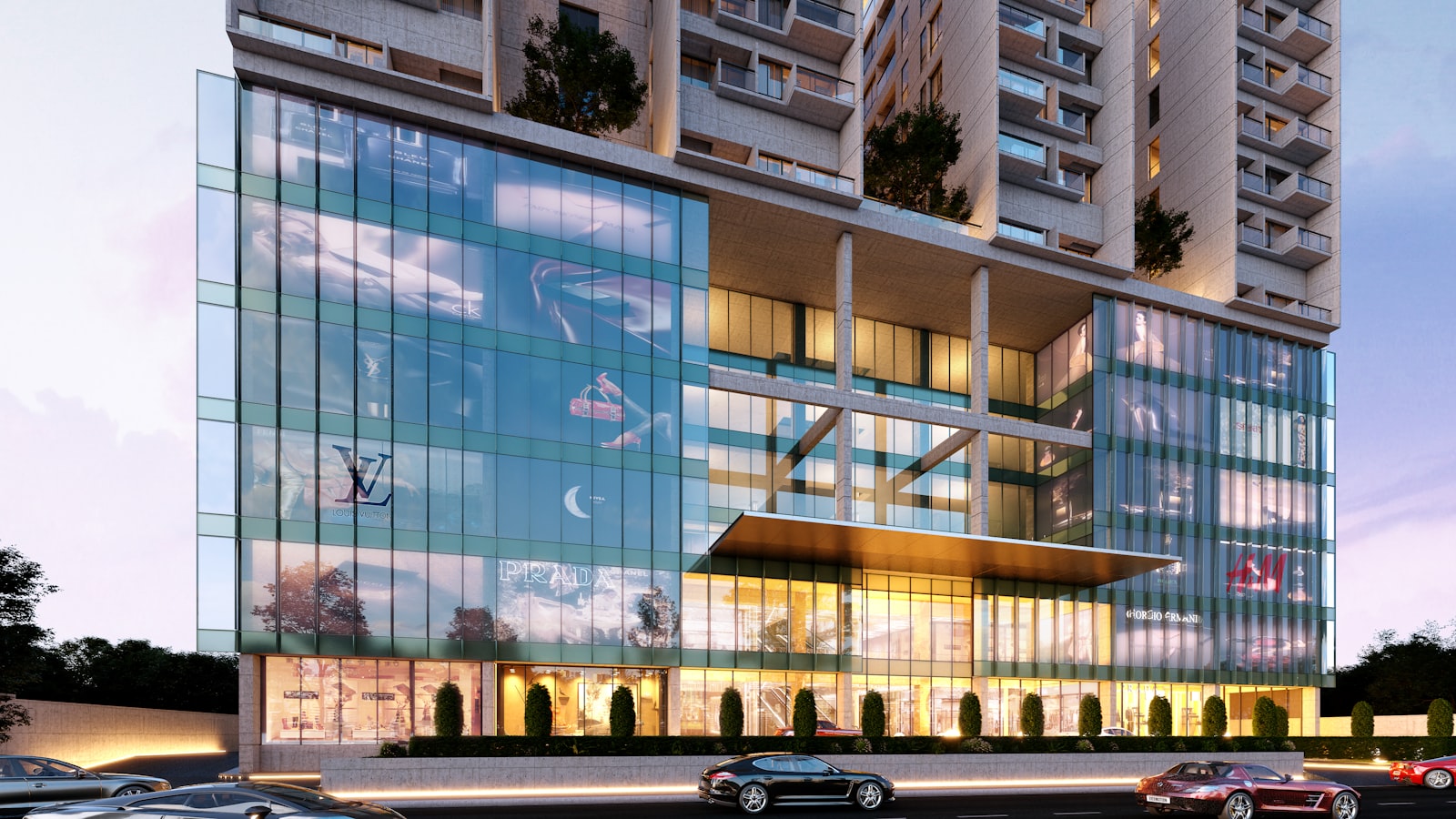
The One Thing Bangalore Guides Never Cover: CRZ and Sea-Facing Property
This is the single most important technical difference between buying in Mangalore and buying in Bangalore, and it's a section you won't find in any Bangalore-focused NRI guide, because Bangalore has no coastline. A significant share of Mangalore's most heavily marketed inventory, and several of the projects listed later in this guide, are sold specifically on "sea view" or "sea-facing" positioning. Before that view becomes a reason to pay a premium, understand what governs it.
The Coastal Regulation Zone (CRZ), notified under the Environment Protection Act by the Ministry of Environment, Forest and Climate Change, restricts construction along India's coastline based on distance from the High Tide Line (HTL). Coastal land up to 500 metres from the HTL, and land up to 100 metres along the banks of tidally influenced rivers, creeks, and backwaters, falls under CRZ jurisdiction, split into four categories:
- CRZ-I:Ecologically sensitive areas, mangroves, sand dunes, reserve forests. Construction is essentially prohibited.
- CRZ-II:Developed areas within existing municipal limits along the shoreline, this is the category most relevant to Mangalore's existing coastal residential zones. Unauthorised construction is restricted, but authorised structures can be reconstructed, generally on the landward side.
- CRZ-III:Relatively undisturbed rural and peri-urban coastal stretches, with a No Development Zone typically spanning 200 to 500 metres from the HTL.
- CRZ-IV:Water area from the Low Tide Line to territorial limits, not directly relevant to residential purchase.
Here's the practical trap buyers fall into: the High Tide Line is not what you see when you visit a plot. It's a permanent, surveyed geographic coordinate representing the sea's highest reach during spring tide, not the waterline on the day you happen to visit, which is routinely much further out at low tide. A broker showing you a plot at low tide and gesturing at a distant waterline is not lying about what you're seeing, but the visual is not the legal measurement that matters. Before paying any premium for "sea-facing" or "sea view" positioning, or before considering any future construction, renovation, or expansion on a coastal Mangalore property, get the actual CRZ classification and HTL distance verified through the Karnataka State Coastal Zone Management Authorityor a licensed surveyor, not through a sales brochure's description.

For NRIs specifically, this matters twice over: once for your own peace of mind about what you're actually buying, and again because a future resale to a domestic buyer who does their own CRZ diligence will surface any issue eventually, so it's better to know now than to discover it as a problem when you try to sell.
Mangalore City Corporation, Not BBMP or GBA
If you've read anything about Bangalore property recently, you've likely encountered BBMP or the newer Greater Bengaluru Authority (GBA). Neither applies in Mangalore. Civic administration here falls under the Mangalore City Corporation (MCC), a separate body with its own property tax system, Khata process, and building approval framework. Don't assume rules, forms, or processes you've read about for Bangalore carry over directly, confirm MCC-specific requirements for property tax assessment, Khata transfer, and building plan approval directly, since these are administered independently of anything happening in Bangalore's civic structure.

Registration: Sub-Registrar Offices and Remote Purchase via Power of Attorney
Dakshina Kannada district has multiple Sub-Registrar offices, with Mangalore City and Mangalore Taluk as the two primary offices serving the city itself, alongside taluk-level offices in Bantwal, Puttur, Belthangadi, Sulya, and Mulki for properties in those areas. Property registration in Karnataka, including Mangalore, requires physical presence at the Sub-Registrar Office for biometric verification, document preparation, stamp duty payment, and appointment booking can be handled online, but the final registration step itself cannot be completed remotely by the buyer in person.
This is exactly why a registered Power of Attorney matters so much for Gulf-based buyers: with a properly executed and registered PoA, a trusted representative can complete the Sub-Registrar Office formalities on your behalf, meaning you do not need to fly back to India for the registration appointment itself. As a useful practical note, the Karnataka government has moved to keep the Mangaluru City sub-registrar office (among others statewide) open on weekends and holidays, worth confirming current hours directly if you're planning a short trip home specifically to handle registration in person, since a weekend appointment could mean not needing to take leave from your Gulf employer at all.

Real Projects Currently Available Across Mangalore's Key Localities
OneCity Property tracks Mangalore's active project market directly. Here's a genuine cross-section by locality, not a marketing list:
Kadri Hills: Mangalore's premier hilltop address, popular specifically among Gulf NRIs for its elevated Arabian Sea views. Landtrades Shivabaghoffers ultra-luxury 3 to 6 BHK homes with Arabian Sea views, and NorthernSky Excelsaadds LEED-certified 2, 3 & 4 BHK options in the same hills, while Rohan Garden Shivbaghand Udbhav Chinmayaround out the corridor's mid-to-premium range.
Mannagudda and Central Mangalore: Rohan Sea Viewis a 30-unit, whole-floor 4 BHK sea-facing tower in central Mangalore, one of the more prestigious addresses for NRI buyers wanting a central, established location alongside a genuine sea view (subject to the CRZ verification discussed above).
Surathkal and Kulai (North Mangalore, near NITK): Rohan Marina Onein Surathkal and Yamuna Sky Cityin Kulai both sit close to NITK Surathkal and the airport road corridor, relevant if student or academic-staff rental demand is part of your investment thesis.
Bejai and Bendoorwell: Prestige Valley Crestand Rohan Cityin Bejai offer more centrally located, family-oriented options, while Land Trade Altitudein Bendoorwell adds a smaller-format luxury option.
Derebail: Mukund Kedaroffers duplex 2, 3 & 4 BHK homes with infinity pools on Airport Road, a newer-format option for buyers wanting contemporary amenities.
What Actually Drives Rental Demand in Mangalore
Unlike Bangalore, where IT-sector employment is the dominant rental demand driver, Mangalore's rental market rests on a different, arguably more stable set of institutions. Manipal University's affiliated colleges bring a large, recurring student population needing rental housing every academic year. KMC Hospital and Mangalore's broader healthcare sector, the city has long been a regional medical hub, draws patients, families, and medical staff from across coastal Karnataka and beyond. NITK Surathkal adds a technical academic and research population with its own distinct housing needs near the Surathkal and Kulai corridor. The New Mangalore Port and its associated logistics, shipping, and industrial employment base add a further, less IT-cycle-dependent layer of rental demand than what drives Bangalore's suburbs.
This mix means Mangalore's rental market doesn't move in lockstep with IT hiring cycles the way Bangalore's does, a genuine diversification benefit for an NRI investor already holding, or considering, Bangalore property as part of a broader Karnataka portfolio.
Worth stating plainly: Mangalore's overall market moves at a different pace than Bangalore's. Bangalore's IT-driven corridors can see faster appreciation cycles during boom periods, but also sharper corrections when hiring slows. Mangalore's more diversified base, education, healthcare, port logistics, and a steady flow of NRI-funded purchases rather than pure rental-yield-driven investment, tends to produce steadier, less dramatic price movement in either direction. For a Gulf NRI thinking in decades rather than quarters, and particularly for one planning eventual retirement or return to coastal Karnataka rather than pure financial return, this steadiness is often the more relevant characteristic than headline appreciation percentages.
What Is the Due Diligence Checklist for Gulf NRIs Buying in Mangalore?
- For any coastal or "sea view" property, independently verify the CRZ classification and HTL distance through the Karnataka State Coastal Zone Management Authoritybefore paying any premium tied to the sea view
- Confirm the property's Khata status directly with Mangalore City Corporation, do not assume Bangalore's Khata process or terminology applies identically
- If the land has any semi-agricultural history or sits on Mangalore's rural-urban fringe, confirm its exact current land classification, since NRIs cannot purchase land classified as agricultural
- Route all payments through your NRE or NRO account via authorised banking channels, and retain the paperwork, since this documentation matters for both compliance and any future repatriation
- If registering via Power of Attorney, verify the PoA is properly drafted, notarised or apostilled as required for your specific Gulf country, and registered in India before your representative attempts to act on it
- Independently verify the developer's RERA registration for the specific project and phase on the Karnataka RERA portal
- Pull an Encumbrance Certificate covering the full available title history before finalising any purchase
A Final Word on Timing
One last practical point worth raising: exchange rate movements between your Gulf currency and the rupee affect the real cost of a Mangalore purchase, sometimes by a meaningful margin over the weeks or months it takes to finalise a deal. A weaker rupee stretches your Gulf salary further in INR terms, and this has been a real, documented factor in recent NRI buying patterns across Indian real estate markets generally. That said, don't let short-term currency timing become the deciding factor over the fundamentals \u2014 the right unit, the right locality, and clean title matter more to your long-term outcome than whether you happened to transfer funds during a particularly favourable week for the exchange rate. Use a currency-timing advantage as a bonus if it happens to align with your purchase timeline, not as the reason to rush a decision you haven't otherwise fully verified.
Who This Suits
This guide is written for Gulf-based NRIs and OCI holders with genuine roots in Dakshina Kannada, Udupi, or the wider coastal Karnataka region, who are considering Mangalore as a primary investment or homecoming destination rather than a secondary alternative to Bangalore. It suits buyers who want a lower entry price than Bangalore, value the emotional and family connection of investing in their home city, and are prepared to handle the coastal-specific due diligence (CRZ, MCC-specific processes) that a generic Bangalore-focused guide simply doesn't cover.
Comparing a Mangalore Purchase to Continuing to Rent
For Gulf NRIs weighing whether to buy now versus wait, it's worth being direct about the calculation rather than assuming property is automatically the right move. Mangalore's rental yields for well-located apartments typically run in a range that makes renting out a purchased unit a modest but real income stream rather than a primary return driver \u2014 the bulk of the investment case for most NRI buyers rests on long-term appreciation and the emotional value of ownership in the home region, not on rental income alone. If your primary goal is pure financial return with no emotional or homecoming component, it's worth comparing Mangalore property against other asset classes available to you as an NRI, including Indian mutual funds, fixed deposits in NRE accounts, and property in other Indian cities, rather than assuming real estate in your home city is automatically the optimal choice purely on investment grounds. Where Mangalore wins over these alternatives is for buyers who want a physical asset and a place to return to, not merely a return on capital \u2014 be honest with yourself about which of these you're actually optimising for before committing.
Which Documents Should You Collect for a Mangalore Purchase?
For an under-construction purchase, expect to collect the RERA registration certificate for the specific project and phase, the sanctioned building plan, land title documents, an Encumbrance Certificate covering the full available history, the draft sale agreement, and the construction-linked payment schedule tied to RERA-mandated milestones. For a resale or completed-unit purchase, add the Occupancy Certificate, the existing chain of prior sale deeds, current Khata certificate and extract from Mangalore City Corporation, and recent property tax payment receipts. If the property carries any coastal or sea-facing positioning, add the CRZ classification certificate and HTL survey documentation discussed earlier in this guide \u2014 don't proceed to registration without it.
Succession Planning: What Happens to a Mangalore Property If Something Happens to You
This is worth raising even though it's an uncomfortable topic, because it's more relevant for NRI-owned property than for a property you live in and manage day to day. A Mangalore property purchased from the Gulf, held by an owner who spends most of the year abroad, and potentially inherited by heirs who are themselves scattered across the Gulf, elsewhere in India, or further abroad, creates a more complex succession situation than a locally-held, locally-occupied home.
A clearly drafted will, registered if possible, specifying exactly how the Mangalore property should pass to your heirs, is worth arranging alongside the purchase itself rather than treating it as a separate, later task. Without one, the property would be governed by intestate succession law applicable to your religion and personal law, which can produce a division of ownership among multiple heirs that none of them individually wanted or planned for, and which can be difficult to untangle from abroad. If you already hold other property in Bangalore, Mangalore, or elsewhere in Karnataka, make sure your will addresses your full property portfolio coherently rather than in isolated, potentially conflicting pieces drafted at different times. This is a conversation worth having with a property lawyer at the time of purchase, not deferred to some future point.
Country-Specific Guides for Every Major Gulf Market
If you want the specifics for your own country rather than the general Gulf overview above, each of the following covers exactly what changes for that market: currency and purchasing power, how a Power of Attorney gets recognised in India, the current tax treaty position, direct flight connectivity to Mangalore, and where local NRIs are actually buying.
- UAE: no personal income tax, not a Hague Apostille member, strong direct Dubai to Mangalore connectivity
- Saudi Arabia: joined the Hague Apostille Convention in 2022, simplifying PoA attestation
- Kuwait: the world's strongest currency by value, embassy attestation required for the PoA
- Qatar: a real, recently renewed DTAA with India, embassy based PoA attestation
- Bahrain: a Hague Apostille member since 2013, though currently only an information exchange tax agreement with India
- Oman: the earliest Gulf Apostille member, from 2011, a genuine functioning DTAA, and the shortest flight time to Mangalore in the region
Frequently Asked Questions
Can Gulf NRIs buy property in Mangalore without visiting India?
Yes, through a registered Power of Attorney authorising a trusted representative to complete the Sub-Registrar Office formalities, since Karnataka registration requires physical presence for biometric verification that the buyer cannot complete remotely in person.
Is "sea view" or "sea-facing" marketing in Mangalore reliable?
Not automatically. Verify the actual CRZ classification and High Tide Line distance independently rather than relying on a sales brochure, since the HTL is a fixed surveyed coordinate, not the waterline visible on the day you visit a low-tide site.
How much cheaper is Mangalore than Bangalore for comparable property?
Roughly 30 to 50% lower entry prices for comparable quality construction, based on current market comparisons across similar project tiers.
Which civic body handles property tax and Khata in Mangalore?
The Mangalore City Corporation (MCC), entirely separate from BBMP or GBA, which govern Bangalore. Don't assume Bangalore-specific processes apply.
Can NRIs buy agricultural land in Mangalore or nearby villages?
No. FEMA prohibits NRIs from purchasing agricultural land, plantation property, or farmhouses anywhere in India, including in Dakshina Kannada's semi-rural and coastal fringe areas.
What drives rental demand in Mangalore compared to Bangalore?
Manipal University's affiliated colleges, KMC Hospital and the healthcare sector, NITK Surathkal, and New Mangalore Port's logistics and industrial employment, a different, less IT-cycle-dependent mix than Bangalore's rental market.
Considering a Mangalore purchase from the Gulf? Send us your target locality and budget on WhatsApp at 076768 70876, we'll help you shortlist verified projects and walk through the CRZ and registration specifics for your exact situation. For the broader Bangalore side of NRI investment, see our general NRI property buying guideand the six country-specific Gulf guides listed above.
Written by L K Monu Borkala
Need expert property advice?
OneCity Property offers independent advisory across Bangalore, Mangalore and Mysore. Zero commission for buyers on projects under ₹1 Cr.
💬 WhatsApp Us📞 Call 076768 70876


News insight
 25/08/2026
How Namma Metro Changed Whitefield Property Prices: A Data-Backed Analysis
How the Purple Line metro changed Whitefield property prices - measurable 10-15% premium data, stati...
 24/08/2026
Bengaluru-Mysuru Expressway: The Complete Route, Property Impact, and Buying Guide
The 119 km Bengaluru-Mysuru Expressway explained honestly - every bypass town from Bidadi to Mysuru,...
 24/08/2026
Satellite Town Ring Road (STRR): The Complete Route, Status, and Real Estate Guide
The 280.8 km STRR explained honestly - real, verified construction status stretch by stretch, includ...