
NRI Guide: Buying Property in Mangalore from Qatar
Published: 30 July 2026 | Updated on: 30 July 2026 | By L K Monu Borkala, Senior Property Advisor, 15 Years in Bangalore & Karnataka Real Estate
Quick answer: NRIs based in Qatar can buy residential property in Mangalore without being physically present at every step, provided they execute a valid Power of Attorney at the Indian Embassy in Doha and route all payments through normal banking channels under FEMA. Unlike Saudi Arabia, Qatar is not a member of the Hague Apostille Convention, so property documents typically go through consular attestation rather than a single-step apostille. The revised India-Qatar tax treaty came into force in September 2025, though capital gains on property located in India remain taxable in India regardless of treaty status.
For the general Gulf-wide overview covering FEMA rules, CRZ verification for coastal property, and Mangalore City Corporation specifics that apply regardless of which Gulf country you're writing from, see our Gulf NRI guide.
Why Qatar-Based NRIs Are Buying Property in Mangalore
Indians form the single largest expatriate community in Qatar. Estimates vary because Qatar does not publish an official nationality-wise population breakdown, but recent figures place the Indian population somewhere between 700,000 and 800,000, roughly a quarter of the country's total population. The community includes a long-standing presence of Malayalam, Tamil, Telugu, and other South Indian speakers alongside migrants from northern states, and it has included coastal Karnataka families for decades.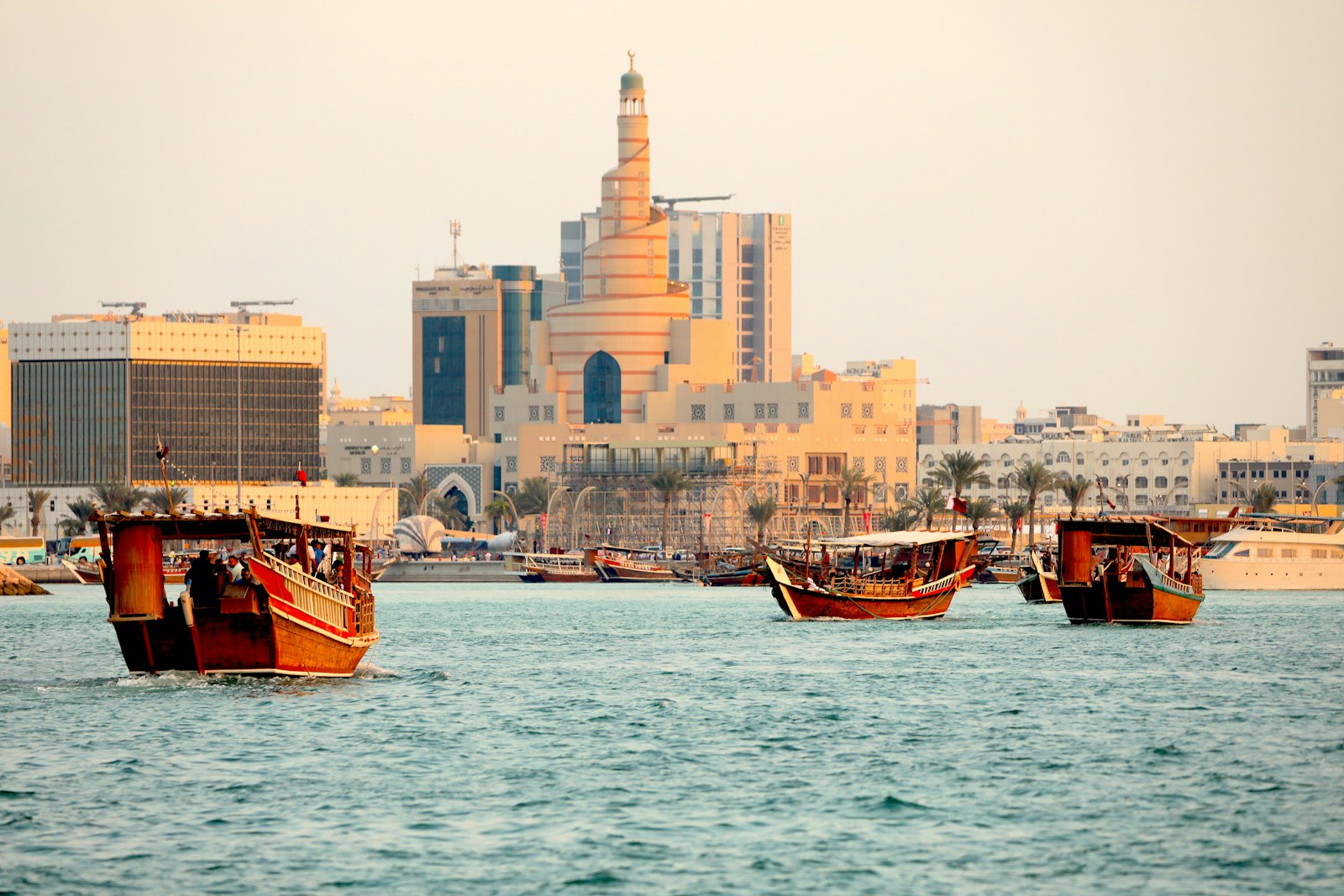 Many Konkani, Tulu, and Beary-speaking households from Dakshina Kannada and Udupi have a Gulf migration history that runs through Qatar as much as the UAE or Saudi Arabia.
For this group, Mangalore offers something Doha real estate does not: a coastal hometown with family ties, a milder cost of entry than Bangalore's saturated micro-markets, and a realistic retirement or eventual-return option. Others buy purely as an investment, treating a Mangalore flat or plot as a rupee-denominated asset that diversifies away from Gulf-only savings. A working understanding of local pricing helps before committing capital; our UAE NRI guide and Saudi Arabia NRI guide cover the same fundamentals for Gulf-based buyers generally, and this page focuses on what is different for Qatar specifically.
Coastal Karnataka's outward migration to the Gulf is not a recent phenomenon. Dakshina Kannada and Udupi districts have sent workers, tradespeople, and increasingly white-collar professionals to Gulf economies since well before the 1970s oil boom, and Qatar's own construction and energy sectors absorbed a meaningful share of that flow. Entire neighbourhoods in Mangalore, Bejai, Kadri, Kottara, and parts of Surathkal among them, carry visible signs of this Gulf-linked prosperity in the form of well-built homes funded by decades of remittances. That history matters practically: it means the local ecosystem, advocates, sub-registrars, and property advisors accustomed to NRI paperwork, is well accustomed to handling Gulf-originated purchases, which is not always true in markets with a thinner NRI buyer base.
Qatari Riyal Purchasing Power: What Your Savings Buy in Mangalore
The Qatari Riyal (QAR) has traded in a roughly Rs 24 to Rs 27 band against the Indian Rupee over the past year, and it moves week to week, so always check the live rate before converting a budget figure. As a working reference at the time of writing, 1 QAR converts to approximately Rs 26.
Worked example: an NRI with QR 500,000 in savings, at an indicative rate of Rs 26 per Riyal, is looking at roughly Rs 1.3 crore once converted. Depending on locality and project stage, that budget can realistically stretch to a mid-sized apartment in an established Mangalore neighbourhood, or further in a developing locality still building out its infrastructure. We deliberately avoid quoting per-square-foot figures on this page, since prices move by locality and by month; our locality-specific guides and individual project pages carry current, verified numbers, and we would rather point you to those than risk giving you a stale figure here.
One practical tip: because QAR/INR volatility has been meaningful (moving between roughly Rs 23.8 and Rs 26.6 over a 12-month window in the data we checked), timing a large one-time transfer around a favourable rate day, rather than converting piecemeal, can make a real difference on a property-sized sum.
A second, smaller scenario: an NRI setting aside QR 200,000 a year toward a future purchase, again at roughly Rs 26, is accumulating around Rs 52 lakh annually, which is enough to plan a plot purchase or a down payment on a mid-range apartment within two to three years of disciplined saving, well before any home loan is even needed. Compare that to Doha's own rental and property costs, where a family often has little left over after housing, transport, and school fees, and the case for building an equity position back home becomes clearer. This is one reason many Qatar-based families treat a Mangalore purchase as a parallel goal alongside their Gulf living expenses rather than something to defer until a final return.
Is Qatar Part of the Hague Apostille Convention?
No. As of the most recent verified status tables, Qatar is not a Contracting Party to the 1961 Hague Apostille Convention. This is a meaningful difference from Saudi Arabia, which joined the Convention in December 2022 and now accepts a single-step apostille on many document types. For Qatar, documents that need to be recognised in India, and Indian documents that need to be recognised in Qatar, generally require full consular legalisation instead of an apostille.
In practice, this means a document is typically verified at the state or MEA level in India first, and then separately attested by the receiving country's embassy or ministry, rather than carrying a single apostille certificate that both sides accept automatically. For Power of Attorney documents specifically, the Embassy of India in Doha offers its own direct attestation service, which sidesteps the need to route the document through Qatar's Ministry of Foreign Affairs first, and is the path most Qatar-based NRIs use for property transactions. We cover the exact steps in the next section. Because embassy procedures do change from time to time, always confirm current requirements directly with the embassy before booking travel or an appointment around them.
Verifying a Builder and Project Before You Wire Any Money
Buying remotely from Qatar removes your ability to walk a site, sit across the table from a builder, or notice the small warning signs a physical visit would surface, which makes upfront verification more important, not less. Before any advance or token payment leaves Qatar, confirm the project's registration number directly on the Karnataka RERA portal rather than trusting a number printed on a brochure, since aggregator sites and sales teams have occasionally quoted inconsistent RERA numbers for the same project.
Ask for the project's current completion percentage as recorded with RERA, not just the builder's verbal timeline, and cross-check the builder's track record against at least one other completed project rather than relying solely on their own marketing material. If pricing, unit sizes, or possession dates differ across the sources you check, and for pre-launch or aggregator-listed projects this is common, it is worth saying so plainly to whoever is selling you the unit rather than assuming the most favourable number is the accurate one. A property advisor working on your behalf in Mangalore should be willing to do this cross-checking for you and flag disagreements rather than paper over them.
How to Execute a Power of Attorney From Qatar for Your Mangalore Property Purchase
Most Qatar-based NRIs use a General Power of Attorney (GPA) or Special Power of Attorney (SPA) authorising a trusted person in Mangalore, often a family member or the seller's advocate acting on clear instructions, to complete registration on their behalf. The typical sequence looks like this:
- Draft the PoA in India first. Have an advocate in Mangalore draft the PoA to match Karnataka registration requirements, then send it to Qatar for signature rather than drafting it locally and hoping it fits Indian formats.
- Book an appointment at the Indian Embassy in Doha. The consular section handles PoA attestation directly, which is the simpler route compared to notarising locally in Qatar and then chasing MOFA and embassy attestation separately.
- Bring the right people and documents. Current embassy practice requires the document holder to appear in person with an original passport and QID, and to bring two witnesses who themselves hold valid Indian passports. This witness requirement is specific and has tightened in recent practice, so confirm it with the embassy before your appointment to avoid a wasted trip.
- The embassy attests the signature on the spot once documents and witnesses check out, and the attested PoA is usually ready the same day.
- Send the attested PoA to India by courier or in person.
- Get it adjudicated within three months of receipt in India. A Power of Attorney executed outside India must be stamped and adjudicated at the District Registrar or Collector's office in Karnataka before it can be used for a registered sale deed. This step is frequently missed and causes registration delays.
If, for any reason, the embassy's direct PoA service is not used, for instance for a document type it does not cover, the longer route is local notarisation in Qatar, attestation by Qatar's Ministry of Foreign Affairs, and then attestation by the Indian Embassy. This takes longer and involves more stops, so the embassy-direct route is worth attempting first for a straightforward property PoA.
Documents Checklist for Buying Property Remotely From Qatar
Keep the following ready before you start, since gaps here are the most common cause of delay for NRI purchases handled remotely:
- Valid passport and Qatar ID (QID) copies
- Attested and adjudicated Power of Attorney (see above)
- PAN card, which is mandatory for any property transaction in India
- Aadhaar card if you hold one, or an alternate accepted ID if you do not
- NRE or NRO bank account details in India for the transaction
- Proof of current address in Qatar
- Passport-size photographs
- Marriage certificate, if the property is being purchased jointly with a spouse
Registering the Sale Deed: What Happens at the Sub-Registrar's Office
Even with a valid, adjudicated Power of Attorney in place, the actual registration still happens at the jurisdictional Sub-Registrar's office in Mangalore, since Karnataka does not permit remote or online execution of a sale deed itself. Your PoA holder appears in person with the original PoA, the draft sale deed, encumbrance certificate, khata extract, and the seller's original title documents, and the registration follows the same process as it would for a resident buyer, just with the PoA holder signing on your behalf rather than you signing directly.
Stamp duty and registration charges in Karnataka are calculated on whichever is higher, the sale consideration or the guidance value (government-notified minimum value) for that locality, so it is worth checking the current guidance value for your specific street before finalising a price with the seller. Our stamp duty calculator lets you work out the exact figure for a given property value and buyer category before you commit funds.
Once registered, the buyer's name is updated in the local municipal records through a separate khata transfer or mutation process, which is not automatic and needs to be filed after registration. This is a common gap for NRI buyers who assume registration alone completes the paperwork; property tax and civic records will continue to show the previous owner until khata mutation is filed.
Sending Money From Qatar to India: Currency Exchange and Remittance Rules
Under FEMA, payment for Indian property must move through normal banking channels into an NRE, NRO, or FCNR account. Cash carried in personally, or funds moved through informal channels, do not satisfy this requirement and can create serious compliance problems later, particularly if you ever want to repatriate sale proceeds.
Within Qatar, remittances are typically arranged through exchange houses regulated by the Qatar Central Bank, such as Alfardan Exchange, Al Dar Exchange, and Al Mirqab Exchange, among others, or through direct bank wire transfer. Rates and fees vary between providers on any given day, so it is worth comparing two or three before moving a property-sized sum.
Whichever route you use, keep the Foreign Inward Remittance Certificate (FIRC) for every transfer connected to the purchase. You will not need it immediately, but it becomes essential documentation if you sell the property later and want to repatriate proceeds under RBI rules, a process we walk through later in this guide.
For remittances above the routine thresholds, your Indian bank will also ask for Form 15CA, a self-declaration of the remittance details, and in some cases Form 15CB, a chartered accountant's certificate confirming the correct tax has been accounted for. These forms are more commonly discussed in the context of money leaving India, but keeping your own transfer records organised from day one, dated, with bank reference numbers and purpose codes noted, saves real time if your bank or a future buyer's bank ever asks for a paper trail years later.
Flight Connectivity: Doha to Mangalore
Air India Express currently operates the only non-stop service between Doha (DOH) and Mangalore (IXE), running a few times a week with a flight time of roughly four hours and ten to twenty-five minutes. Qatar Airways itself does not fly this specific route non-stop; its own metal connects through Bengaluru or other hub airports instead, adding a layover.
For anyone planning a site visit, a registration appearance despite having a PoA in place, or simply a trip to see family, it is worth checking the non-stop schedule early and booking around it, since seats on the limited direct frequency fill up faster than on routes with daily service. If the direct schedule does not line up with your dates, connecting through Bengaluru and then a short domestic hop, or a road transfer, is the practical alternative.
Mangalore's airport itself handles a modest but steady mix of domestic and a handful of Gulf-bound international routes, so once you land, onward travel to most Dakshina Kannada and Udupi localities is a short drive rather than a further flight. Keep this route's limited weekly frequency in mind if your visit needs to align with a specific registration date, a bank appointment, or a builder's handover schedule, since rebooking around a missed direct flight can add a full day or more to a trip through a connecting city.
India-Qatar Tax Treaty: What Changed in 2025 and What It Means for Your Property Purchase
India and Qatar signed a renewed Double Taxation Avoidance Agreement on 18 February 2025, which entered into force on 10 September 2025 and was formally notified by India on 24 October 2025, replacing the original 1999 treaty. The update aligns the treaty with international Base Erosion and Profit Shifting (BEPS) standards and tightens several definitions, including how gains from shares deriving most of their value from immovable property are treated.
For an individual buying residential property in Mangalore, the point that matters most has not changed: capital gains on the sale of immovable property situated in India remain taxable in India under the treaty's source-state rule, regardless of where the seller is tax resident. Since Qatar levies no personal income tax, there is no Qatar-side tax bill for an individual NRI to offset in the first place, which means the DTAA's practical value for most Qatar-based property buyers lies more in clarity around withholding rates and anti-abuse alignment than in reducing personal capital gains tax on an Indian property sale.
TDS under Section 195 of the Income Tax Act still applies at the time of sale under India's domestic law, independent of the treaty. Given how specific and personal tax residency questions can get, particularly around RNOR status for anyone who has spent time in India recently, we would flag this as a point to confirm with a qualified chartered accountant for your specific situation rather than treat as settled from a general guide like this one.
The renewed treaty does matter more if your India-linked income extends beyond a single property. It updates definitional and anti-abuse provisions around dividends, interest, and hybrid financial instruments, and introduces a specific threshold for capital gains on shares that derive most of their value from immovable property, which is more relevant to structured investment vehicles than to a straightforward direct purchase of a flat or plot. The original 1999 treaty had run for a quarter century without this kind of modernisation, so the update mainly brings India-Qatar tax treatment in line with the newer treaties India has already signed with other trading partners, rather than changing anything specific to residential property buyers.
FEMA and RBI Rules Every Qatar-Based NRI Must Follow
Under FEMA rules administered by the RBI, NRIs can freely purchase residential and commercial property in India. The one significant restriction is agricultural land, plantation property, and farmhouses, which NRIs cannot buy without specific RBI permission. This restriction catches out buyers occasionally when a plot is described loosely as "land" without clarifying its revenue classification, so always confirm the land-use category before committing funds.
Funds for the purchase must originate from an NRE, NRO, or FCNR account, or arrive as a fresh inward remittance, rather than foreign currency carried in personally beyond declared limits. NRIs are also eligible for home loans from Indian banks, subject to standard eligibility and documentation requirements that differ slightly from resident lending criteria.
Managing Your Mangalore Property From Qatar After Purchase
Buying the property is the first half of the job; keeping it maintained, tenanted if you plan to rent it out, and compliant on paperwork from a few thousand kilometres away is the second half, and it is where many NRI owners lose track over time. If the property is left vacant, arrange periodic inspection visits through a family member or a paid caretaker service, since long-vacant homes in coastal Karnataka's humid climate need more upkeep than owners abroad tend to expect.
If you plan to rent it out, a local property management arrangement, even an informal one through your PoA holder, should cover tenant verification, rent collection into your NRO account, and basic maintenance, with you receiving periodic statements. Rental income is taxable in India and should be declared, and TDS rules apply differently depending on whether the tenant is an individual or a company, so keep this on your chartered accountant's checklist alongside the property purchase itself.
Finally, keep your PoA current. Some registrars and banks expect a PoA to be reasonably recent, and if the original PoA holder's circumstances change, a family relocation, a falling-out, or simply wanting to appoint someone else, you will need to execute a fresh PoA through the same Doha embassy process described earlier, and formally revoke the old one in India to avoid any ambiguity about who is authorised to act.
Common Mistakes Qatar-Based NRIs Make When Buying in Mangalore
- Assuming an apostille will work. It will not, since Qatar is not a Convention member; documents need consular attestation instead, and finding this out at the registrar's counter causes real delays.
- Missing the witness requirement at the Indian Embassy in Doha and having to reschedule an appointment because the witnesses did not hold Indian passports.
- Skipping adjudication of the PoA once it reaches India, which must happen within three months of receipt under Karnataka's stamp rules.
- Moving money through informal channels rather than normal banking routes, which creates FEMA compliance problems that only surface later, usually at resale.
- Skipping RERA verification on an off-plan project. Always verify a project's registration directly on the Karnataka RERA portal rather than relying on a builder's claim.
- Forgetting khata mutation after registration, which leaves municipal and property tax records showing the previous owner and can complicate a future resale.
- Letting the PoA go stale without revoking and replacing it when circumstances change, leaving genuine confusion about who is currently authorised to act on the property.
Repatriating Your Sale Proceeds Later
If you eventually sell the Mangalore property, repatriation of the proceeds abroad is subject to a lifetime cap for foreign-currency-funded residential purchases, currently limited to two properties, with commercial property exempt from that particular cap. The FIRC and remittance records you keep from the original purchase, described earlier in this guide, become the documentation that supports a clean repatriation later. Our full repatriation guide walks through the RBI process, the paperwork, and the common ways NRIs lose track of their original FIRCs.
Who Should Buy in Mangalore From Qatar?
This works well for NRIs with existing family or property ties to Dakshina Kannada or Udupi, anyone planning an eventual return or retirement to coastal Karnataka, and buyers looking to diversify a portion of Gulf savings into a rupee-denominated residential asset with realistic rental demand. It suits people less well if you expect to need frequent in-person presence, given the limited direct flight frequency; in that case, plan your travel around the fixed weekly schedule rather than assuming last-minute flexibility, or lean more heavily on a well-drafted PoA and a trusted local point of contact.
OCI cardholders based in Qatar follow largely the same property-buying process as NRIs for residential and commercial property, since the same FEMA framework applies to both; our OCI vs NRI property rights guide sets out the handful of areas where the two statuses actually diverge.
Mangalore or Udupi: Which Fits a Qatar-Based Buyer Better?
Many Qatar-based NRIs from coastal Karnataka weigh Mangalore against nearby Udupi, and the honest answer is that it depends on what you are optimising for rather than one city being categorically better. Mangalore carries more commercial density, a bigger rental pool driven by students and IT-adjacent employment, and the direct flight connectivity discussed earlier in this guide. Udupi tends to offer a quieter, more temple-town pace, often at a gentler entry price for comparable plot sizes, but with a thinner rental market and less frequent direct international connectivity of its own, meaning most Udupi-bound NRIs still route through Mangalore's airport regardless.
If rental yield and resale liquidity matter most to you, Mangalore's deeper market generally gives more options. If you are buying primarily for eventual personal use, retirement, or family continuity in a specific ancestral area, the right answer often comes down to where your family already holds land or ties, more than any citywide comparison can capture.
Working With OneCity Property
We work with Qatar-based NRIs on exactly this kind of remote purchase: verifying a project's RERA status and builder track record before you commit, coordinating the practical steps around registration with your PoA holder in Mangalore, and giving you a straight answer when a listing's claims do not match what we find. You can compare currency and remittance mechanics, tax treatment, and flight connectivity for other Gulf countries in our Kuwait and Singapore NRI guides, and check the rental math on any specific listing using our rental yield calculator before you commit.
Reach us on WhatsApp at 9606230962, by phone at 7676870876, or by email at reach@onecityproperty.com. You can read more about our advisory background on our Senior Property Advisor profile page.
Frequently Asked Questions
Is Qatar part of the Hague Apostille Convention?
No. Qatar is not currently a Contracting Party to the 1961 Hague Apostille Convention, unlike Saudi Arabia, which joined in December 2022. Documents for use in India generally need consular legalisation or embassy attestation rather than a single-step apostille. Always confirm current status directly with the relevant embassy, since accession status can change.
Can I buy property in Mangalore without travelling from Qatar?
Yes, using a Power of Attorney executed and attested at the Indian Embassy in Doha, then adjudicated in India within three months of receipt. Most Qatar-based NRIs handle the entire purchase this way, with a trusted person completing registration in Mangalore on their behalf.
How many witnesses do I need to execute a Power of Attorney at the Indian Embassy in Doha?
Current embassy practice requires two witnesses who themselves hold valid Indian passports, in addition to the document holder appearing in person with their own passport and QID. Confirm this requirement directly with the embassy before your appointment, since consular procedures can change.
Does the new India-Qatar tax treaty reduce capital gains tax on my Mangalore property?
Not directly. The renewed DTAA, in force since September 2025, keeps capital gains on Indian immovable property taxable in India under the treaty's source-state rule. Since Qatar has no personal income tax, there is no Qatar-side liability for an individual NRI to offset in the first place.
Are there direct flights from Doha to Mangalore?
Yes, but only on Air India Express, running a few times a week with a flight time of roughly four hours and ten to twenty-five minutes. Qatar Airways connects through Bengaluru or another hub rather than flying this route non-stop.
Which exchange houses in Qatar can I use to remit money to India for a property purchase?
Qatar Central Bank-regulated exchange houses such as Alfardan Exchange, Al Dar Exchange, and Al Mirqab Exchange are commonly used, alongside direct bank wire transfer. Compare rates and fees across providers, and always route the payment into an NRE, NRO, or FCNR account to stay FEMA-compliant.
Do I need to pay tax in Qatar on my Indian rental income?
Qatar does not levy personal income tax on individuals, so there is no Qatar-side tax on rental income from an Indian property. You will still need to account for it under Indian tax law, and we would recommend a chartered accountant confirm your specific filing obligations.
Can OCI cardholders based in Qatar buy property in Mangalore the same way as NRIs?
Largely yes, since the same FEMA framework governs residential and commercial property purchases for both NRIs and OCI cardholders. A small number of areas actually differ between the two statuses, covered in our OCI vs NRI property rights guide.
Can I get a home loan from an Indian bank while living in Qatar?
Yes. Most major Indian banks offer NRI home loans to Qatar-based applicants, typically requiring salary certificates, an employment contract, QID and passport copies, and repayment through your NRE or NRO account. Loan-to-value ratios and documentation requirements can differ from resident lending norms, so confirm current terms directly with the bank before assuming a resident-equivalent loan amount.
Do I need to be present in Mangalore for the property registration itself?
No, provided your Power of Attorney holder is authorised to sign on your behalf and has completed the adjudication step in India. The PoA holder appears in person at the Sub-Registrar's office; you do not need to travel unless you specifically want to be present.