
NRI Guide: Buying Property in Mangalore from Bahrain
Published: 30 July 2026 | Updated on: 30 July 2026 | By L K Monu Borkala, Senior Property Advisor, 15 Years in Bangalore & Karnataka Real Estate
Quick answer: NRIs based in Bahrain can buy residential property in Mangalore using a Power of Attorney that is apostilled through Bahrain's Ministry of Foreign Affairs, since Bahrain has been a Hague Apostille Convention member since 2013, well before Saudi Arabia joined in 2022. This makes documentation meaningfully simpler than for Qatar, Kuwait, or the UAE. The one thing to know going in: India and Bahrain do not yet have a full tax treaty, only a 2012 information-exchange agreement, so treaty-based tax relief is not currently available, though this rarely matters in practice since Bahrain does not tax individual income at all.
For the general Gulf-wide overview covering FEMA rules, CRZ verification for coastal property, and Mangalore City Corporation specifics that apply regardless of which Gulf country you're writing from, see our Gulf NRI guide.
Why Bahrain-Based NRIs Are Buying Property in Mangalore
Indians are the largest expatriate community in the Kingdom of Bahrain, with the Indian Embassy in Manama citing a figure of roughly 350,000 and Bahrain's own government statistics placing the number closer to 320,000, together making up somewhere between a fifth and a quarter of Bahrain's total population. The community traces back further than most people expect: Indian merchants, largely Gujarati and Keralite Banyan traders, were established in Bahrain from the late 19th century, well before the oil economy that most people associate with Gulf migration, and coastal Karnataka households joined this flow through the construction and trading booms of the mid-20th century onward.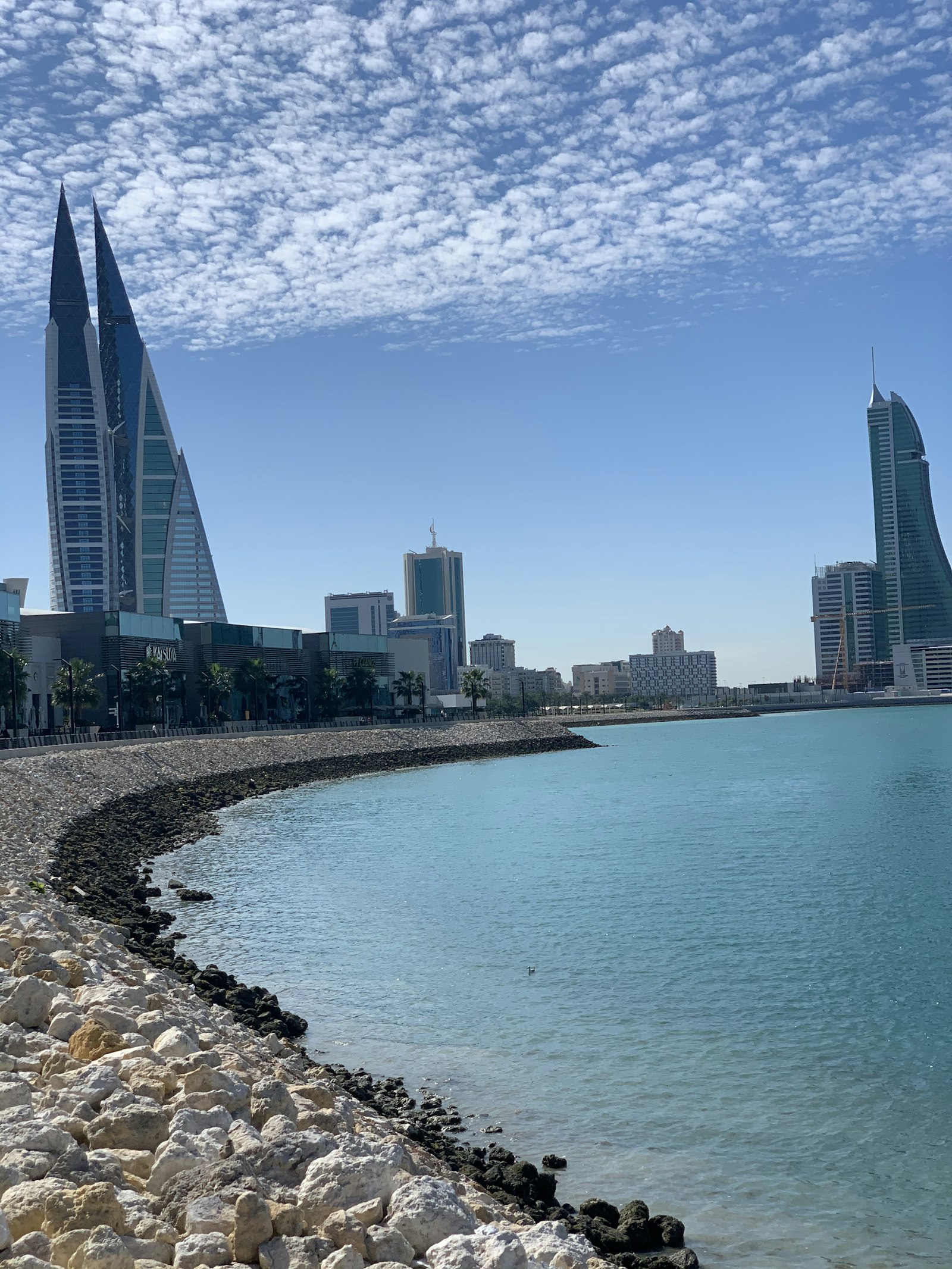
For Bahrain-based NRIs with roots in Dakshina Kannada, Udupi, or the wider Tulu Nadu region, a Mangalore purchase is frequently a homecoming decision as much as a financial one, a hedge and a future retirement base rolled into one. Others simply see coastal Karnataka as a lower-entry-cost, lower-competition alternative to Bangalore's crowded investment market while keeping the option open to eventually settle near family. A working understanding of local pricing is worth building before committing capital; our UAE NRI guide and Qatar NRI guide cover the shared Gulf fundamentals, and this page focuses specifically on what is different for Bahrain.
Bahrain's Indian community is also unusually diverse by origin compared to some neighbouring Gulf states, drawing meaningfully from Kerala, Tamil Nadu, Maharashtra, and Andhra Pradesh alongside the Karnataka contingent, and spans professions from banking and fintech, sectors where Bahrain has actively positioned itself as a regional hub, through healthcare, construction, and retail. This professional breadth means Bahrain-based NRI buyers often bring a wider range of financial profiles to a Mangalore purchase than a single-industry expat community might, from salaried mid-career professionals building toward a first purchase to established business owners looking to diversify a larger portfolio.
Bahraini Dinar Purchasing Power: What Your Savings Buy in Mangalore
The Bahraini Dinar (BHD) is pegged to the US Dollar at a fixed rate of roughly 0.376 BHD per USD, and against the Indian Rupee it has traded in a band of approximately Rs 238 to Rs 257 over the past year, moving with the Rupee's broader trend against the Dollar rather than on its own. As a working reference at the time of writing, 1 BHD converts to approximately Rs 254, though this shifts week to week and should always be checked live before you convert a specific budget figure. The BHD is, in practical terms, the second-strongest currency in the world after the Kuwaiti Dinar, which means Bahrain-based NRIs carry meaningful purchasing power into the Indian market even on relatively modest Dinar-denominated savings.
Worked example: an NRI with BD 20,000 in savings, at an indicative rate of Rs 254 per Dinar, is looking at roughly Rs 51 lakh once converted, which is enough to comfortably fund a down payment on a mid-range Mangalore apartment or move well along toward an outright plot purchase, depending on locality. A second scenario: setting aside BD 500 a month toward a future purchase accumulates to roughly Rs 15.2 lakh a year at the same rate, a realistic pace for building toward a full purchase within three to four years without financing. We deliberately avoid quoting per-square-foot figures on this page since prices shift by locality and by month; our locality-specific guides and individual project pages carry current, verified numbers.
It is also worth putting this in the context of Bahrain's own cost of living. Bahrain does allow foreign nationals to buy freehold property in designated zones, and a fair number of Indian expats do invest locally, but competitive pricing in Bahrain's freehold segment, combined with the pull of family ties and a lower entry cost back home, means many Bahrain-based NRIs treat a Mangalore purchase as a parallel goal rather than a substitute for local investment. Rent in Bahrain for a comfortable family home can run to a meaningful share of monthly income for mid-career professionals, and redirecting a portion of that same budget toward a Mangalore EMI or savings goal, once the initial down payment is met, is a common pattern among the families we work with.
Is Bahrain Part of the Hague Apostille Convention?
Yes, and this is the single biggest practical difference between this guide and our Qatar, Kuwait, and UAE guides. Bahrain acceded to the 1961 Hague Apostille Convention on 10 April 2013, with the Convention entering into force for the country on 31 December 2013, making Bahrain one of the earliest Gulf states to join, nearly a decade ahead of Saudi Arabia's December 2022 accession. Since India has been a Convention member since 2005, a document apostilled in Bahrain is, in principle, recognised in India without any further embassy attestation step.
In practice, this means a Power of Attorney executed and notarised in Bahrain can be apostilled directly by Bahrain's Ministry of Foreign Affairs, the country's sole designated competent authority for this purpose, rather than needing separate legalisation from the Indian Embassy in Manama. The Embassy does still offer its own attestation service for those who prefer it or for document types the apostille route does not cleanly cover, but for a standard property PoA, the apostille path is faster and involves fewer stops. As with any cross-border legal process, confirm the current requirement with whichever route you choose before relying on it, since local practice at individual sub-registrar offices in Karnataka can occasionally lag behind the letter of the Convention.
Verifying a Builder and Project Before You Wire Any Money
Buying remotely from Bahrain removes your ability to walk a site or read the small warning signs a physical visit would surface, which makes upfront verification more important, not less. Before any advance or token payment leaves Bahrain, confirm the project's registration number directly on the Karnataka RERA portal rather than trusting a number printed on a brochure, since aggregator sites and sales teams have occasionally quoted inconsistent RERA numbers for the same project.
Ask for the project's current completion percentage as recorded with RERA, not the builder's verbal timeline, and cross-check the builder's track record against at least one other completed project rather than relying solely on their own marketing material. If pricing, unit sizes, or possession dates differ across the sources you check, and for pre-launch or aggregator-listed projects this is common, it is worth saying so plainly to whoever is selling you the unit rather than assuming the most favourable number is the accurate one.
How to Get a Power of Attorney Apostilled From Bahrain for Your Mangalore Purchase
Because Bahrain is a Hague Apostille member, the process is shorter than the embassy-attestation route required for Qatar, Kuwait, or the UAE:
- Draft the PoA in India first. Have an advocate in Mangalore draft the PoA to match Karnataka registration requirements, then send it to Bahrain for signature rather than drafting it locally and hoping it fits Indian formats.
- Notarise the document in Bahrain. The PoA needs to be signed and notarised locally before it can be apostilled.
- Apostille it through Bahrain's Ministry of Foreign Affairs. Visit the Legalization Office at the Manama Government Centre, or the Legalization Office at the Labour Market Regulatory Authority; the fee is around BD 20. This single certificate replaces the multi-step embassy legalisation chain entirely.
- Alternatively, use the Indian Embassy in Manama's own attestation service if you prefer it or if your specific document type isn't cleanly covered by the apostille route; this mirrors the process used for non-apostille Gulf countries but is not the default requirement here.
- Send the apostilled PoA to India by courier or in person.
- Get it adjudicated within three months of receipt in India. A Power of Attorney executed outside India must be stamped and adjudicated at the District Registrar or Collector's office in Karnataka before it can be used for a registered sale deed, regardless of whether it arrived apostilled or embassy-attested. This step is frequently missed and causes registration delays.
Documents Checklist for Buying Property Remotely From Bahrain
Keep the following ready before you start, since gaps here are the most common cause of delay for NRI purchases handled remotely:
- Valid passport and Bahrain CPR (Central Population Register) card copies
- Apostilled or embassy-attested Power of Attorney, adjudicated in India (see above)
- PAN card, which is mandatory for any property transaction in India
- Aadhaar card if you hold one, or an alternate accepted ID if you do not
- NRE or NRO bank account details in India for the transaction
- Proof of current address in Bahrain
- Passport-size photographs
- Marriage certificate, if the property is being purchased jointly with a spouse
Registering the Sale Deed: What Happens at the Sub-Registrar's Office
Even with a valid, adjudicated Power of Attorney in place, the actual registration still happens at the jurisdictional Sub-Registrar's office in Mangalore, since Karnataka does not permit remote or online execution of a sale deed itself. Your PoA holder appears in person with the original PoA, the draft sale deed, encumbrance certificate, khata extract, and the seller's original title documents, and the registration follows the same process as it would for a resident buyer, just with the PoA holder signing on your behalf.
Stamp duty and registration charges in Karnataka are calculated on whichever is higher, the sale consideration or the guidance value (government-notified minimum value) for that locality, so it is worth checking the current guidance value for your specific street before finalising a price with the seller. Our stamp duty calculator lets you work out the exact figure for a given property value and buyer category before you commit funds.
Once registered, the buyer's name is updated in the local municipal records through a separate khata transfer or mutation process, which is not automatic and needs to be filed after registration. This is a common gap for NRI buyers who assume registration alone completes the paperwork.
Sending Money From Bahrain to India: Currency Exchange and Remittance Rules
Under FEMA, payment for Indian property must move through normal banking channels into an NRE, NRO, or FCNR account. Cash carried in personally, or funds moved through informal channels, do not satisfy this requirement and can create serious compliance problems later, particularly if you ever want to repatriate sale proceeds.
Within Bahrain, remittances are typically arranged through exchange houses regulated by the Central Bank of Bahrain, such as Bahrain Financing Company (BFC), which has operated in the Kingdom since 1917 and is one of the oldest exchange houses in the Gulf, and NEC, among others, or through direct bank wire transfer. Rates and fees vary between providers on any given day, so it is worth comparing two or three before moving a property-sized sum.
Whichever route you use, keep the Foreign Inward Remittance Certificate (FIRC) for every transfer connected to the purchase. You will not need it immediately, but it becomes essential documentation if you sell the property later and want to repatriate proceeds under RBI rules, a process we walk through later in this guide. For remittances above the routine thresholds, your Indian bank will also ask for Form 15CA, a self-declaration of the remittance details, and in some cases Form 15CB, a chartered accountant's certificate confirming the correct tax has been accounted for.
Bahrain also has a somewhat unusual advantage here: several Indian-linked banks maintain a direct retail presence in the Kingdom, including ICICI Bank and HSBC's Bahrain operations, both of which offer online remittance services that route straight into an NRE account in India, often at competitive rates and with same-day or next-day crediting for transfers between their own network. For routine transfers, this can reduce how often you need to compare exchange houses separately, though it is still worth checking rates for a large, one-time property-related transfer rather than assuming your regular bank's rate is automatically the best available that day.
Flight Connectivity: Bahrain to Mangalore
Bahrain has better direct connectivity to Mangalore than most of the other Gulf countries in this series. Both Air India Express and Air India operate non-stop flights between Bahrain International Airport (BAH) and Mangalore (IXE), with a flight time of roughly four hours and fifteen to twenty-five minutes, and a combined weekly frequency that has run as high as six flights a week in recent schedules, noticeably better than the three-times-weekly service on some neighbouring Gulf routes.
For anyone planning a site visit, a registration appearance despite having a PoA in place, or simply a trip to see family, this higher frequency gives more flexibility around specific dates, a bank appointment, or a builder's handover schedule than the thinner schedules on some other Gulf-Mangalore routes. It is still worth booking early around peak season, since seats on any single non-stop route can fill up faster than on hub-connected alternatives.
India-Bahrain Tax Treaty Status: What Bahrain-Based NRIs Should Actually Know
Unlike Qatar, Saudi Arabia, the UAE, and Kuwait, India and Bahrain do not currently have a full Double Taxation Avoidance Agreement. What exists instead is a Tax Information Exchange Agreement (TIEA), signed in May 2012, which allows the two countries to exchange tax-relevant information but does not itself provide relief from double taxation or set reduced withholding rates. At the Fifth India-Bahrain High Joint Commission meeting in November 2025, both governments agreed to begin negotiating a full DTAA alongside a Comprehensive Economic Partnership Agreement and a Bilateral Investment Treaty, but as of this writing no DTAA has been signed, and one is not expected before 2026 or 2027 at the earliest.
In practical terms, this matters less than it sounds for most Bahrain-based property buyers. Bahrain does not levy personal income tax on individuals, so there is no Bahrain-side tax bill on rental income or capital gains for a DTAA to relieve in the first place, which is the same practical position as the other Gulf countries in this series despite their treaty status differing. What a DTAA would add, once signed, is a clearer, treaty-backed mechanism for information exchange and dispute resolution rather than a change to the actual tax owed on an Indian property. Capital gains on the sale of Indian immovable property remain taxable in India under domestic law regardless, and TDS under Section 195 applies at the time of sale exactly as it does for buyers in any other country.
The broader context is worth knowing even if it does not change your immediate tax position: the DTAA discussion sits alongside parallel negotiations for a Comprehensive Economic Partnership Agreement and a Bilateral Investment Treaty, part of a wider push to deepen India-Bahrain economic ties following Prime Minister Modi's 2019 visit to Bahrain, the first by an Indian Prime Minister, and the two countries' Fifth High Joint Commission meeting in late 2025. If and when a full DTAA is eventually signed, it would most directly affect withholding rates on dividends, interest, and royalties for business and investment income, rather than the residential property purchase covered in this guide, so most individual NRI buyers can treat this as a background development to watch rather than something that changes today's planning.
FEMA and RBI Rules Every Bahrain-Based NRI Must Follow
Under FEMA rules administered by the RBI, NRIs can freely purchase residential and commercial property in India. The one significant restriction is agricultural land, plantation property, and farmhouses, which NRIs cannot buy without specific RBI permission. This restriction catches out buyers occasionally when a plot is described loosely as "land" without clarifying its revenue classification, so always confirm the land-use category before committing funds.
Funds for the purchase must originate from an NRE, NRO, or FCNR account, or arrive as a fresh inward remittance, rather than foreign currency carried in personally beyond declared limits. NRIs are also eligible for home loans from Indian banks, subject to standard eligibility and documentation requirements that differ slightly from resident lending criteria.
Managing Your Mangalore Property From Bahrain After Purchase
Buying the property is the first half of the job; keeping it maintained, tenanted if you plan to rent it out, and compliant on paperwork from thousands of kilometres away is the second half, and it is where many NRI owners lose track over time. If the property is left vacant, arrange periodic inspection visits through a family member or a paid caretaker service, since long-vacant homes in coastal Karnataka's humid climate need more upkeep than owners abroad tend to expect.
If you plan to rent it out, a local property management arrangement, even an informal one through your PoA holder, should cover tenant verification, rent collection into your NRO account, and basic maintenance, with you receiving periodic statements. Rental income is taxable in India and should be declared, and TDS rules apply differently depending on whether the tenant is an individual or a company, so keep this on your chartered accountant's checklist alongside the property purchase itself.
Finally, keep your PoA current. If the original PoA holder's circumstances change, a family relocation, a falling-out, or simply wanting to appoint someone else, you will need to execute a fresh PoA through the same apostille or embassy process described earlier, and formally revoke the old one in India to avoid any ambiguity about who is authorised to act.
Finding a tenant from Bahrain is more manageable today than it was even a few years ago, with virtual walkthroughs and video calls handling most of the initial screening before your PoA holder or a local property manager finalises the agreement in person. Even so, a quick verification of any prospective tenant's identity and background through your PoA holder or a local agent remains worth the extra day it takes, rather than accepting a tenant purely on the strength of a video call.
Common Mistakes Bahrain-Based NRIs Make When Buying in Mangalore
- Assuming a full DTAA exists the way it does for Qatar or Saudi Arabia. It does not yet, only a 2012 information-exchange agreement, though this rarely changes the actual tax owed since Bahrain does not tax individuals in the first place.
- Getting a document notarised but not apostilled, or apostilled through the wrong authority. Bahrain's Ministry of Foreign Affairs is the sole competent authority for apostilles; a regular notary stamp alone is not sufficient.
- Skipping adjudication of the PoA once it reaches India, which must happen within three months of receipt under Karnataka's stamp rules, regardless of whether the document arrived apostilled or embassy-attested.
- Moving money through informal channels rather than normal banking routes, which creates FEMA compliance problems that only surface later, usually at resale.
- Skipping RERA verification on an off-plan project. Always verify a project's registration directly on the Karnataka RERA portal rather than relying on a builder's claim.
- Forgetting khata mutation after registration, which leaves municipal and property tax records showing the previous owner and can complicate a future resale.
- Not translating documents when required. English-language documents are usually accepted without translation for Bahrain apostille purposes, but always confirm this for your specific document, since some categories can still require an Arabic translation.
- Letting the PoA go stale without revoking and replacing it when circumstances change, leaving genuine confusion about who is currently authorised to act on the property.
Repatriating Your Sale Proceeds Later
If you eventually sell the Mangalore property, repatriation of the proceeds abroad is subject to a lifetime cap for foreign-currency-funded residential purchases, currently limited to two properties, with commercial property exempt from that particular cap. The FIRC and remittance records you keep from the original purchase, described earlier in this guide, become the documentation that supports a clean repatriation later.
Who Should Buy in Mangalore From Bahrain?
This works well for NRIs with existing family or property ties to Dakshina Kannada or Udupi, anyone planning an eventual return or retirement to coastal Karnataka, and buyers looking to diversify a portion of Gulf savings into a rupee-denominated residential asset with realistic rental demand. Bahrain's comparatively straightforward apostille process and better-than-average flight frequency make the practical side of a remote purchase somewhat easier here than for some neighbouring Gulf countries, though the underlying property due diligence matters just as much regardless of which country you're buying from.
OCI cardholders based in Bahrain follow largely the same property-buying process as NRIs for residential and commercial property, since the same FEMA framework applies to both; our OCI vs NRI property rights guide sets out the handful of areas where the two statuses actually diverge.
Mangalore or Udupi: Which Fits a Bahrain-Based Buyer Better?
Many Bahrain-based NRIs from coastal Karnataka weigh Mangalore against nearby Udupi, and the honest answer depends on what you are optimising for. Mangalore carries more commercial density, a bigger rental pool driven by students and IT-adjacent employment, and the flight connectivity discussed earlier in this guide. Udupi tends to offer a quieter, more temple-town pace, often at a gentler entry price for comparable plot sizes, but with a thinner rental market, and most Udupi-bound NRIs still route through Mangalore's airport regardless of where they ultimately settle.
If rental yield and resale liquidity matter most to you, Mangalore's deeper market generally gives more options. If you are buying primarily for eventual personal use or family continuity in a specific ancestral area, the right answer often comes down to where your family already holds land or ties, more than any citywide comparison can capture.
Bahrain's Own Property Market and Why NRIs Still Look Home
Bahrain has one of the more open freehold property regimes in the Gulf for foreign nationals, with designated freehold areas across Manama, Amwaj Islands, and several other developments open to expat ownership, and a fair number of long-settled Indian professionals do own property locally. That said, freehold entry prices in Bahrain's established expat-facing developments are not necessarily cheap relative to income, and ownership there does not carry the same generational, family-continuity value that a property in one's own home district in India does. For most Bahrain-based NRIs we work with, a Bahrain property, where they have one, and a Mangalore property serve different purposes: one is tied to their working life in the Gulf, and the other is tied to where they eventually plan to spend time, retire, or keep family connected, and the two decisions rarely compete directly against each other.
Working With OneCity Property
We work with Bahrain-based NRIs on exactly this kind of remote purchase: verifying a project's RERA status and builder track record before you commit, coordinating the practical steps around registration with your PoA holder in Mangalore, and giving you a straight answer when a listing's claims do not match what we find. You can compare currency, documentation, and flight connectivity for other Gulf countries in our Kuwait and Saudi Arabia NRI guides, and check the rental math on any specific listing using our rental yield calculator before you commit.
Reach us on WhatsApp at 9606230962, by phone at 7676870876, or by email at reach@onecityproperty.com. You can read more about our advisory background on our Senior Property Advisor profile page.
Frequently Asked Questions
Is Bahrain part of the Hague Apostille Convention?
Yes. Bahrain acceded to the 1961 Hague Apostille Convention on 10 April 2013, with effect from 31 December 2013, well before Saudi Arabia's December 2022 accession. Since India is also a Convention member, a Bahrain-apostilled document is generally recognised in India without separate embassy attestation.
Do I still need the Indian Embassy in Manama to attest my Power of Attorney?
Not necessarily. Because Bahrain is a Hague Apostille member, a PoA notarised in Bahrain and apostilled through Bahrain's Ministry of Foreign Affairs is typically sufficient. The Embassy still offers its own attestation service as an alternative for those who prefer it.
Does India have a full tax treaty with Bahrain?
Not yet. India and Bahrain currently only have a 2012 Tax Information Exchange Agreement, not a full Double Taxation Avoidance Agreement. A full DTAA was agreed to be negotiated at the November 2025 Joint Commission meeting but has not been signed as of this writing.
Since there is no DTAA, will I pay more tax on my Mangalore property as a Bahrain-based NRI?
In practice, no. Bahrain does not levy personal income tax, so there is no Bahrain-side tax on rental income or capital gains for a treaty to relieve in the first place. Capital gains on Indian property remain taxable in India under domestic law regardless of treaty status.
Are there direct flights from Bahrain to Mangalore?
Yes, and more frequently than some other Gulf routes. Both Air India Express and Air India operate non-stop flights, with a combined weekly frequency that has reached six flights a week on recent schedules, and a flight time of roughly four hours and fifteen to twenty-five minutes.
Which exchange houses in Bahrain can I use to remit money to India for a property purchase?
Central Bank of Bahrain-regulated exchange houses such as Bahrain Financing Company (BFC), operating since 1917, and NEC are commonly used, alongside direct bank wire transfer. Always route the payment into an NRE, NRO, or FCNR account to stay FEMA-compliant.
How much does it cost to apostille a document in Bahrain?
The apostille fee through Bahrain's Ministry of Foreign Affairs is approximately BD 20 per document, payable at the Legalization Office at the Manama Government Centre or the Labour Market Regulatory Authority office.
Can OCI cardholders based in Bahrain buy property in Mangalore the same way as NRIs?
Largely yes, since the same FEMA framework governs residential and commercial property purchases for both NRIs and OCI cardholders. A small number of areas actually differ between the two statuses, covered in our OCI vs NRI property rights guide.
Do I need to be present in Mangalore for the property registration itself?
No, provided your Power of Attorney holder is authorised to sign on your behalf and has completed the adjudication step in India. The PoA holder appears in person at the Sub-Registrar's office; you do not need to travel unless you specifically want to be present.