
Bejai Mangalore: Complete Locality Guide for Buyers

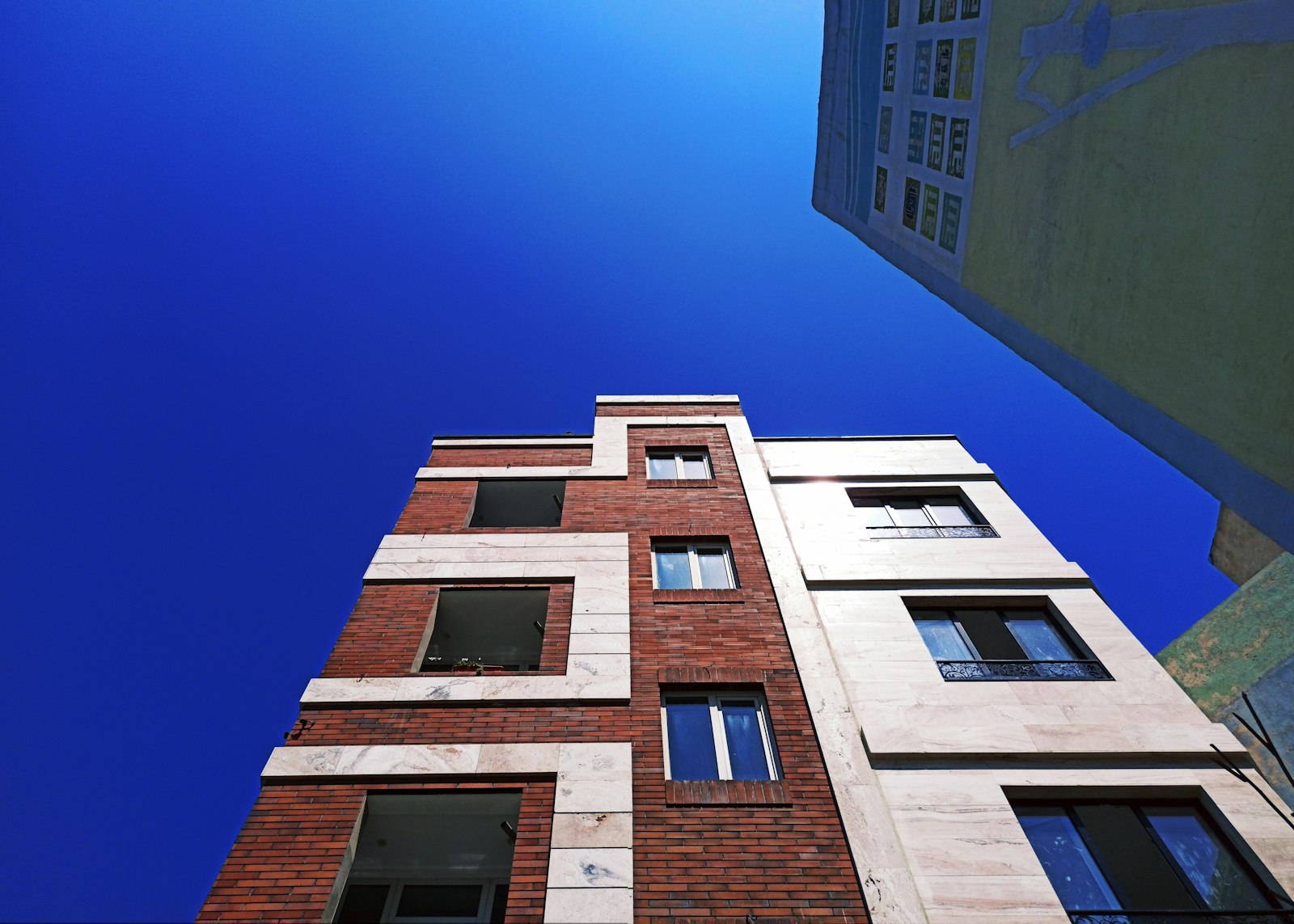
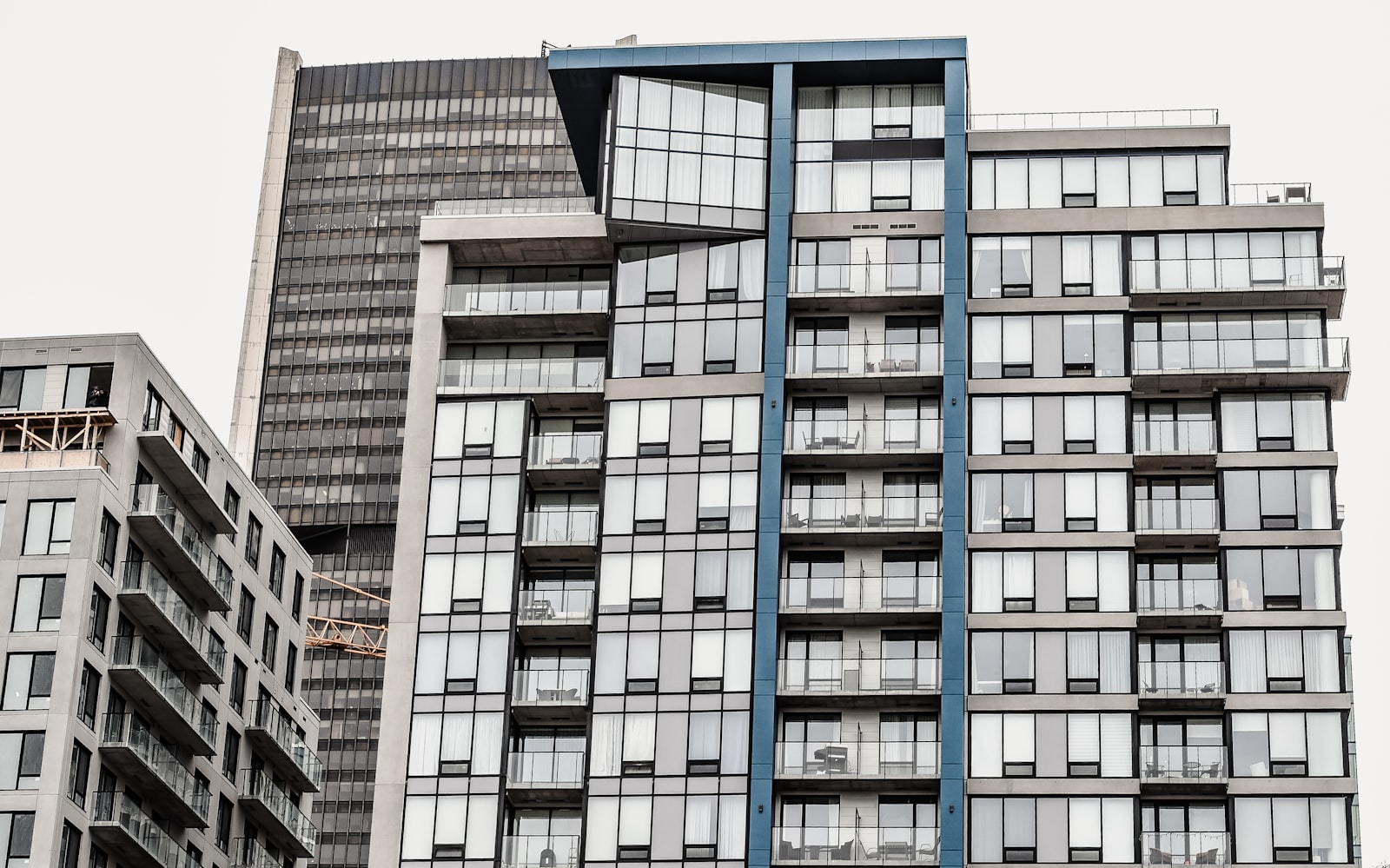
Bejai is Mangalore's dual-character locality — simultaneously one of the city's busiest commercial hubs and a premium residential address, a combination that gives it a genuinely different profile from single-purpose suburbs elsewhere in the city. Locally, Bejai and neighbouring Kadri are together sometimes called the "Manhattan of Mangalore," a reference to the concentration of high-rise buildings along this corridor that's unusual for a city where most residential construction still runs low-rise.
Bejai's Development History and Why It Matters to Buyers
Bejai's transformation into a commercial hub happened gradually rather than through a single planned development, which is precisely why its building stock spans such a wide age range today. Unlike a newer, master-planned corridor where most construction dates from the same decade, Bejai's mix of older independent houses, mid-2000s apartment blocks, and current high-rise towers reflects organic growth around an increasingly commercial main road over several decades. For a buyer, this means location within Bejai matters more than the "Bejai" label alone — a unit on Bejai Main Road itself, in the thick of the retail density, is a genuinely different daily-life proposition from a quieter side-street property still carrying the same locality name. Get the exact street and proximity to the main commercial stretch clear before assuming what kind of Bejai address you're actually buying into.
The presence of the Srimanthi Bhai Memorial Government Museum (commonly known as the Bejai Museum) in the locality is also worth noting as a marker of Bejai's civic and historical standing within Mangalore — this isn't a recently-developed suburb but an established part of the city's institutional geography, predating most of the current residential construction by decades.
Civic Administration: Bejai's Place Within Mangalore City Corporation
Mangalore City Corporation (MCC) governs the city through 60 wards, each represented by a directly elected corporator, with council elections held every five years and a mayor selected from the majority party. Bejai falls within this ward structure as one of the city's established central wards. Before finalising any purchase, confirm which specific ward and corporator jurisdiction your exact property falls under directly with MCC, since ward boundaries can shift with periodic delimitation and this affects which local office handles your property tax and Khata matters.
It's worth understanding this governance structure isn't a minor administrative detail but has real, practical consequences for property owners. Each corporator represents their ward's specific civic concerns to the MCC council, meaning issues like road maintenance, drainage, streetlight upkeep, and local infrastructure investment in Bejai specifically get channelled through that ward's elected representative rather than a generic city-wide process. For a buyer evaluating long-term civic infrastructure quality, it's reasonable to ask about the specific ward's recent track record on issues like the parking constraints already discussed, since a locally engaged corporator can meaningfully influence whether such issues get addressed over time versus persisting indefinitely.
Price Trends: A Documented Appreciation Story
Bejai's residential market shows real, tracked movement rather than a single static figure. Current listings put average apartment pricing at approximately ₹7,750 per square foot, with independent aggregator tracking citing price appreciation of roughly 8.4% over the past year and approximately 47.9% over the past five years for the locality. We're citing this as aggregator-tracked data, not an official government price index — Indian real estate pricing at the hyperlocal level generally isn't published through a single authoritative government source, and any site claiming otherwise for a specific locality should be treated with scepticism. What we can say with more confidence is the underlying driver: Bejai's dual commercial-residential character and central connectivity have kept it among Mangalore's consistently sought-after addresses across multiple independent listings we cross-checked, not just one source's claim.
Connectivity
Bejai sits along NH-66, giving direct highway connectivity toward Panaji, Kota, and Kozhikode without needing to route through central Mangalore first — a genuine advantage for anyone with regular travel needs along the coastal highway corridor. Locally, Bajpe Main Road, Bejai Main Road, and MG Road connect the locality to Hampankatta, Giri Nagar, and Kottara. Mangalore Central Railway Station sits approximately 4 km away via Jail Road, and Mangalore International Airport is roughly 11 km away via Bejai-Kavoor Road and Airport Road. The Mangalore Bus Terminal (KSRTC) sits directly adjacent to the locality, giving genuinely convenient intercity bus access without a separate trip across town. Yeyyadi Industrial Estate (3 km) and Baikampady Industrial Area (11 km) are both within reasonable reach for anyone working in Mangalore's industrial belt.
Schools, Healthcare, and Daily Life
Bejai's social infrastructure reflects its established, central character. Kapikad Government School, Palm School, Ikon Kids School, Bejai Kapikad School, Holy Family High School, Nisarga Playschool, Early Learning Centre, Vidhya Education Centre, Victoria Girl's High School, and Presidency School all serve the immediate locality, with Lourdes Central School among the nearby options in adjacent areas — a genuinely comprehensive spread of options across age groups rather than one or two isolated choices. On healthcare, AJ Hospital, Dr TMA Pai Rotary Hospital, and City Hospital are all within a roughly 3 km radius, giving residents multiple options rather than dependence on a single facility. Retail is a genuine strength here rather than an afterthought: Century Plaza, Bharath Mall and its second phase (Bharath Mall 2), Pio Mall, Kingdom Mall at Pais Garden, and the Bejai Church Complex together make this one of Mangalore's most retail-dense residential localities, with Swami Vivekanand Park providing a green-space counterpoint to the commercial density.
Key Amenities Near Bejai
- Kapikad Government School
- Holy Family High School
- Victoria Girl's High School
- Presidency School
- AJ Hospital
- Dr TMA Pai Rotary Hospital
- City Hospital
- Century Plaza
- Bharath Mall (both phases)
- Pio Mall
- Kingdom Mall, Pais Garden
- Swami Vivekanand Park
- Bejai Church Complex
Independent resident ratings cited by property portals put Bejai at roughly 4.2 to 4.3 out of 5 for overall satisfaction and around 4.4 out of 5 for safety — consistently high marks across the sources we checked, though these remain resident-survey figures from aggregator platforms rather than an official civic satisfaction index. The honest downside worth naming directly: insufficient parking is a recurring, specifically named complaint from residents given the locality's commercial density, a genuine trade-off for the retail and connectivity advantages rather than a minor footnote.
Who Actually Rents and Buys in Bejai
Bejai's tenant and buyer profile is worth understanding in more specific terms than a generic "premium locality" description. The area's mix of commercial establishments, medical facilities, and government offices nearby draws a working professional demographic specifically — a genuinely different tenant base from a locality dominated by students or IT-sector employees. This matters practically: Bejai's rental demand tends to be less seasonal and less tied to a single academic calendar or hiring cycle than areas anchored primarily around a university or a single large employer, since the demand base is spread across retail workers, healthcare staff, small business owners, and general professionals drawn by the central, well-connected address itself.

For families specifically, Bejai's combination of established schools, multiple healthcare options within a short radius, and genuine walkable retail convenience makes it a practical choice for households prioritising daily-life ease over the quieter, more suburban character of some of Mangalore's newer residential corridors. The trade-off, as already noted, is traffic and parking density that a genuinely quiet suburb wouldn't carry — a family specifically seeking a low-traffic, low-noise environment for young children may want to weigh this honestly against Bejai's genuine daily-convenience advantages before deciding.
Real Projects Currently Available in Bejai
OneCity Property tracks two current projects specifically in Bejai, each with a distinct positioning worth understanding rather than treating as interchangeable. Rohan City offers an integrated township format with 1, 2 & 3 BHK configurations directly on Bejai Main Road, suited to a buyer wanting a self-contained community with broader amenity infrastructure built in. Prestige Valley Crest offers a ready-to-move option across 1, 2, 3 & 4 BHK configurations, relevant if avoiding construction-timeline uncertainty is a priority alongside the address itself.
The "integrated township" format Rohan City represents deserves a specific word of explanation for buyers unfamiliar with the term, since it's a meaningfully different proposition from a standalone apartment building. An integrated township typically bundles residential units with shared amenity infrastructure — clubhouse, landscaped areas, dedicated parking, and sometimes retail or commercial space — developed and managed as a single, cohesive community rather than a collection of independently-managed buildings. For a buyer, this generally means more predictable amenity access and shared-maintenance costs, but also less flexibility to opt out of amenities you might not personally use, since township maintenance fees typically cover the whole shared infrastructure regardless of individual usage.
Beyond these two, the broader Bejai market includes numerous smaller-format buildings from local Mangalore-based developers, reflecting the locality's long development history rather than a market dominated by one or two large master-planned communities. If you're comparing options here, ask directly about each specific building's construction year and current maintenance condition, since Bejai's building stock spans a wide age range rather than being uniformly new.
Other Notable Developments in Bejai
Palace Gardens, on Bejai-Kapikad Road, is one of Bejai's established, fully-completed developments — a ready-to-move project by Mac & VK Associates spread across 1.35 acres with 120 units across 1, 2 & 3 BHK configurations (RERA: PRM/KA/RERA/1257/334/PR/171027/000678). Unit sizes range from roughly 660 to 1,455 sq ft, with amenities including a swimming pool, gymnasium, children's play area, and a residents-only park. As a completed, occupied project with families already living in it, Palace Gardens offers the kind of track record a brand-new launch cannot — worth visiting directly if you want to see how a multi-year-old Bejai building has actually aged. Details and builder background: Palace Gardens project listing.
Bearys Golden Harvest in Bejai comes from Bearys Group, a Mangalore-headquartered developer with a genuinely national footprint (projects across Bangalore, Mumbai, Chennai, Hyderabad, and internationally in Dubai) and multiple CREDAI award wins for sustainable, IGBC-certified construction. Bearys' scale and multi-city track record make it a meaningfully different proposition from Bejai's smaller, purely local builders — worth considering specifically if a larger, more institutionally accountable developer matters to your decision. Official developer site: Bearys Group projects.
Beyond these two, Bejai's active development pipeline includes Poorvi Estella, Bhandary Canyon, Marian Agnel Ville, GB Sai Ameya Arc 1 & 2, Paradise Streak, Citadel Amethyst, Poonam Garden, Nidhi Land Sharon Rose, Nirmaan Nandagokul, and Sorake Iris — a genuinely large number of concurrent local developments, reflecting Bejai's continued, sustained construction activity rather than a locality that has stopped growing. For any of these, request the RERA registration number directly and verify it on the Karnataka RERA portal before proceeding, since not every smaller local project has the same level of independently documented detail as Palace Gardens or a Bearys development.
How Bejai Compares to Neighbouring Localities
Bejai sits adjacent to several other well-known Mangalore addresses, and it's worth understanding the actual differences rather than treating this stretch of the city as one undifferentiated zone. Kadri, directly adjacent, shares the "Manhattan of Mangalore" high-rise character but leans further toward premium, sea-view-adjacent positioning in its Hills section specifically — see our Kadri Hills locality guide for that comparison in detail. Hampankatta, connected via MG Road, is more purely commercial and central without Bejai's residential density. Kottara, also linked via the same road network, offers a somewhat quieter, less commercially saturated alternative for buyers who want Bejai's connectivity without its retail-driven traffic and parking pressure.
The Bejai-Kadri relationship specifically deserves a direct comparison, since the two are so frequently mentioned together that buyers can reasonably wonder whether they're functionally interchangeable. They are not. Kadri, and Kadri Hills within it specifically, trades on elevation and genuine Arabian Sea views as its primary differentiator, commanding a price premium tied specifically to that view access. Bejai's value proposition rests instead on retail and commercial density combined with central connectivity — you are paying for daily convenience and commercial proximity in Bejai, not for a view. A buyer choosing between the two should be honest with themselves about which of these genuinely matters more to their daily life, since the price premiums in each case are earned by different, non-overlapping features.
This distinction also matters for resale planning. A Bejai unit's resale value will track the locality's continued commercial vitality and connectivity infrastructure, while a Kadri Hills unit's resale value tracks the durability of its sea-view access and elevation advantage specifically. Neither is inherently more secure than the other, but they respond to different risk factors — a Bejai investment is more exposed to changes in the retail and commercial landscape immediately around it, while a Kadri Hills investment is more exposed to any future construction that could obstruct sea views on lower floors. Factor this into your own risk assessment rather than assuming both localities carry identical investment risk profiles simply because they're often mentioned in the same breath.
For an investor specifically, Bejai's combination of documented price appreciation, commercial rental demand (given the retail density), and residential rental demand (given proximity to employment zones) gives it a genuinely diversified demand base compared with a purely residential suburb dependent on one tenant profile.
It's worth being specific about what this diversification actually means in practice, since "diversified demand" can sound like an abstraction without concrete grounding. A residential unit in Bejai can realistically draw tenant interest from at least three distinct pools: professionals working in Bejai's own commercial establishments and nearby offices, staff at the AJ Hospital and other medical facilities in the 3 km radius, and general renters drawn by the retail convenience and central connectivity regardless of their specific workplace. This is a meaningfully broader tenant base than a locality dependent on a single institution or industry, and it's a genuine reason Bejai's rental demand has proven more consistent across market cycles than more narrowly-positioned addresses, based on the sustained retail and commercial development the locality has attracted over multiple decades rather than a single recent construction boom.
Documents to Collect for a Bejai Purchase
For a resale unit in an established Bejai building, expect to collect the Occupancy Certificate, the existing chain of prior sale deeds establishing clean title, current Khata certificate and extract from Mangalore City Corporation, recent property tax payment receipts, and the apartment association's maintenance accounts if the building is more than a few years old — which, given Bejai's mixed-age building stock, is a genuinely common scenario here compared with newer, single-phase developments elsewhere in the city. For an under-construction unit in either of the two current projects, expect the RERA registration certificate, sanctioned building plan, land title documents, an Encumbrance Certificate, the draft sale agreement, and the construction-linked payment schedule tied to RERA-mandated milestones.
Property Tax and Civic Administration
This address falls under Mangalore City Corporation jurisdiction, and property tax follows MCC's own assessment system based on zone classification, built-up area, and usage — distinct from Bangalore's BBMP or GBA systems, so don't assume terminology or processes from Bangalore-focused guides carry over directly. Given Bejai's substantial commercial component, if you're purchasing a unit with any mixed-use or commercial classification, confirm the exact tax classification applicable to your specific unit directly with MCC, since commercial and residential rates typically differ. Our Khata registration guide covers the transfer process in more general Karnataka-wide detail, though MCC-specific office locations and procedures should be confirmed directly given they operate independently of Bangalore's civic structure.
A Note on Bejai's Retail Anchors for Daily Life Planning
Beyond the malls already mentioned, it's worth understanding what genuinely differentiates Bejai's retail offering from a typical Indian residential locality with a single nearby shopping centre. Century Plaza, Bharath Mall's two phases, Pio Mall, and Kingdom Mall together represent a genuinely unusual concentration of organised retail within walking or short-drive distance for most Bejai residents — this is closer to what you'd find in a much larger metro's established commercial district than what's typical for a mid-sized coastal city. For a buyer specifically prioritising daily convenience without a long drive for groceries, dining, or shopping, this retail density is a real, tangible advantage that few other Mangalore localities can currently match at this scale, and it's part of why Bejai commands the price premium it does relative to more purely residential addresses in the city.

Due Diligence Checklist
- Confirm the exact MCC ward and corporator jurisdiction for your specific property directly with Mangalore City Corporation, since this determines which office handles Khata and property tax
- Independently verify the current Khata status and that it transfers cleanly at registration — see our Khata registration guide
- Pull a fresh Encumbrance Certificate covering the full available title history — see our Encumbrance Certificate guide
- For any specific building under consideration, ask directly about construction year, current maintenance condition, and parking allocation given the locality's documented parking constraints
- Independently verify RERA registration for any new-construction project on the Karnataka RERA portal
- If buying as an NRI, review our Mangalore Gulf NRI guide for FEMA rules and remote registration via Power of Attorney
Who This Suits
Bejai suits a buyer who specifically wants central Mangalore connectivity combined with genuine day-to-day retail and commercial density, rather than a quieter, purely residential address. It particularly suits professionals working in or near Mangalore's commercial core who want a short, direct commute without depending on a car for daily errands, given the walkable retail density. It suits less well a buyer specifically seeking a quiet, low-traffic residential character, or one for whom guaranteed dedicated parking is a hard requirement, given the locality's documented parking pressure.
Frequently Asked Questions
What is the average property price in Bejai?
Current listings put average apartment pricing at approximately ₹7,750 per square foot, with independent tracking citing roughly 8.4% appreciation over the past year and 47.9% over five years. Verify current pricing directly given aggregator data can lag actual market movement.
How far is Bejai from the airport and railway station?
Roughly 11 km to Mangalore International Airport via Bejai-Kavoor Road and Airport Road, and roughly 4 km to Mangalore Central Railway Station via Jail Road.
Why is Bejai called the "Manhattan of Mangalore"?
Bejai and adjacent Kadri have a concentration of high-rise buildings unusual for Mangalore, where most residential construction is low-rise. This nickname reflects that density, not any claim of comparable scale to the actual Manhattan.
What is the main downside of living in Bejai?
Insufficient parking is the most consistently and specifically named resident complaint, a direct consequence of the locality's commercial density and retail concentration.
Which MCC ward covers Bejai?
Bejai falls within Mangalore City Corporation's 60-ward structure as an established central ward. Confirm your specific property's exact ward directly with MCC, since boundaries can shift with periodic delimitation.
What projects are currently available in Bejai?
Rohan City (integrated township, 1-3 BHK) and Prestige Valley Crest (ready-to-move, 1-4 BHK) are the two projects OneCity Property currently tracks directly in Bejai, alongside numerous smaller buildings from local developers.
Is Bejai a good choice for renting out to tenants?
Yes, generally. Bejai's diversified tenant base — drawing from retail workers, healthcare staff, small business owners, and general professionals rather than a single institution or industry — tends to produce more consistent rental demand across market cycles than a locality dependent on one anchor tenant type.
Considering a purchase in Bejai? Send your budget and configuration needs to 9606230962 on WhatsApp, or call 7676870876 — we'll help you compare current options and verify title documents before you commit. Our stamp duty calculator and rental yield calculator can help you model the full cost and return picture.



News insight
 23/07/2026
Buy Property in Mangalore from UK: Complete NRI Guide
A Mangalore-first NRI guide for UK-based buyers: precise HMRC worldwide taxation rules, the DTAA gap...
23/07/2026Shakthinagar Mangalore: Complete Locality Guide for Buyers
Shakthinagar is a residential Mangalore locality with a genuinely active plot market and a rare no-t...
23/07/2026Attavar Mangalore: Complete Locality Guide for Buyers
Attavar is a centrally located, mixed-use Mangalore neighbourhood with KMC Hospital and income tax o...