

Repatriation of Sale Proceeds for NRIs: The Complete Process

Published: 29 July 2026 | Updated on: 29 July 2026 | By L K Monu Borkala, Senior Property Advisor, 20+ Years Bangalore & Karnataka Real Estate
Quick Answer: Repatriating Sale Proceeds from an Indian Property
Every property sale by an NRI must first be credited to an NRO account, regardless of how the property was originally funded. If the property was originally purchased using foreign currency, through an NRE or FCNR account or direct inward remittance, the original invested amount can be repatriated freely outside the standard cap, but this treatment is limited to a lifetime maximum of two residential properties; any gain above the original investment, and any further properties, fall under the standard cap. If the property was purchased using rupee funds, or was inherited, the full sale proceeds are repatriable up to USD 1 million per financial year from the NRO account, with no limit on the number of properties. Commercial property has no property-count restriction at all under either route. TDS is deducted by the buyer at the point of sale, and Form 15CA and Form 15CB are required for most repatriations above Rs 5 lakh.
Repatriation, the process of legally moving sale proceeds from an Indian property out of the country in foreign currency, is one of the areas where NRIs most commonly either overestimate what's freely allowed or discover a restriction only after a sale is already underway. This guide walks through exactly how the rules work, since they actually differ depending on how a property was originally purchased, a distinction that matters more than most NRI sellers initially realise.
Every Sale Proceeds Route Through an NRO Account First
Regardless of how a property was originally funded, or which country the seller currently lives in, the fundamental starting point is the same: sale proceeds cannot be credited directly to an NRE account or wired abroad without first passing through an NRO (Non-Resident Ordinary) account. This is a Reserve Bank of India requirement under the Foreign Exchange Management Act (FEMA), 1999, and it applies uniformly. From the NRO account, the specific repatriation pathway available then depends on how the property was acquired in the first place.
The Two Repatriation Pathways, Based on How You Originally Bought
The single most important distinction in this entire process is whether the original purchase was funded in foreign currency or in rupees, since the two paths lead to distinctly different repatriation treatment.
If the property was originally purchased using foreign currency, meaning funds remitted from abroad through an NRE account, an FCNR account, or a direct foreign inward remittance at the time of purchase, the original invested amount can be repatriated as a return of principal, outside the standard annual cap altogether, once the sale is complete. This carve-out is documented against the original inward remittance certificate or FIRC (Foreign Inward Remittance Certificate) from the time of purchase, which is why retaining that original document matters even years later. Critically, this favourable treatment is restricted to a lifetime maximum of two residential properties; any amount above the two-property limit, and any capital gain or appreciation above the original invested principal even within those first two properties, falls under the standard annual repatriation cap described below rather than this unrestricted route.
If the property was purchased using rupee funds, whether from an NRO account, domestic income, or because the property was bought while the seller was still a resident Indian before becoming an NRI, the entire sale proceeds are repatriable, but only up to the standard cap of USD 1 million per financial year from the NRO account, and this applies regardless of how many properties are sold; there's no property-count restriction on this route, only the annual dollar ceiling.
A worked example makes this concrete. Say an NRI remitted USD 250,000 from abroad in 2018 to buy an apartment, using an NRE account for the purchase. In 2026, the property sells for the rupee equivalent of USD 500,000. The original USD 250,000 can be repatriated as return of principal, documented against the original FIRC, outside the standard cap, since this is the first of at most two residential properties eligible for this treatment. The remaining USD 250,000, representing the gain, is credited to the NRO account and falls under the standard USD 1 million per financial year ceiling, which in this case comfortably covers the full gain in a single year. If the same NRI later sells a second, then a third residential property originally bought with foreign currency, the third property's original investment no longer qualifies for the unrestricted route; its entire proceeds, principal and gain alike, fall under the standard NRO cap instead.
What Happens If You Don't Have the Original FIRC
A genuine practical problem for NRIs who bought property one or two decades ago is that the original Foreign Inward Remittance Certificate documenting that purchase has often been misplaced, especially if the remitting bank has since changed systems, merged, or the NRI switched banks multiple times since the original transaction. Without this document, claiming the unrestricted return-of-principal treatment becomes considerably harder, since the bank processing the repatriation needs to see documented proof that the original purchase was actually funded in foreign currency rather than simply asserted. Buyers in this position should first check with the original remitting bank, since many retain records well beyond the original transaction date and can reissue a duplicate FIRC or equivalent certification on request, sometimes for a fee. Where the original bank truly cannot produce this documentation, a Chartered Accountant experienced in NRI repatriation can advise on alternative evidence, such as the original sale agreement showing payment from an NRE account, bank statements from that period if still accessible, or a certificate from the bank confirming the account was NRE-designated at the time, though none of these substitutes are as clean as the original FIRC itself. This is a strong practical argument for retaining every original remittance document indefinitely once a foreign-currency property purchase is made, rather than assuming it can be reconstructed decades later if needed.
Why Commercial Property Works Differently
Commercial property carries no property-count restriction under either pathway. Whether the original purchase was funded in foreign currency or in rupees, an NRI can repatriate sale proceeds from any number of commercial properties, subject only to the standard USD 1 million per financial year ceiling once the funds are in an NRO account, or the return-of-original-foreign-investment treatment if applicable. This is a genuine asymmetry with residential property that catches some sellers off guard, particularly those diversifying across both residential and commercial holdings, since the two-property cap that applies to residential sales under the foreign-currency route simply does not extend to commercial assets.
Inherited Property: A Slightly Different Path
An NRI who inherits property in India, rather than purchasing it directly, can repatriate the sale proceeds up to the standard USD 1 million per financial year ceiling once sold, but the required documentation differs: a will or legal heir certificate establishing inheritance is needed alongside the standard sale documents, and if the property was inherited from a person who was themselves a foreign national rather than a resident or NRI Indian, additional RBI approval may be required before the remittance can proceed. This is a narrower, less common scenario than the two main pathways above, but worth flagging specifically for sellers dealing with inherited property.
The USD 1 Million Per Financial Year Ceiling, Explained
The USD 1 million annual ceiling applies per individual, per financial year (April to March), and covers the aggregate of all NRO-to-abroad remittances for that person across every authorised dealer bank, not per transaction or per property. It covers property sale proceeds, rental income, pension, and other NRO-sourced funds combined; they all share the same single ceiling rather than each having their own separate limit. A married couple who are both NRIs each have their own independent USD 1 million ceiling, so a joint sale can, in principle, move up to USD 2 million combined across a financial year if structured correctly between both sellers' accounts. If a single sale generates proceeds exceeding USD 1 million and the seller wants to repatriate the full amount within the same financial year rather than spreading it across two or more years, prior RBI approval through the authorised dealer bank is required; without that approval, the excess simply needs to wait for the following financial year's ceiling to open up.
TDS on Your Sale: What Actually Gets Deducted Before You See a Rupee
Unlike a resident seller, who faces a flat 1% TDS under Section 194-IA on the full transaction value regardless of profit, an NRI seller faces TDS under Section 195 calculated on the capital gain itself, at rates generally in the 20% to 22.88% range once applicable surcharge and cess are factored in, deducted by the buyer directly at the time of payment before the seller receives any funds. For property acquired before 23 July 2024, the underlying capital gains calculation can generally choose between 20% with indexation benefit or 12.5% without indexation, whichever works out lower; property acquired on or after that date is taxed at a flat 12.5% without indexation, following the change introduced in the July 2024 Union Budget. This TDS is deducted upfront regardless of the seller's actual final tax liability, which is often higher than what the seller actually owes once the real cost basis and holding period are accounted for, making the next section particularly relevant. 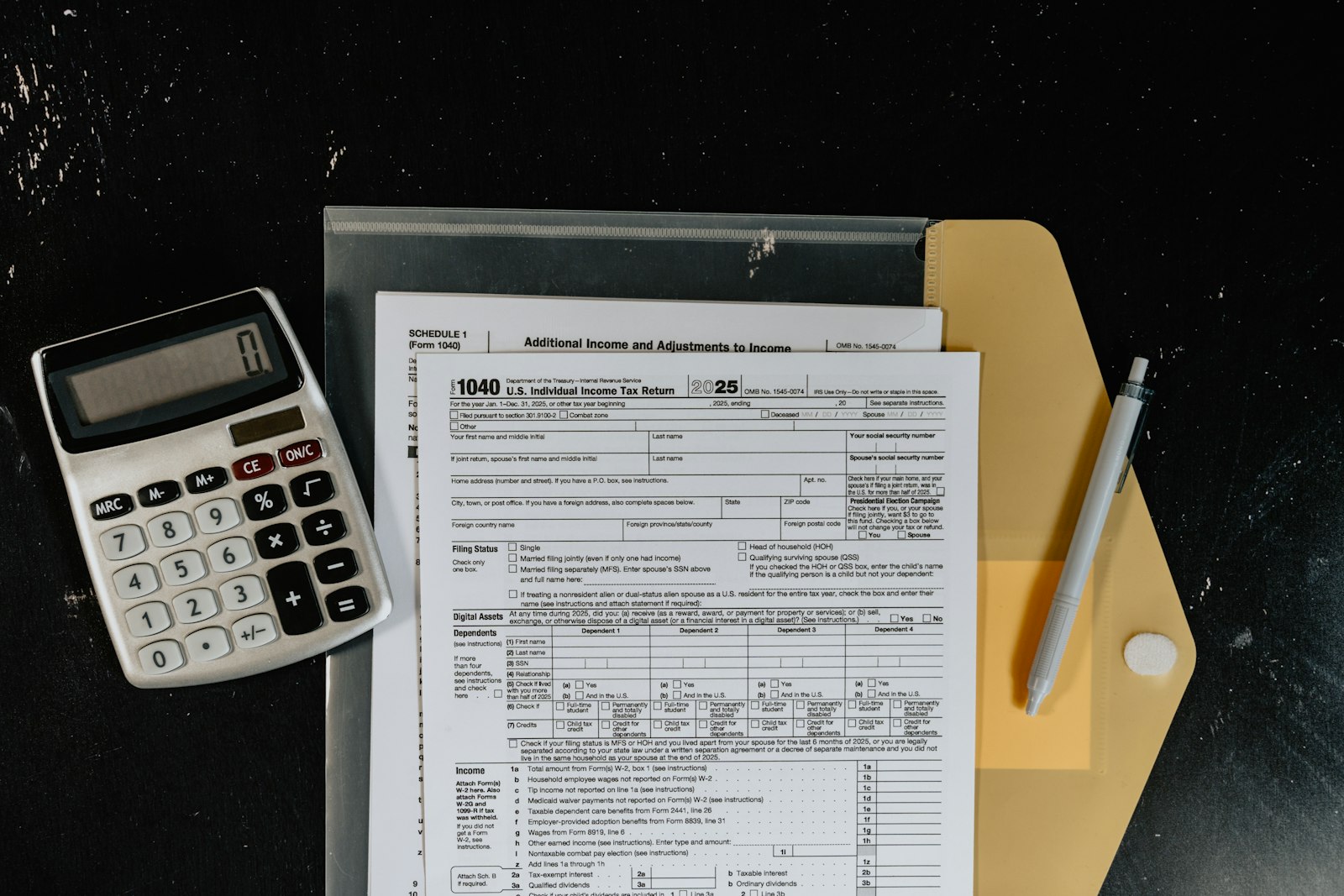
The Lower TDS Certificate: Getting More of Your Money Sooner
A seller who believes the standard TDS rate will deduct meaningfully more than their actual tax liability can apply to the Income Tax Department for a Lower TDS Certificate under Form 13, before the sale transaction closes wherever possible. Once granted, this certificate authorises the buyer to deduct TDS at a lower, specifically calculated rate rather than the default rate, meaning the seller receives a larger portion of the sale proceeds immediately rather than waiting to claim a refund after filing an income tax return the following year. This application takes real processing time with the Assessing Officer, so it's worth starting well before a sale agreement is finalised rather than as a last-minute step once a buyer is already lined up.
Form 15CA and Form 15CB: The Paperwork That Actually Moves the Money
Form 15CA and Form 15CB are the documents that authorise a bank to actually execute an NRO-to-abroad remittance, and which specific parts apply depends on the amount and taxability of the remittance. For remittances aggregating up to Rs 5 lakh in a financial year, only Form 15CA Part A, a self-declaration, is required. Above Rs 5 lakh and where the remittance is taxable, which describes the overwhelming majority of property sale proceeds, Form 15CA Part C is required, along with Form 15CB, a certificate from a practising Chartered Accountant confirming the nature of the remittance, the tax already deducted, and that the remittance complies with applicable tax provisions. Where a remittance above Rs 5 lakh is actually non-taxable, or where a certificate has separately been obtained from the Assessing Officer, Part B or Part D applies instead. For most NRI property sales, the Part C plus Form 15CB combination is the standard requirement, and engaging a Chartered Accountant early in the process, rather than only after the sale deed is registered, keeps this step from becoming the final bottleneck before funds actually move.
Step-by-Step: From Sale Agreement to Funds Landing Abroad
The realistic sequence runs through several stages. First, the sale agreement is executed and the buyer deducts TDS under Section 195 at the point of payment, or at the lower rate if a Form 13 certificate was obtained beforehand. Second, the net sale proceeds, after TDS, are credited to the seller's NRO account. Third, the seller engages a Chartered Accountant to prepare Form 15CB, confirming the remittance's tax compliance. Fourth, Form 15CA is filed electronically on the income tax portal, referencing the CA's Form 15CB where applicable. Fifth, both forms, along with the standard KYC and source-of-funds documentation, are submitted to the authorised dealer bank holding the NRO account. Sixth, the bank processes the remittance, converting rupees to the seller's foreign currency of choice and transferring the funds abroad, a step that itself can take anywhere from a few days to a couple of weeks depending on the specific bank's internal processing. 
Documentation Checklist
- Registered sale deed for the property sold
- TDS challan or Form 16A confirming the tax actually deducted at source
- Original FIRC or inward remittance documentation, if claiming the foreign-currency return-of-principal route
- PAN card, mandatory for the transaction and for filing Form 15CA
- Passport and OCI card, if applicable
- Form 13 Lower TDS Certificate, if one was obtained
- Form 15CB from a practising Chartered Accountant
- NRO account statements confirming the sale proceeds have been credited
Common Mistakes NRIs Make with Repatriation
- Assuming the entire sale proceeds can be repatriated freely simply because the property was originally bought with foreign currency, without realising the unrestricted route is capped at two residential properties in a lifetime
- Not retaining the original FIRC or inward remittance certificate from years earlier, which is specifically needed to document the foreign-currency return-of-principal claim
- Waiting until after a sale agreement is signed to apply for a Lower TDS Certificate, when the Form 13 process needs real lead time with the Assessing Officer
- Not engaging a Chartered Accountant early enough for Form 15CB, treating it as a final formality rather than a step that itself takes real time
- Assuming a spouse's separate NRI status doesn't create an independent USD 1 million ceiling, when in fact each individual has their own
- Overlooking that commercial property carries no property-count restriction, and unnecessarily structuring a sale around the residential two-property cap that doesn't actually apply
What If You're Selling More Than USD 1 Million Worth in a Year
A seller whose net proceeds exceed the USD 1 million annual ceiling has two realistic options: stagger the repatriation across two or more financial years, moving up to the ceiling amount each year until the full sum has been transferred, or apply for prior RBI approval through the authorised dealer bank to remit the full amount within a single financial year. The staggered approach is simpler administratively but means part of the proceeds sit in the NRO account, earning NRO interest rates, for a longer period before reaching the seller abroad; the RBI approval route moves everything faster but requires a more involved application and generally a clearer justification for why single-year repatriation is needed. Neither option is available without first ensuring TDS, Form 15CA/15CB, and all standard documentation are already in order, since RBI approval addresses the ceiling itself, not the underlying tax compliance requirements. Sellers anticipating a proceeds figure well above the ceiling are generally better served planning the staggered route from the outset, since RBI approval applications for single-year repatriation above the standard ceiling are not routinely granted and typically require a specific, documented reason rather than simple convenience.
Separately, and worth mentioning here since it affects the underlying sale that generates these proceeds in the first place, any seller working through a broker or dealing with a buyer sourced through a project should independently confirm the project's RERA registration directly on the Karnataka RERA portal before finalising a sale agreement, since a dispute over an unregistered or improperly represented project can delay the entire sale and, by extension, the repatriation timeline that depends on it.
Who This Guide Serves
This guide is written for any NRI, regardless of country of residence, who is selling or planning to sell property in India and needs to understand exactly how much can be repatriated, under which route, and what paperwork actually moves the money. It complements the country-specific guides elsewhere in this series, covering how the broader process interacts with a Canada, Australia, or Singapore residency specifically, alongside our Gulf NRI guide for buyers based in the UAE, Saudi Arabia, or Kuwait, while this piece focuses on the FEMA and RBI mechanics that apply identically regardless of where the seller lives. Anyone finalising a sale should also independently verify the buyer's payment schedule and the property's own registration history through our property registration in Karnataka guide, and confirm applicable stamp duty on any related transaction through our stamp duty calculator. It draws on our Senior Property Advisor's two decades tracking Mangalore's real estate market and NRI buyer and seller patterns specifically, detailed on the author profile page.
Frequently Asked Questions
Can I repatriate the full sale proceeds of my Indian property?
It depends on how the property was originally funded. If bought with foreign currency, the original investment can be repatriated freely, capped at two residential properties in a lifetime; any gain above that, or proceeds from further properties, follow the standard USD 1 million per financial year cap.
What is the two-property cap, exactly?
The unrestricted return-of-original-foreign-investment route for residential property is limited to a lifetime maximum of two properties. This restriction doesn't apply to commercial property, which has no property-count limit under either repatriation route.
How much can I repatriate per year?
Up to USD 1 million per financial year (April to March) per individual, from an NRO account, covering the combined total of property sale proceeds, rental income, and other NRO-sourced funds.
What documents do I need to actually move the money?
Form 15CA and, for most property sales, Form 15CB from a Chartered Accountant, alongside the registered sale deed, TDS documentation, and, if claiming the foreign-currency route, the original FIRC from the time of purchase.
Can I get a lower TDS deduction than the standard rate?
Yes, by applying for a Lower TDS Certificate under Form 13 with the Income Tax Department, ideally before the sale transaction closes, so the buyer can deduct at the lower, specifically calculated rate rather than the default rate.
What if my sale proceeds exceed USD 1 million?
You can either stagger the repatriation across two or more financial years, or apply for prior RBI approval through your authorised dealer bank to remit the full amount within a single year.
Considering a property sale and need help planning the repatriation timeline? Call 7676870876 or WhatsApp your details to 9606230962, or email reach@onecityproperty.com.



News insight
 29/07/2026
OCI vs NRI: Property Rights Compared
A clear comparison of NRI and OCI status and what each actually means for buying, inheriting, and se...
 29/07/2026
NRI Property Buying Guide for Mangalore: Complete Process for Singapore Residents
A complete guide for Singapore-based NRIs buying property in Mangalore: FEMA rules, apostille-based...
 29/07/2026
NRI Property Buying Guide for Mangalore: Complete Process for Australia Residents
A complete guide for Australia-based NRIs buying property in Mangalore: FEMA rules, apostille-based...