Bengaluru Suburban Rail Project: The Complete, Honest Guide to Every Corridor

Published: 23 August 2026 | By L K Monu Borkala, CEO & Founder, OneCity Property — 15 years of property consultancy experience and over 20 years in marketing and management at OneCity Technologies Pvt. Ltd.
Bengaluru Suburban Rail Project: The Complete, Honest Guide to Every Corridor
Quick answer: The Bengaluru Suburban Rail Project (BSRP) is a planned 148-149 km, four-corridor commuter rail network being built by K-RIDE, distinct from and complementary to Namma Metro. As of August 2026, none of it is operational. Two of the four corridors have seen zero ground construction. The other two - Mallige and Kanaka - sit at roughly 30 percent and 10 percent physical progress respectively, and both lost their original contractor, L&T, to a bitter mid-construction termination in July 2025 that's still working through arbitration. Project cost has already been revised upward from ₹15,767 crore to ₹16,876 crore before most of the network has broken ground. This guide walks every corridor, every confirmed station, and gives you the real construction status corridor by corridor - not the marketing version.
If you've read our companion Namma Metro station guide, you already know we don't sugarcoat infrastructure timelines there either - but Namma Metro, whatever its delays, has a genuine track record of eventually delivering what it announces. This project's story so far is meaningfully different, and this guide reflects that difference in practice rather than borrowing the metro network's more settled reputation by association.
Most articles about Bangalore's suburban rail read like press releases. They lead with the ridership projections and the ribbon-cutting photos from 2023, and they bury - if they mention at all - that the original contractor walked off two of the four corridors in the middle of construction, that the project has already missed its first deadline by a wide margin, and that half the network hasn't seen a single spade of earth moved. We're not doing that here. If you're weighing a property decision against this project's timeline, you deserve the actual construction status, not the announcement-day enthusiasm.
What Makes This Different From Namma Metro
Before the corridor-by-corridor breakdown, it's worth understanding what this project actually is, because "suburban rail" gets casually conflated with "metro" constantly, and they are truly different systems.
Namma Metro is a standard-gauge urban rapid transit system - frequent trains, short distances between stations, built specifically for intra-city hops. The Bengaluru Suburban Rail Project is broad-gauge commuter rail, sharing conceptual DNA with the Indian Railways network it partly runs alongside, built for longer-distance trips connecting Bengaluru's core to satellite towns 20 to 45 km out. Think of the relationship the way you'd think of Mumbai's local trains versus the Mumbai Metro - related, complementary, but not the same tool for the same job. Stations sit further apart, trips cover more ground per journey, and the whole system is designed around a different commuting pattern: people living in Devanahalli, Chikkabanavara, or Heelalige and working in central Bengaluru, not someone hopping three stops within a single neighbourhood cluster.
This matters directly for property decisions. A metro station changes a locality's character within a 500-metre radius. A suburban rail station changes whether an entire satellite town is commutable at all.
The Network at a Glance
| Corridor | Kannada Name | Route | Length | Stations | Ground Progress (Aug 2026) |
|---|---|---|---|---|---|
| Corridor 1 | Sampige | KSR Bengaluru (Majestic) ↔ Devanahalli, + Airport branch | ~41.4 km + 5.5 km branch | 19 | Zero - still in tendering |
| Corridor 2 | Mallige | Benniganahalli ↔ Chikkabanavara | ~25 km | 12-16 | ~30% - original contractor exited, re-tendered |
| Corridor 3 | Parijaata | Kengeri ↔ Whitefield | ~35.5 km | Unconfirmed | Zero - still in tendering |
| Corridor 4 | Kanaka | Heelalige ↔ Rajanukunte | ~46.9 km | 18 | ~10% - original contractor exited |
Total: roughly 148-149 km across all four corridors, with station counts across sources ranging from 57 to 69 depending on whether interchange stations and the airport branch are counted separately - we'll flag this imprecision in practice rather than pick a number and present it as settled fact.
The Four Corridors, Mapped
Here's the full network laid out schematically - solid lines mark the two corridors with genuine, verified construction progress; dashed lines mark the two corridors still at zero ground construction. This distinction is the single most important thing this map communicates, and it's precisely the distinction most other coverage of this project glosses over.
Schematic representation - station positions indicate sequence and interchange relationships, not geographic distance. Always verify current alignment details through K-RIDE's official channels for any location-specific decision.
Why the Corridors Are Named After Flowers
Each of the four corridors carries a Kannada name for a regional flower - Sampige (Magnolia champaca), Mallige (Jasmine), Parijaata (Nyctanthes arbor-tristis, the night-flowering coral jasmine), and Kanaka (Crossandra infundibuliformis). Taken together, the first syllables spell out "Sampark" - a Kannada word meaning connectivity. It's a nice piece of naming, and worth knowing because official K-RIDE documents, tender notices, and news coverage use these flower names as often as they use "Corridor 1" through "Corridor 4" - if you're researching this independently, you'll need both naming conventions to find everything.
The Money and the Timeline - What's Actually Confirmed
The project was approved by India's Central Government in October 2020 with an estimated cost of ₹15,767 crore. Prime Minister Narendra Modi laid the foundation stone on 20 June 2023, setting a 40-month completion deadline - meaning October 2025 for all four corridors. That deadline has been missed entirely; as of this guide's publication, zero kilometres are operational.
The project's cost has since been revised upward to ₹16,876 crore, an increase of over ₹1,000 crore approved by the Karnataka state Cabinet - before the majority of construction has even started. K-RIDE (Rail Infrastructure Development Company Karnataka Limited), the joint venture between the Government of Karnataka and the Ministry of Railways executing the project, has publicly stated a revised target of 2028 for full completion, though individual corridor timelines vary significantly and several officials have declined to commit to firm dates given the project's track record.
Funding comes partly through international loans - a €500 million (₹4,552 crore) facility from Germany's KfW Development Bank for Corridors 1 and 3, and additional financing discussions with the European Investment Bank. This international funding structure is itself worth understanding: projects with multilateral development bank financing typically carry more rigorous land-acquisition and environmental compliance requirements, which - while good for long-term project quality - has been cited as a contributing factor in the delays.
The L&T Story: Why This Matters More Than a Typical Construction Delay
This deserves its own section because it's the single most important piece of context missing from most coverage of this project, and it directly affects how much confidence you should place in any timeline K-RIDE announces going forward.
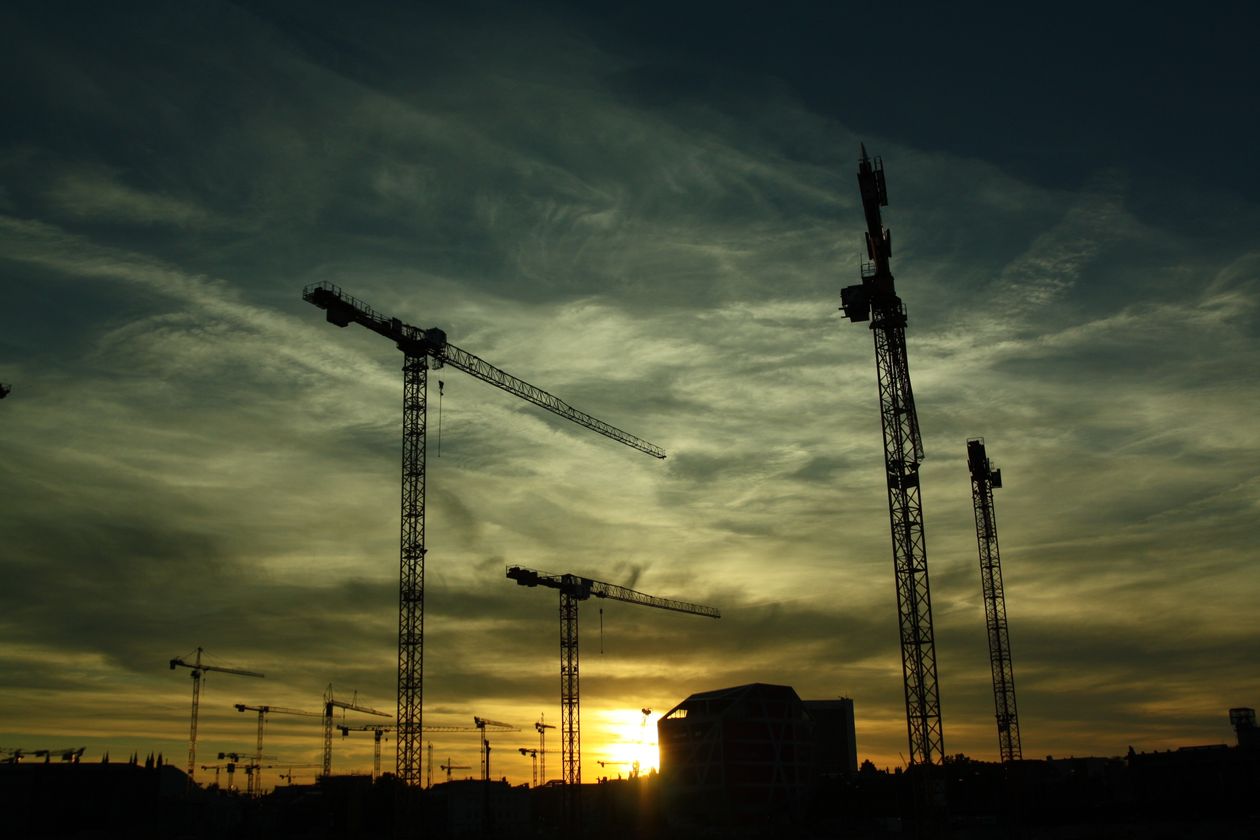
In August 2022, Larsen & Toubro (L&T) - one of India's largest and most experienced infrastructure contractors - won the civil works contract for Corridor 2 (Mallige Line). In December 2023, the same company won the contract for Corridor 4 (Kanaka Line). These were the only two corridors where any physical construction ever began. Work progressed slowly through 2023 and 2024, with L&T repeatedly citing delays in land handover as the reason work fronts weren't available on schedule.
By March 2025, L&T had effectively stopped active construction, stating that idle resources - equipment and crews sitting unused while waiting for usable land - were generating financial losses. On 31 July 2025, L&T formally terminated both contracts. The company's legal notice claimed that even 22 months after its Letter of Acceptance, only 12.83 km - roughly 49 percent - of the required work front had been made available, and that in "unworkable fragmented stretches" rather than continuous, constructible sections. L&T moved to Bengaluru's commercial court seeking approximately ₹505 crore in damages, and the dispute is now with a three-member panel of retired judges through an Amicable Settlement Committee mechanism built into the original contract.
K-RIDE's public position is that L&T's termination was "unilateral and illegal" - that the contract's own provisions allowed for time extensions specifically to cover exactly this kind of land-handover delay, and that L&T instead made contract-restructuring demands (converting a fixed-price EPC contract into an itemised billing arrangement) that weren't permitted under the agreement terms. K-RIDE also cited L&T's own performance issues - frequent changes of on-site project managers and inadequate resource mobilisation - as contributing factors.
Whichever side's account you find more persuasive, the practical outcome for property buyers is the same: the two corridors that had actually started construction lost their contractor mid-build, litigation is ongoing, and K-RIDE has had to re-tender the remaining civil work. For Corridor 2, that re-tendering happened in November 2025, split into three separate packages specifically to attract more bidders and reduce the risk of a single contractor controlling the entire remaining scope. As of this writing, only about 30 to 35 percent of the work on Corridors 2 and 4 combined had been completed when L&T exited - meaning the majority of even the two "active" corridors still needs a contractor, mobilisation, and years of construction ahead.
For Corridors 1 (Sampige) and 3 (Parijaata), none of this drama even applies yet, because civil construction contracts for those two corridors had not been awarded as of L&T's exit - they remain in various stages of tendering, with zero physical ground work to interrupt in the first place.
What's truly Under Construction Right Now
Stripping away announcements and tender notices, here's what has physically happened on the ground as of August 2026.
Corridor 2 (Mallige Line) has the most visible progress of the four. Casting yards, batching plants, and utility-shifting work have been completed at multiple points along the route - Hebbal, Yeshwantpur, Jalahalli, and near Devanahalli. Test piles have been cast, and some viaduct piers exist. The line's priority section - Chikkabanavara to Yeshwantpur - was the original near-term target, though the L&T exit has pushed realistic completion for even this shorter stretch toward March 2027 rather than the originally stated December 2026. A notable addition to this corridor: a 1.2 km double-decker flyover at Mathikere, where the suburban rail track will run above a road flyover, funded separately by the erstwhile BBMP at a cost of ₹150 crore, addressing a specific space-constraint request from the city.
Corridor 4 (Kanaka Line) has seen utility-shifting work and some early civil activity, but at a meaningfully slower pace than Mallige - officials cited roughly 10 percent physical progress at the point L&T exited, against Mallige's 30 percent. This corridor's re-tendering status is less clear in public reporting than Corridor 2's, suggesting it may be further behind in getting back on track.
Corridors 1 and 3 remain, as of this guide's publication, without an awarded civil works contract. Land alignment revisions, tender preparation, and design finalisation continue, but "under construction" would be an inaccurate description for either.
Corridor 1 - The Sampige Line: KSR Bengaluru to Devanahalli and the Airport
This is, on paper, the single most consequential corridor of the four - the one that will eventually give Bengaluru's city centre a direct rail link to Kempegowda International Airport, running roughly parallel to (and independent of) the Blue Line metro corridor that's targeting the same airport connectivity via a different route through Hebbal. It's also, as of today, the corridor furthest from having a shovel in the ground.
The Sampige Line runs 41.4 km from KSR Bengaluru (Majestic) north through Yelahanka to Devanahalli, with a 5.5 km branch peeling off toward the airport itself. K-RIDE has split it into two packages: 1A, covering Majestic to Yelahanka Junction (17.63 km, seven stations - five improve and two at-grade), and 1B, covering Yelahanka to Devanahalli (23 km). The airport branch splits off at a "trumpet junction" on Ballari Road and will include two stations - one, tentatively called Airport Terminal, positioned near the airport's parking areas, and a second near the junction of Hennur-Bagalur-Begur Road, still described as tentative in the most recent reporting available.
Tenders for package 1A were issued with an estimated cost of ₹1,422.6 crore, funded in part through a €300 million loan secured from the European Investment Bank, with a stated 30-month construction deadline from contract award. Package 1B's tendering was expected to follow roughly a month after 1A's, per K-RIDE's own stated timeline - though as with much of this project, stated timelines and actual execution have diverged significantly.
Wikipedia's infrastructure tracking lists a planned opening of June 2029 for this corridor - truly the furthest-out date of any BSRP corridor, and one that should be treated as a current best estimate rather than a firm commitment, given this project's overall track record.
What This Means If You're Evaluating Property Along This Route
If you're specifically weighing a Devanahalli, Yelahanka, or airport-corridor property purchase against this suburban rail connection, the honest framing is: this is a truly valuable long-term connectivity story, but "long-term" here plausibly means the early-to-mid 2030s once you account for this project's demonstrated pattern of missed deadlines. The Blue Line metro extension to the airport via Hebbal - covered in our full Namma Metro station guide - has considerably more construction progress and a nearer-term realistic timeline, and should be weighted more heavily than the Sampige Line if airport rail access is your primary investment thesis right now.
Corridor 3 - The Parijaata Line: Kengeri to Whitefield
The Parijaata Line is, in some ways, the most geographically interesting corridor of the four, because its 35.5 km route cuts directly across the city from west to east - Kengeri through Krishnarajapura (KR Puram), Benniganahalli, Bengaluru Cantonment, and KSR Bengaluru, ultimately reaching Whitefield. This is a corridor that, if built, would connect two of Bengaluru's most significant residential and employment belts without requiring a change of line - something neither Namma Metro nor any other current infrastructure plan achieves in a single continuous run.
That said, this is also the corridor with the least public detail available. Tenders for civil works were, per the most recent reporting we could verify, still pending as of this guide's publication - meaning Corridor 3 sits in essentially the same pre-construction state as Corridor 1. No detailed, confirmed station-by-station list for this corridor was available in public K-RIDE documentation or news coverage at the time of writing; where other guides present a definitive Parijaata station list, treat that with real skepticism unless it cites an actual K-RIDE tender document, since we could not independently verify one.
What we can say with confidence: the route passes through KR Puram, an area our dedicated KR Puram market guide already covers in depth for its existing Purple Line metro and railway station access, and through Whitefield, where our Whitefield property guide already flags a "planned station at Whitefield for affordable rapid transit" as a genuine but not-yet-operational factor in that locality's connectivity story.
Corridor 2 - The Mallige Line: Benniganahalli to Chikkabanavara
This is the corridor with the most genuine, verifiable construction activity, and the one most worth tracking closely if you have a stake in North or Northeast Bangalore connectivity. It runs roughly 25 km - reported variously as 25.01, 25.02, 25.14, and 25.57 km across different official and news sources, a small but real inconsistency worth flagging rather than papering over - connecting Benniganahalli in the east to Chikkabanavara in the northwest, passing through Hebbal and Yeshwantpur along the way.
The confirmed station list, per K-RIDE's own tender documentation, runs: Benniganahalli, Kasturi Nagar, Seva Nagar, Banaswadi, Nagawara, Kanaka Nagar, Hebbal, Mathikere, Yeshwantpur, Shettyhalli, Myadarahalli, and Chikkabanavar - 12 named stations, though some tracking sources list the total as 16, likely reflecting additional stations added or confirmed after the original tender documentation. We're presenting the 12 names we could directly verify against primary tender sources rather than inflating the list with unconfirmed additions.
| Station | What's Nearby / Why It Matters |
|---|---|
| Benniganahalli | Eastern terminus; also a Purple Line metro interchange point (Tin Factory area), giving this corridor a genuine metro connection at its starting point |
| Kasturi Nagar | Residential pocket in the Banaswadi-adjacent belt |
| Seva Nagar | Serves the broader Banaswadi-Kammanahalli residential corridor |
| Banaswadi | Established North East Bangalore locality - see our Banaswadi locality guide for the full picture of what's already there today |
| Nagawara | Major junction point, also a future Pink Line metro interchange - this station will eventually sit at a genuine multi-line convergence once both projects mature |
| Kanaka Nagar | Residential pocket serving the broader Hebbal-adjacent belt |
| Hebbal | One of North Bangalore's most significant employment and infrastructure hubs - Manyata Tech Park, Hebbal Lake, and the airport highway corridor all converge here |
| Mathikere | Site of the planned 1.2 km double-decker flyover carrying the suburban rail track above a BBMP-funded road flyover |
| Yeshwantpur | Major existing railway junction, already served by Namma Metro's Green Line - this becomes a genuine multi-modal hub once suburban rail arrives |
| Shettyhalli | Transitional zone heading toward the far northwest |
| Myadarahalli | Approaching the western terminus |
| Chikkabanavara | Western terminus - see our dedicated Chikkabanavara buying guide, which covers this specific station's real estate impact in detail, including current plot and apartment pricing ahead of the line's completion |
The priority sub-section - Chikkabanavara to Yeshwantpur - was originally targeted for completion by December 2026. Given the L&T contract termination and subsequent re-tendering, a realistic expectation is closer to March 2027 for even this shorter stretch, with the full Benniganahalli-Chikkabanavara corridor taking meaningfully longer.
Corridor 4 - The Kanaka Line: Heelalige to Rajanukunte
At 46.9 km, this is the longest of the four corridors - running from Heelalige in Bengaluru's far south all the way to Rajanukunte in the far north, cutting through some of the city's fastest-growing eastern and northeastern residential belts along the way. It's also, alongside Mallige, one of the two corridors that actually saw construction begin, though at a slower pace - roughly 10 percent physical progress at the point L&T exited, against Mallige's 30 percent.
K-RIDE's tender documentation confirms 18 stations across two construction packages:
| Package | Stations |
|---|---|
| C4A (South) | Heelalige, Singena Agrahara, Huskur, Ambedkar Nagar, Carmelaram, Bellandur, Marathahalli, Doddanekkundi, Kaggadasapura |
| C4B (North) | Channasandra, Horamavu, Hennur, Thanisandra, RK Hegde Nagar, Jakkur, Yelahanka, Muddanahalli, Rajanukunte |
This is a truly significant list for East and Northeast Bangalore property buyers, because it touches several localities we already cover in depth. Carmelaram appears here as a confirmed station - our Panathur locality guide already notes Carmelaram Railway Station as an existing suburban rail reference point for that area, and this Kanaka Line station is what that reference is pointing toward. Similarly, Thanisandra appears directly on this line - our Thanisandra locality guide already flags "Thanisandra Railway Station" as roughly 1.6 km from the locality, with an honest caveat that suburban rail frequency runs less often than metro service, worth reading in full if Thanisandra is on your shortlist. Hennur similarly connects to our Hennur Road locality guide, and Marathahalli and Bellandur both fall within the broader ORR tech corridor that so much of East Bangalore's employment growth depends on.
Yelahanka functions as this corridor's interchange point with the Sampige Line (Corridor 1) - meaning once both lines are eventually operational, Yelahanka becomes a genuine two-corridor suburban rail hub, on top of its existing road and bus infrastructure.
Ridership projections circulated at the tendering stage suggested more than 3.5 lakh daily riders on the Kanaka Line alone once operational - a substantial number, though worth holding loosely given how far this corridor still is from completion.
The Five Interchange Stations
Once (or if) all four corridors reach completion, five stations will function as interchanges between two corridors each, per K-RIDE's own network planning documents:
| Interchange Station | Connects |
|---|---|
| Bangalore City (KSR) | Corridor 1 (Sampige) ↔ Corridor 3 (Parijaata) |
| Yesvantapur | Corridor 1 (Sampige) ↔ Corridor 2 (Mallige) |
| Lottegollahalli | Corridor 1 (Sampige) ↔ Corridor 2 (Mallige) |
| Yelahanka | Corridor 1 (Sampige) ↔ Corridor 4 (Kanaka) |
| Benniganahalli | Corridor 2 (Mallige) ↔ Corridor 4 (Kanaka) |
Notice that Corridor 1 (Sampige) touches three of the five interchange points despite being one of the two corridors with zero ground construction - a useful reminder that "planned interchange" and "usable connectivity" remain very different things until multiple corridors are simultaneously operational.
The Technical Side: Rolling Stock, Gauge, and What "Metro-Style" Actually Means Here
A detail that truly matters for understanding what kind of service this will eventually be: the Bengaluru Suburban Rail Project runs on broad gauge (1,676 mm) track, the same gauge used across the Indian Railways network, not the standard gauge Namma Metro uses. This isn't a trivial technical footnote - it means BSRP trains can, in principle, share infrastructure with existing Indian Railways lines in ways a metro system never could, but it also means the rolling stock, signalling, and operational model come from a truly different engineering tradition.
In May 2026, ICF (Integral Coach Factory, the same body that manufactures much of Indian Railways' rolling stock) signed an MoU with K-RIDE for 153 "metro-style" rail coaches. This phrase is doing real work - it signals that despite running on broad-gauge track, the actual passenger experience is being designed to feel closer to a metro or an EMU (electrical multiple unit) service - frequent stops, quick boarding, standing-room-friendly layouts - rather than a traditional long-distance Indian Railways coach. Think Mumbai's suburban local trains as the closest existing comparison, rather than an intercity express.
Electrification is planned at 25 kV 50 Hz AC overhead catenary - again, consistent with Indian Railways standards rather than Namma Metro's 750V DC third-rail system. Two depots are confirmed: Soladevanahalli for the Mallige Line, and Akkupete plus a second depot near Devanahalli for the Sampige Line.
Reading the Real Estate Impact in practice
Every infrastructure guide on this topic makes some version of the claim that suburban rail will transform property values along its route. That's very likely true eventually. The honest question is timing, and here the answer differs meaningfully from how we'd frame Namma Metro's impact.
Our Namma Metro guide makes the case that most metro-driven appreciation happens during confirmed construction, before a station opens - because metro construction in Bangalore, whatever its delays, has a demonstrated pattern of eventually finishing. That same logic applies with real caution here, because this project's pattern is different: announced deadlines have been missed repeatedly, a major contractor exited mid-construction on the two corridors that had actually started, and two of the four corridors haven't started at all. "Confirmed construction" on Namma Metro's Blue or Pink Lines carries a different weight than "confirmed construction" on BSRP's Mallige or Kanaka Lines, purely based on execution track record.
That doesn't mean BSRP-adjacent property is a bad bet - it means the risk-and-timeline math is different, and any pricing premium you're asked to pay today for "suburban rail access" deserves more scrutiny here than the equivalent premium near a Namma Metro station under active, uninterrupted construction. A truly useful mental model: treat confirmed-and-actively-progressing corridors (Mallige, cautiously) as a long-horizon bet with real but delayed upside, and treat corridors still in tendering (Sampige, Parijaata) as closer to speculative until an actual construction contract is signed and mobilised - not just announced.
What This Means Corridor by Corridor
Along the Mallige Line (Benniganahalli through Hebbal, Yeshwantpur, to Chikkabanavara), there's genuine, physical, verifiable construction activity - casting yards, piers, utility shifting. This is the strongest case for a "the infrastructure is truly coming, even if later than promised" thesis among all four corridors. Our Chikkabanavara buying guide already makes this case directly for that specific terminus location, noting current pricing running 30-40 percent below comparable Jalahalli and Nagasandra rates - a gap the guide reasonably expects to tighten once the line actually opens.
Along the Kanaka Line (Heelalige through Carmelaram, Bellandur, Marathahalli, Thanisandra, Hennur, up to Yelahanka and Rajanukunte), construction has begun but at a slower pace, and re-tendering status is less clear than Mallige's. Most of the localities this line touches - Marathahalli, Bellandur, Thanisandra, Hennur - already have strong independent growth stories driven by IT employment and Outer Ring Road proximity, meaning suburban rail here is more of a genuine bonus on top of an already-solid thesis than the entire investment case.
Along the Sampige and Parijaata Lines (the airport corridor and the Kengeri-Whitefield cross-city route), we'd counsel real patience. Zero ground construction as of this guide's publication means any "suburban rail premium" being marketed on properties along these routes is pricing in a plan, not progress. That's not necessarily wrong for a buyer with a truly long horizon and risk tolerance, but it should be understood as exactly that - a bet on a plan, not a reward for demonstrated infrastructure delivery.
A Related Project Worth Knowing: The Bengaluru Circular Railway
If you research BSRP long enough, you'll run into references to a second, related but truly separate project - the Bengaluru Circular Railway, a proposed 287 km network estimated at ₹23,000 crore, designed to link satellite towns sitting roughly 20 to 25 km from the city core, including places like Niduvanda and Doddaballapur. K-RIDE has floated a feasibility study to explore integrating this circular network with BSRP, and separately discussed a possible BSRP "Phase 2" that could span anywhere from 146 km to a much larger 452 km depending on which planning document and which year you're reading - the wide range itself telling you how early-stage this expansion thinking still is.
Our honest recommendation: don't factor either of these into any current property decision. Both remain in pre-feasibility or conceptual stages, with no approved funding, no awarded contracts, and no confirmed alignment. They're worth knowing exist, for context on how large Bengaluru's rail ambitions eventually could become, but treating them as a near-term buying signal today would be getting well ahead of the actual planning process.
Suburban Rail vs Metro: A Practical Comparison for Buyers
Since these two systems get confused constantly, here's a direct, side-by-side comparison worth keeping in mind whenever you're evaluating a property's rail-connectivity story.
| Factor | Namma Metro | Suburban Rail (BSRP) |
|---|---|---|
| Gauge / Technology | Standard gauge, 750V DC third rail | Broad gauge, 25kV AC overhead |
| Typical station spacing | ~1-1.5 km apart | Several km apart - longer-distance trips |
| Best suited for | Intra-city commutes, short hops | City-to-satellite-town commutes |
| Current status | 86 stations operational across 3 lines | Zero stations operational; 2 of 4 corridors under (interrupted) construction |
| Execution track record | Delayed but consistently eventually delivered | Missed first deadline entirely; major contractor exited two active corridors |
| Implementing agency | BMRCL | K-RIDE |
The practical takeaway: if a property is near both an operational (or under-construction) metro line and a planned suburban rail station, weight the metro connectivity far more heavily in your decision today. If suburban rail is the only rail-based connectivity story for a specific location - as it currently is for places like Devanahalli, Chikkabanavara, and much of the Kanaka Line's northern stretch - go in with clear eyes about the realistic timeline, and don't let a broker's "the suburban rail is coming" pitch carry more urgency than the actual construction evidence supports.
Common Mistakes Buyers Make With Suburban Rail Premiums
Treating "under construction" as uniform across all four corridors. As this guide has hopefully made clear, "under construction" truly means something for Mallige and, to a lesser extent, Kanaka. It means essentially nothing yet for Sampige and Parijaata, where zero ground work has occurred.
Not distinguishing suburban rail frequency from metro frequency. Even once operational, suburban rail services in India typically run less frequently than metro lines - this is standard across Indian suburban rail systems, not a BSRP-specific flaw, but it matters for daily-commute planning. Our Thanisandra locality guide already flags this distinction explicitly, and it's worth internalising broadly rather than assuming metro-equivalent service just because a station exists nearby.
Assuming a K-RIDE tender announcement equals a construction start. This project's history shows a wide, sometimes multi-year gap between "tender issued," "contract awarded," and "physical work actually begins on usable land." Treat each of these as a truly separate milestone, not interchangeable proof of progress.
Ignoring the contractor-dispute risk entirely. The L&T termination isn't just historical trivia - it demonstrates that even a corridor with an awarded contract and visible early construction can stall for years over land-handover and payment disputes. Any "the line will open by [date]" claim from a broker or developer should be treated with the same scepticism you'd apply to any other unconfirmed infrastructure promise, arguably more so given this specific track record.
Overweighting suburban rail for locations that already have a strong independent growth story. Marathahalli, Bellandur, and Thanisandra don't need the Kanaka Line to justify their current pricing - they're already driven by IT employment and Outer Ring Road access. Treat suburban rail there as a genuine future bonus, not the core thesis, and don't pay a premium as if the line were the primary reason to buy.
A Brief History: Why This Project Took Over Forty Years to Break Ground
Understanding why this project moves so slowly requires understanding just how long it's been discussed. The first serious proposal for a Bengaluru suburban rail system dates back to 1983 - over four decades before a single station opened. Several subsequent proposals followed over the years without progressing to approval. A notable 2010 citizen-led effort, the "Call to Action" report from Praja Bangalore, proposed a 376 km network built around three hubs - Yesvantpur Junction, Benniganahalli, and Yelahanka Junction - with 42 new stations, developed in collaboration with the Indian Institute of Science's Centre for Infrastructure, Sustainable Transportation and Urban Planning. That report shaped much of the later official thinking, even though its specific network design wasn't adopted wholesale.
The current project traces to RITES' 2018 proposal, approved in 2019 - with the alignment reduced somewhat from earlier, more ambitious versions (the Mallige Line, for instance, was originally conceived as an 83 km route through Tumakuru before being scaled back to its current 25 km Benniganahalli-Chikkabanavara alignment). K-RIDE itself was formally established as the joint-venture vehicle between the Karnataka government and the Ministry of Railways, and began preparatory work - land surveys, staff hiring, tender groundwork - starting in 2020. Actual construction activity didn't begin until 2022, on just two of the eventual four corridors.
This history matters for one practical reason: a project that took 37 years to move from first proposal to any construction activity, and has already missed its post-construction-start deadline by a wide margin, has earned genuine scepticism about announced dates. That's not cynicism for its own sake - it's simply respecting the project's own demonstrated pattern.
Which Corridor Actually Matters for Your Situation
Rather than treating "suburban rail access" as one uniform factor, here's how to think about it based on what you're actually trying to do.
If You're Buying in Chikkabanavara or Along the Mallige Line's Western Stretch
This is truly the strongest current case among all four corridors. Real construction activity, a re-tendering process already underway rather than stalled indefinitely, and - per our own dedicated Chikkabanavara guide - a meaningful current pricing gap versus comparable North Bangalore locations that could close once the line actually opens. Treat this as a genuine, if delayed, infrastructure story rather than pure speculation.
If You're Buying Near Hebbal, Yeshwantpur, or Nagawara
These locations benefit from BSRP's Mallige Line, but they're also already well-served or soon-to-be-served by Namma Metro's Green Line (Yeshwantpur) and the upcoming Blue Line and Pink Line (Hebbal and Nagawara respectively). Suburban rail here is a genuine bonus on top of an already strong metro-driven connectivity thesis - evaluate the metro timeline as your primary factor, with BSRP as additional long-term upside.
If You're Buying Along the Kanaka Line's East Bangalore Stretch (Marathahalli, Bellandur, Thanisandra, Hennur)
Same logic as above - these are already strong, independently-justified East Bangalore locations driven by IT employment and ORR access. Suburban rail adds a genuine long-term dimension, but shouldn't be the reason you're paying a premium today.
If You're Buying Near Devanahalli or Along the Airport Corridor
Be the most patient here. The Sampige Line serving this corridor has zero ground construction as of this guide's publication and Wikipedia's own tracking lists a 2029 planned opening - treat any current "suburban rail premium" being marketed on Devanahalli-area properties as pricing in a plan rather than progress. Devanahalli does have other genuine growth drivers - airport proximity itself, the BIAL IT Investment Region, ongoing highway infrastructure - that stand independently of BSRP's timeline, and those factors deserve more weight in a near-term decision than the suburban rail connection specifically.
If You're Buying Along the Parijaata Line (Kengeri to Whitefield)
Similarly early-stage - zero confirmed construction, and even the station list for this corridor remains largely unconfirmed in public documentation. Kengeri and Whitefield both have substantial independent growth stories (Kengeri via the Purple Line metro extension we cover in our Namma Metro guide, Whitefield via its long-established IT employment base), and BSRP's cross-city connection between them should be treated as a genuine long-term bonus rather than a near-term factor.
Deep-Dive: The Five Stations That Matter Most for Property Decisions
Pulling together everything this guide has covered, here's a fuller picture of the five BSRP stations generating the most genuine buyer interest right now - what's actually there today, independent of the rail project's own timeline.
Hebbal (Mallige Line)
| Category | What's truly There Today |
|---|---|
| Employment | Manyata Embassy Business Park - one of Bangalore's largest tech parks, over 150,000 employees across its full footprint |
| Existing Rail/Metro | Hebbal Railway Station already exists on the conventional Indian Railways network; the upcoming Namma Metro Blue Line will also serve this area |
| Road Infrastructure | Hebbal Flyover, direct access to the airport highway (NH-44 / Bellary Road) |
| Green Space | Hebbal Lake, a genuine and well-used recreational area |
| Character | Already one of North Bangalore's most consequential employment and infrastructure hubs, independent of any suburban rail contribution |
Yeshwantpur (Mallige Line)
| Category | What's truly There Today |
|---|---|
| Existing Transit | Yeshwantpur Junction - a major existing Indian Railways station with long-distance and suburban connections, plus an operational Namma Metro Green Line station |
| Retail | Orion Mall, one of Bangalore's largest shopping and entertainment destinations |
| Character | Already a genuine multi-modal transit hub before suburban rail even arrives - this is the strongest existing-infrastructure case of any BSRP station |
Chikkabanavara (Mallige Line Terminus)
| Category | What's truly There Today |
|---|---|
| Current Character | A historically quieter, more peripheral North West Bangalore location - see our full Chikkabanavara buying guide for current pricing and site-versus-apartment analysis |
| Pricing Position | Currently running 30-40 percent below comparable Jalahalli and Nagasandra pricing, per our own site's research - the core of this location's value thesis |
| Depot Presence | Will host the Mallige Line's operational depot at Soladevanahalli, nearby |
Marathahalli / Bellandur (Kanaka Line)
| Category | What's truly There Today |
|---|---|
| Employment | Core Outer Ring Road IT corridor - among the highest concentrations of tech employment anywhere in the city |
| Existing Connectivity | Strong road access via ORR; both locations are frequently discussed as future Blue Line metro catchment areas as well |
| Character | An already-mature, high-value corridor where suburban rail is a genuine but secondary connectivity factor rather than the primary growth driver |
Devanahalli (Sampige Line Terminus)
| Category | What's truly There Today |
|---|---|
| Anchor Institution | Kempegowda International Airport itself, plus the surrounding BIAL IT Investment Region - genuine, independent growth drivers regardless of BSRP's timeline |
| Current Rail Status | Zero suburban rail construction as of this guide's publication; this remains the least infrastructure-advanced of the five stations covered here |
| Honest Assessment | Buy here for the airport and BIAL story if that thesis stands on its own; treat suburban rail access as a genuine multi-year-out bonus, not a near-term factor |
Cantonment (Parijaata Line)
| Category | What's truly There Today |
|---|---|
| Existing Rail | Bengaluru Cantonment Railway Station already exists and functions as a genuine Indian Railways stop, independent of BSRP |
| Character | One of Bangalore's older, more established central neighbourhoods, with a distinct colonial-era layout and character quite different from the city's newer IT-driven corridors |
| Honest Assessment | Sits on the Parijaata Line, which has zero confirmed BSRP construction - but the existing railway station here already provides genuine conventional rail access today, separate from whatever BSRP eventually adds |
The Three Corridors Nobody's Watching Closely Enough
Most coverage of this project focuses on whichever corridor had the most recent news event - usually Mallige, given the L&T saga played out most visibly there. But a few quieter details are worth surfacing for anyone tracking this closely.
The interchange design itself is truly ambitious. Five stations serving as two-corridor interchanges - Bangalore City, Yesvantapur, Lottegollahalli, Yelahanka, and Benniganahalli - means that once (if) the full network completes, a rider could theoretically cross from the far south (Heelalige) to the far north (Rajanukunte) via Kanaka, then interchange at Yelahanka onto Sampige toward Devanahalli and the airport, without touching a road vehicle. That's a truly significant vision for a city this car-dependent. It's also, right now, entirely theoretical, since three of those five interchange stations sit on corridors with zero construction progress.
The double-decker at Mathikere is a small but telling detail. Building suburban rail track directly above a road flyover, specifically to solve a land-constraint problem the erstwhile BBMP flagged, shows a level of engineering problem-solving that doesn't often make headlines but suggests genuine technical competence exists within this project even amid its execution troubles. It's a useful reminder that "delayed" and "poorly engineered" aren't the same thing - this project's problems have been overwhelmingly about land, contracts, and inter-agency coordination, not fundamental design quality.
The gauge choice has long-term implications beyond this project alone. Because BSRP uses the same broad gauge as the national rail network, future extensions - the discussed Phase 2, the separate Circular Railway project, even potential direct connections to existing Indian Railways lines toward Mysuru, Tumakuru, or Kolar - become technically clear in a way a standard-gauge system like Namma Metro could never achieve without a completely separate parallel network. This is a genuine long-term strategic advantage of the suburban rail approach, even though it's cold comfort if you're trying to make a property decision on a 3-to-5-year horizon today.
Fares, Ticketing, and What to Expect Operationally
No official fare structure has been announced for BSRP, since no section is operational yet - but it's worth understanding the general pattern Indian suburban rail systems follow, so you're not caught off guard by assumptions once service does begin. Suburban rail fares in India have historically run lower than equivalent metro fares for comparable distances, reflecting both the different cost structure of broad-gauge rail operations and a policy emphasis on affordability for longer-distance commuters. Ticketing is likely to eventually integrate with the same digital and smart-card infrastructure Namma Metro already uses, given K-RIDE and BMRCL both operate under Karnataka's broader urban transit coordination efforts, though this integration itself hasn't been formally confirmed for BSRP specifically.
On frequency: once the priority sections do open - realistically the Chikkabanavara-Yeshwantpur stretch of the Mallige Line first, given its relative progress - expect an operational ramp-up period where frequency is lower than the eventual target service level, consistent with how most large Indian infrastructure projects phase in service. Don't plan a household relocation around suburban rail commute times until you've seen at least a few months of actual, published timetables rather than pre-launch projections.
How to Prioritise BSRP Against Bangalore's Other Infrastructure Projects
If you're weighing multiple infrastructure-driven property theses at once - and in a city with this much simultaneous construction, most serious buyers are - here's how BSRP stacks up against the other major projects we cover elsewhere on this site.
| Project | Current Status | Confidence Level |
|---|---|---|
| Namma Metro Purple/Green/Yellow Lines | Fully operational | Highest - already delivered |
| Namma Metro Pink/Blue Lines | Under construction, most sections progressing | High - active, funded, tracked construction |
| BSRP Mallige Line (Corridor 2) | ~30% complete, re-tendering underway after contractor exit | Moderate - genuine progress, real execution risk |
| BSRP Kanaka Line (Corridor 4) | ~10% complete, contractor exited | Moderate-low - slower progress, less clear re-tendering status |
| Namma Metro Phase 3 (Orange/Grey) | Tendering, construction into early 2030s | Moderate - funded and tendered, but years from completion |
| BSRP Sampige Line (Corridor 1) | Zero ground construction, still tendering | Low - plan stage only |
| BSRP Parijaata Line (Corridor 3) | Zero ground construction, still tendering | Low - plan stage only |
| Namma Metro Phase 3A (Red Line) | DPR under assessment | Low - earlier than tendering stage |
| Bengaluru Circular Railway | Feasibility study stage | Lowest - pre-planning |
Our full Namma Metro guide covers the metro side of this comparison in much greater depth, including honest treatment of the Blue, Pink, Orange, Grey, and Red Lines' individual timelines. The consistent principle across both guides: confirmed, actively-progressing construction deserves real weight in a property decision; tendering and planning-stage projects deserve genuine scepticism regardless of how confidently they're marketed.
What This Project Has Actually Gotten Right
It's worth balancing this guide's necessarily critical tone with genuine credit where it's due, because a purely negative framing would be its own kind of inaccuracy. The DPR work by RITES was thorough enough to survive multiple years of scrutiny and government review without major redesign. The decision to seek international development-bank financing (KfW, EIB) - while contributing to longer approval timelines - also means the project is subject to more rigorous environmental and social-impact assessment than a purely domestically-funded project might face, which matters for long-term project quality even if it slows short-term delivery. The engineering solutions being deployed, like the Mathikere double-decker, show genuine technical problem-solving rather than a project simply going through the motions. And the decision to re-tender Corridor 2 in three smaller packages rather than seeking a single new mega-contractor reflects a reasonable, if hard-won, lesson learned from the L&T experience - smaller packages generally attract more competitive bidding and reduce single-point-of-failure risk.
None of this changes the honest bottom line that this project is years behind its own schedule with two corridors not yet started. But it's a truly different situation from a project that's simply been abandoned or is fundamentally mismanaged at the design level - this is a large, technically complex, multi-agency infrastructure project experiencing the kind of land-acquisition and contractor friction that's unfortunately common to Indian infrastructure delivery at this scale, rather than a project with no real path forward.
What Genuine Progress Will Look Like Going Forward
If you want concrete signals to watch for, rather than vague reassurance, here's what would meaningfully change this project's risk profile in a positive direction:
For Corridor 2 (Mallige): A new contractor formally awarded for the re-tendered packages, followed by visible resumption of pier construction at previously-stalled sites. This is the single most trackable near-term signal across the whole project.
For Corridor 4 (Kanaka): Confirmation of a re-tendering process similar to Mallige's, since as of this guide's publication that status remains less clear in public reporting than Corridor 2's.
For Corridors 1 and 3 (Sampige and Parijaata): An actually awarded civil works contract - not another tender notice, but a signed, funded agreement with a named contractor and a public mobilisation date. Until that happens, treat both corridors as pre-construction regardless of any interim announcements.
Project-wide: A revised, credible completion date from K-RIDE that survives at least one full year without slipping further - this project hasn't yet demonstrated it can hold a timeline once one is set, and a full year of on-schedule delivery on any single corridor would be a truly meaningful signal that execution has stabilised.
Why This Project Matters Beyond Any Single Property Decision
It's worth stepping back from the corridor-by-corridor mechanics for a moment, because the underlying ambition here is truly significant for a city Bangalore's size. Cities that successfully build out suburban rail networks alongside metro systems - Mumbai with its local trains and metro, Delhi with its suburban rail and Delhi Metro, dozens of cities across Europe and East Asia - consistently show that the two systems solve different problems, and a city needs both to truly reduce car dependency at scale. Bangalore's metro network, however successful, was never designed to solve the specific problem of a resident living in Devanahalli or Chikkabanavara and working in the city core. That's precisely the gap BSRP is meant to close.
The expected daily ridership once complete - close to 10 lakh passengers - would represent a truly meaningful dent in Bangalore's road traffic, on the same order of magnitude as what Namma Metro itself carries today. Combined, a fully operational BSRP and a mature Namma Metro network would give Bangalore something it has never had: a rail-based option covering both short intra-city hops and longer satellite-town commutes, at a scale that could meaningfully shift how the city's next decade of growth actually happens. Suburbs and satellite towns that are functionally unreachable for a daily commute today - truly too far, given road traffic realities - become viable residential options once a reliable rail alternative exists. That's the entire premise behind why Chikkabanavara, Devanahalli, and the other terminus towns covered in this guide are worth watching at all, despite this project's rocky execution so far.
None of that changes the honest, near-term picture this guide has tried to present throughout: real progress on two corridors, none yet on the other two, a missed first deadline, and a contractor dispute still working through arbitration. But it's worth holding both truths simultaneously - the execution has been truly troubled, and the underlying vision remains truly important for the city's long-term development. Most infrastructure projects of this scale, in most rapidly growing cities, go through some version of this same messy middle period between approval and delivery. Namma Metro's own history - covered in detail in our full station guide - shows a similar pattern of delay and eventual delivery, albeit with a less dramatic contractor dispute along the way.
The Environmental and Funding Angle Worth Understanding
One dimension of this project that rarely makes it into property-focused coverage, but that's worth understanding if you're evaluating the project's long-term credibility: the involvement of international development finance institutions like KfW and the European Investment Bank isn't just a funding detail - it comes with genuine environmental and social safeguard requirements that domestically-funded Indian infrastructure projects don't always face to the same degree. The Environmental Impact Assessment and Social Impact Assessment documentation for BSRP, both dated March 2024 and publicly available through K-RIDE's own channels, reflect this - a level of documented environmental and resettlement planning rigor that, while contributing to the project's slower pace, also suggests a genuine commitment to doing this construction responsibly rather than cutting corners to hit an arbitrary political deadline.
This matters practically in one specific way: land acquisition and resettlement processes tied to international financing tend to be slower but also more thoroughly documented and less prone to the kind of ad-hoc disputes that can leave displaced landowners without clear compensation. If you're evaluating a property specifically because it sits near planned BSRP land-acquisition zones, this is a genuine point in the project's favour - the process, however slow, has real institutional oversight behind it.
A Closing Thought
Four corridors, forty-plus years of proposals before construction ever began, a foundation stone laid with genuine fanfare in 2023, and - as of today - two corridors that haven't started and two that lost their contractor mid-build. That's not the story most coverage of this project tells, but it's the accurate one, and it's the one that actually helps you make a good property decision rather than a decision based on a rendering and a press release.
The honest version of this project's future is truly promising over a long enough horizon - a decade, perhaps more, from today. Whether that horizon matches your own investment timeline is a question only you can answer, but at least now you're answering it with the real construction status in hand, corridor by corridor, rather than a single undifferentiated "suburban rail is coming" narrative that treats a fully-tendered, thirty-percent-built line and a not-yet-tendered, zero-progress line as the same story. They're not, and treating them as if they were is exactly the kind of imprecision that costs buyers real money.
Terms Worth Knowing Before You Read Any K-RIDE Announcement
A short glossary, because official communications and news coverage on this project use terminology that isn't always self-explanatory.
K-RIDE - Rail Infrastructure Development Company (Karnataka) Limited, the special-purpose joint venture between the Government of Karnataka and the Ministry of Railways that owns and executes BSRP. Distinct from BMRCL, which runs Namma Metro.
Corridor vs Line - used interchangeably in official documentation. "Corridor 2" and "Mallige Line" refer to the exact same route.
Civil works contract - the contract covering physical construction (viaducts, at-grade track, stations). Awarding this contract is a genuine milestone; it's meaningfully different from land acquisition, utility shifting, or design finalisation, all of which typically happen before or alongside civil works but don't by themselves mean construction has started.
Work front - the specific, physically available and legally cleared land a contractor can actually build on at a given time. The gap between "land acquired on paper" and "usable work front handed over" is precisely what drove the L&T dispute - a distinction worth understanding whenever you read about acquisition progress on this project.
EPC vs BOQ contract - EPC (Engineering, Procurement, and Construction) is a fixed-scope, fixed-price contract structure; BOQ (Bill of Quantities) allows for itemised billing as work progresses. The L&T-K-RIDE dispute centred partly on L&T's request to convert an EPC agreement into a BOQ arrangement mid-contract - a request K-RIDE says wasn't permitted under the original terms.
DPR (Detailed Project Report) - the formal engineering and planning document, prepared here by RITES, that a corridor must have finalised before tendering can meaningfully begin. All four BSRP corridors have a completed DPR; that's a different and earlier milestone than an awarded construction contract.
Due Diligence Checklist Before Factoring BSRP Into a Purchase Decision
If a specific corridor's progress truly matters to a property decision you're making, verify these points independently rather than relying on a broker's summary.
Check whether a civil works contract is actually awarded and active for the specific corridor in question - not just tendered, not just DPR-approved. K-RIDE's own press releases and Deccan Herald's ongoing coverage are more reliable sources than developer marketing material for this specific fact.
If a contract is awarded, verify it hasn't been subsequently terminated or is in active dispute - as this guide covers in detail, an awarded contract in 2022 or 2023 was no guarantee of continued construction by 2025.
Distinguish "station confirmed in DPR" from "station under active construction." Several station lists circulating for this project - particularly for Corridors 1 and 3 - reflect DPR planning rather than confirmed, funded, contracted construction.
Ask specifically what percentage of physical work is complete, not just what percentage of time has elapsed since a contract was awarded - this project's own reporting shows these two figures diverging dramatically (22 months elapsed, roughly 30-35% physical progress on the two active corridors combined).
Cross-check any "suburban rail premium" against the corridor's actual status using this guide's corridor-by-corridor breakdown, rather than accepting a blanket "suburban rail is coming" framing that doesn't distinguish between corridors.
Weight metro connectivity more heavily than suburban rail connectivity wherever both exist as options for the same location, given the two systems' meaningfully different execution track records to date.
How to Track This Project's Progress Yourself
Given how much this project's status has shifted even within the past year, treat this guide as a snapshot as of August 2026 rather than a permanently fixed reference. K-RIDE's own website publishes tender notices directly, and Deccan Herald's Bengaluru infrastructure desk has covered this project's developments - including the less flattering ones like the L&T dispute - more consistently and in more technical detail than most other outlets, making it a truly useful ongoing source if you want to track a specific corridor's progress before committing to a purchase decision built around it.
Frequently Asked Questions
Is any part of the Bengaluru Suburban Rail Project operational as of 2026?
No. As of this guide's publication in August 2026, zero kilometres of the BSRP network are operational. Two of the four corridors (Mallige and Kanaka) have partial construction progress; the other two (Sampige and Parijaata) have not yet had a civil works contract awarded.
What happened with L&T and why does it matter?
L&T held the civil works contracts for both corridors that had begun construction (Mallige and Kanaka) and terminated both on 31 July 2025, citing unresolved land-handover delays and idle-resource losses. K-RIDE disputes L&T's account and calls the termination illegal. The dispute is in arbitration, with L&T seeking roughly ₹505 crore in damages. K-RIDE has since re-tendered Corridor 2's remaining work in three packages.
How is this different from Namma Metro?
BSRP is broad-gauge commuter rail designed for longer-distance trips between the city core and satellite towns, distinct from Namma Metro's standard-gauge urban transit system built for shorter, more frequent intra-city hops. They're complementary, not competing, systems, run by different agencies (K-RIDE versus BMRCL).
Which corridor is furthest along?
The Mallige Line (Corridor 2, Benniganahalli to Chikkabanavara) has the most verifiable physical progress - roughly 30 percent complete at the point its original contractor exited, with re-tendering already underway for the remaining work.
When will the airport suburban rail link open?
The Sampige Line, which includes the airport branch, has zero ground construction as of this guide's publication. Wikipedia's infrastructure tracking lists a planned opening of June 2029, though given this project's track record, that date should be treated as an early estimate rather than a firm commitment.
Should I pay a premium for a property because "suburban rail is coming"?
Only after verifying which specific corridor serves that property and what its actual, current construction status is - not just whether it appears on a K-RIDE planning map. This guide's corridor-by-corridor breakdown is a starting point for that verification.
What is K-RIDE?
Rail Infrastructure Development Company (Karnataka) Limited - the joint-venture special purpose vehicle between the Government of Karnataka and the Ministry of Railways responsible for building and eventually operating the BSRP.
Why are the corridors named after flowers?
Each of the four corridors - Sampige, Mallige, Parijaata, and Kanaka - is named after a Kannada flower name. Read together, their initial syllables spell "Sampark," meaning connectivity in Kannada.
How many stations will the full network have?
Public sources vary between 57 and 69 depending on how interchange stations and the airport branch are counted. We're presenting this range in practice rather than picking a single figure and stating it as settled fact, since official documentation itself hasn't been fully consistent on this point.
What's the total cost of the project?
Originally approved at ₹15,767 crore in 2020, since revised upward to ₹16,876 crore by Karnataka's state Cabinet - an increase of over ₹1,000 crore before most of the network has broken ground.
Will suburban rail trains run as frequently as Namma Metro trains?
Likely not, at least initially. Indian suburban rail systems generally operate at lower frequencies than metro systems, even once fully operational - a distinction worth factoring into any daily-commute planning rather than assuming metro-equivalent service.
Is there a suburban rail station near Whitefield?
A station is planned for Whitefield on the Parijaata Line (Corridor 3), though this corridor has zero confirmed construction progress and an unconfirmed detailed station list as of this guide's publication.
What's the Bengaluru Circular Railway, and is it the same project?
No - it's a separate, larger (287 km) proposed project aimed at connecting satellite towns 20-25 km from the city core, still in early feasibility stages with no approved funding or confirmed alignment. Don't factor it into current property decisions.
Where can I verify the latest construction status myself?
K-RIDE's own website publishes tender notices directly, and Deccan Herald's Bengaluru infrastructure coverage has tracked this project - including its setbacks - more consistently than most other outlets.
What's the single most important thing to understand about this project?
That "under construction" and "operational" remain very far apart here, that the four corridors are at truly different stages of progress despite often being discussed as a single unified project, and that this project's specific history of missed deadlines and contractor disputes warrants real scepticism toward any announced completion date until construction milestones are independently verified.
Does BSRP replace the need for a car in these satellite towns?
Not entirely, and not soon. Even once operational, suburban rail typically covers the core commute - home to a central station and back - while last-mile connectivity to the actual station still relies on walking, two-wheelers, autos, or feeder buses. Factor this into any "car-free living" assumption for a BSRP-adjacent property.
Are there any suburban rail stations already usable today, even informally?
No. Unlike some infrastructure projects where partial or trial services sometimes begin before full commissioning, no BSRP section has entered any form of passenger service, trial or otherwise, as of this guide's publication.
Why did the deadline move from 2025 to 2026 to 2028?
Each revision followed the same underlying pattern: land acquisition running slower than planned, inter-agency coordination between K-RIDE, the Railways, and local bodies proving more complex than anticipated, and - most recently - the L&T contract termination requiring a full re-tendering process on two corridors. There's no single cause; it's an accumulation of the kind of friction common to large multi-agency Indian infrastructure projects.
How does this compare to how long Namma Metro took to build?
Namma Metro's first section opened in 2011, roughly five years after serious construction began, and the network has continued expanding in phases since. BSRP's construction start (2022) is more recent, and its slower progress so far - even accounting for the shorter elapsed time - reflects truly different execution challenges, particularly around land acquisition for at-grade (rather than higher) track, which makes up a larger share of BSRP's route than it does for most of Namma Metro.
Before You Factor This Into Any Purchase Decision
Suburban rail access is one input into a property decision, and right now, for three of the four corridors, it's a truly long-horizon one. Whatever premium you're weighing for a BSRP-adjacent property, run it alongside your actual stamp duty and registration costs, and cross-check the specific locality's current pricing and independent growth drivers against our broader area-wise price guide before assuming a quoted rate truly reflects verified infrastructure progress rather than a broker's optimism about a plan.
Expert take - OneCity Property: This is a truly important long-term project for Bangalore, and parts of it - particularly the Mallige Line - show real, verifiable progress worth tracking closely. But the honest picture as of August 2026 is a network that's roughly 20 to 25 percent physically complete on its two active corridors and effectively at zero on the other two, six years after approval and three years after its own foundation-stone ceremony. Buy for what exists today and what's truly, verifiably under construction. Treat everything else as a bonus that may take considerably longer to arrive than any single announcement suggests. For personalised guidance on how a specific BSRP corridor affects a property you're evaluating, reach out via WhatsApp or call 7676870876, or email reach@onecityproperty.com.
This guide reflects the Bengaluru Suburban Rail Project's confirmed status as of August 2026, based on K-RIDE's public statements, Deccan Herald and other verified news coverage, and Wikipedia's infrastructure tracking. Given this project's demonstrated pattern of shifting timelines and contractor changes, treat all completion dates in this guide as current best estimates rather than firm commitments, and verify current status directly through K-RIDE's official channels before making a purchase decision based on any specific corridor's progress.
Featured Projects in This Area
Need expert property advice?
OneCity Property offers independent advisory across Bangalore, Mangalore and Mysore. Zero commission for buyers on projects under ₹1 Cr.
💬 WhatsApp Us📞 Call 7676870876


News insight
 25/08/2026
How Namma Metro Changed Whitefield Property Prices: A Data-Backed Analysis
How the Purple Line metro changed Whitefield property prices - measurable 10-15% premium data, stati...
 24/08/2026
Bengaluru-Mysuru Expressway: The Complete Route, Property Impact, and Buying Guide
The 119 km Bengaluru-Mysuru Expressway explained honestly - every bypass town from Bidadi to Mysuru,...
 24/08/2026
Satellite Town Ring Road (STRR): The Complete Route, Status, and Real Estate Guide
The 280.8 km STRR explained honestly - real, verified construction status stretch by stretch, includ...