
STRR vs PRR in Bangalore: What to Verify Before You Buy on the Ring Road Story

Quick answer: The Satellite Town Ring Road and Peripheral Ring Road are different projects at different stages around Bengaluru, and land near either has attracted speculative buying based on future connectivity. Before buying on the strength of either story, confirm the specific alignment is finalised, land acquisition is complete, and your survey number is not inside a still-pending acquisition notification.
Published: 9 July 2026 | Updated: 1 August 2026 | By L K Monu Borkala, CEO & Founder, OneCity Property — 15 years of property consultancy experience and over 20 years in marketing and management at OneCity Technologies Pvt. Ltd.

Every growth corridor in Bangalore eventually gets the same pitch: a ring road is coming, prices are about to double, buy now before it's too late. It happened with the Outer Ring Road. It happened with Metro Phase 1 and 2. It's happening right now with two projects that get talked about in the same breath but are actually very different animals: the Satellite Town Ring Road (STRR) and the Peripheral Ring Road (PRR).
The problem isn't that infrastructure doesn't move prices. It does, over time. The problem is that the gap between "this will eventually raise value" and "buy this specific plot today because of it" is where most bad decisions get made. After twenty years of watching this exact cycle play out in Bangalore, here's what's worth verifying before you let either of these projects talk you into a purchase.
This matters more right now than it usually does, because both projects are being actively marketed at the same time, in overlapping corridors, to the same pool of buyers. That overlap makes it easier than usual to end up paying a premium for whichever story sounds more convincing in a sales conversation, rather than the one that's actually further along on the ground.
What Is the Satellite Town Ring Road (STRR)?
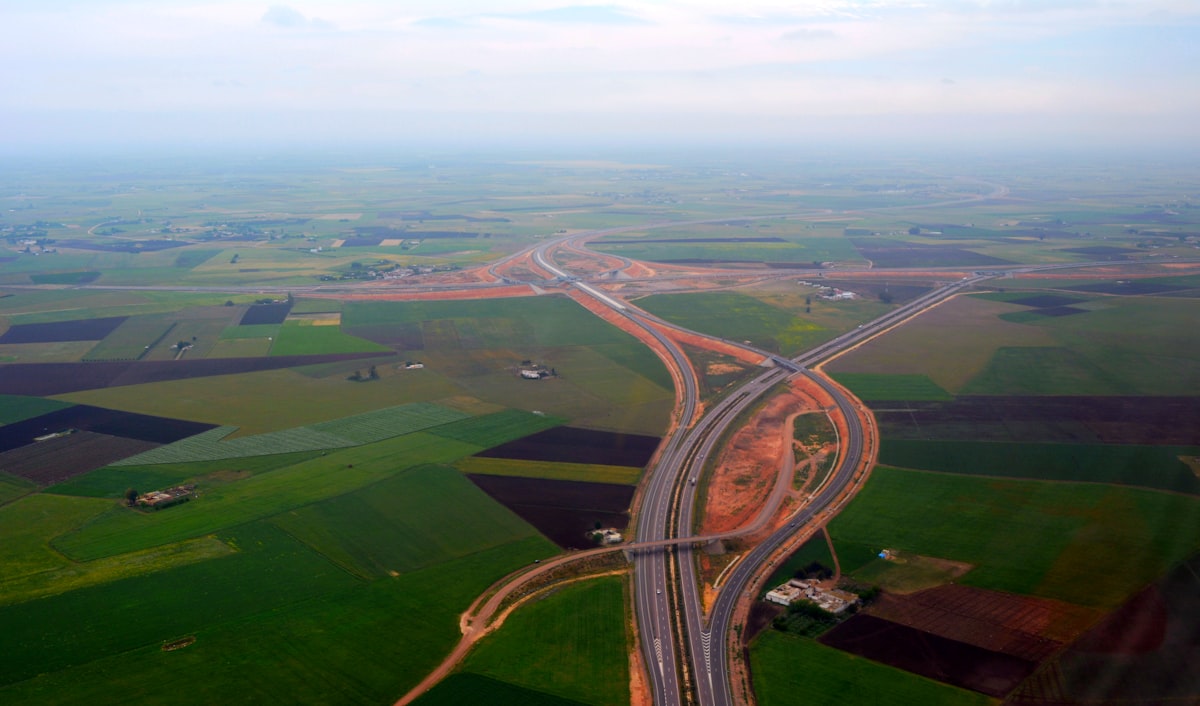
STRR is an NHAI project, not a city project. It's a large access-controlled expressway, reported at anywhere from 280 to nearly 300 kilometres depending on the source, built to loop around Bangalore at a distance and connect satellite towns like Hoskote, Devanahalli, Doddaballapur, Nelamangala, Magadi, Kanakapura, and Anekal to each other and to the national highway network, without funnelling that traffic through the city core.
The intent is regional and logistics-first: keep freight and interstate traffic off Bangalore's already strained inner roads, and open up industrial and warehousing land around the satellite towns it touches. Residential growth around STRR is a secondary effect of that logistics and industrial activity, not the primary purpose of the road. The project connects roughly 12 satellite towns and more than 330 villages around the city, and links up with 8 state highways and 6 national highways, functioning as an orbital network for road and logistics traffic rather than a single point-to-point road. That scale is exactly why timelines for the full project stretch out: different segments sit under different phases of land acquisition and construction at any given time, and treating STRR as one uniform project with one uniform completion date is where a lot of buyer confusion starts.
What Is the Peripheral Ring Road (PRR)?
PRR is a different project entirely, planned by the Bangalore Development Authority rather than NHAI, and it sits much closer to the city. At roughly 65 to 75 kilometres, it's designed as a high-speed corridor just outside the existing Outer Ring Road, cutting through or near established growth zones like Yelahanka, Whitefield's outer edge, Sarjapur, and Kanakapura Road.
Where STRR is about regional logistics, PRR is about intra-city mobility and decongestion. Because it runs through areas that already have residential demand, its effect on housing prices tends to show up faster and more directly than STRR's.
Depending on the source, PRR's length is quoted anywhere from roughly 65 to 75 kilometres, and it is planned to run from Tumkur Road on one side to Hosur Road on the other, effectively forming a second, tighter loop just outside the existing ORR. Because BDA is a city-level authority rather than a national one, PRR's land acquisition and construction have historically moved through Bangalore's usual planning and litigation cycles, which is worth keeping in mind before treating any PRR completion date as fixed.
Why the Two Get Confused, and Why That Confusion Costs Buyers Money
The confusion is understandable: both are ring roads, both promise better connectivity, both get cited in the same breath when a plot is being marketed in outer Bangalore. But conflating them leads to a specific mistake. A seller can say "this is on the ring road corridor" and let you assume it means the faster, closer, more advanced PRR, when the actual project touching that land is the more distant, slower-moving STRR.
Before you accept either project as a reason to pay a premium, ask specifically which one is actually relevant to the plot in front of you, and where that particular stretch stands today, not where the project stands overall.
The ORR Playbook: What History Actually Shows
Bangalore has run this exact cycle before, and it is worth being specific about what actually happened rather than relying on the general sense that "the Outer Ring Road increased prices." The ORR itself took years longer to fully complete than its original targets suggested, and the stretches that saw real estate benefit first were not the ones simply near the alignment on a map, but the ones where construction had visibly finished and traffic was actually flowing.
Areas along the ORR that are considered established today, Sarjapur-adjacent stretches, Marathahalli, and the Bellandur-Sarjapur junction among them, did not appreciate the moment the road was announced. They appreciated once the corridor was functionally complete and companies had actually moved in, which in some stretches took the better part of a decade after the original announcement. Buyers who purchased purely on the announcement, years before completion, often sat on flat or slow-moving land values for a long stretch before the eventual appreciation arrived.
The lesson isn't that early buyers were wrong to buy early. Some of them did very well. The lesson is that the buyers who did well were the ones who understood they were making a long-hold bet on a specific, verifiable construction timeline, not a short-term bet on a marketing narrative. The same distinction applies directly to STRR and PRR today.
The Verification Questions That Actually Matter
Marketing material will tell you a ring road is coming. It will not tell you these things, and these are the things that determine whether the appreciation story is real or still speculative.
Is the specific stretch near this property under construction, or still in land acquisition?These are not the same thing, and the gap between them can run for years. A stretch where land acquisition is contested or incomplete can sit exactly as it is for a long time, while a stretch with construction already underway has a different, shorter timeline ahead of it.
What is the realistic completion date for this stretch specifically, not the project's overall target?Large infrastructure projects in Bangalore have a long history of overall completion dates slipping by years. A target of 2027 or 2029 for the full project tells you very little about when the segment actually touching your plot will be usable.
How much of the current asking price already reflects the ring road story?If a plot has already repriced sharply on the expectation of a road that hasn't broken ground near it yet, you are not buying early upside, you are buying someone else's speculation at a markup.
What does the area look like today, independent of the road?Strip out the ring road narrative entirely and ask whether the location makes sense on its current fundamentals: existing access, existing social infrastructure, existing demand. A location that only makes sense because of a future road is a materially different bet than one that's already reasonable today and gets better from here.
How to Actually Check Land Acquisition Status, Not Just Ask About It
Asking a seller or agent about land acquisition status will usually get you a confident, reassuring answer regardless of the real position on the ground. There are more reliable ways to check.
For STRR-adjacent stretches, NHAI publishes project status updates and tender awards for national highway projects, and local NHAI project offices can, in practice, confirm whether a specific stretch has completed land acquisition or is still under litigation or awaiting compensation settlements. A stretch with an awarded construction tender and a contractor visibly working is in a fundamentally different position than one still listed as "under acquisition."
For PRR-adjacent stretches, BDA's own notifications and the state's land acquisition gazette notifications are the primary record of which survey numbers have been through the acquisition process. Local sub-registrar offices and revenue department records for the specific village or survey number in question will show whether acquisition proceedings are complete, ongoing, or not yet initiated for that exact parcel, which is a materially more useful answer than a general "yes it's happening" from a seller.
The simplest ground checkremains a physical visit. Contested or incomplete land acquisition is visible: unresolved boundary disputes, absence of any construction activity, and local landowners who are themselves unclear on compensation status are all signs that the stretch is further from completion than the marketing suggests. A stretch with visible earthwork, contractor signage, and equipment on site tells a very different story.
A Grounded Read on the Corridors You're Likely Considering
Sarjapur Road is already an established, expensive corridor in its own right, and the PRR passing nearby is additive rather than foundational to its value. If you're evaluating Sarjapur, the ring road is a supporting factor, not the main reason to buy. Our detailed look at Sarjapur Road as a plot investment corridorcovers what's actually driving demand there independent of any ring road.
Whitefield sits close to both the existing ORR and the PRR's planned path, but it's also already a mature, high-priced IT corridor. Any PRR-driven upside here is marginal on top of demand that already exists for reasons that have nothing to do with the ring road. Our Whitefield market updatecovers where pricing actually stands today.
Hoskote sits on the STRR's eastern stretch and near the NH-75 corridor, and it's one of the more STRR-relevant satellite towns, but that also means it's more exposed to STRR's slower, logistics-first timeline rather than PRR's faster residential effect. Our guide to Hoskote real estatelays out what's already built versus what's still speculative in this corridor.
Budigere Cross benefits from road widening tied to the STRR and NH-75 upgrades and sits at a useful midpoint between North Bangalore's IT hubs and Whitefield's ITPL corridor, which is a real, structural reason for demand rather than just a ring road story. Our Budigere Cross investment guidecovers the specifics.
North Bangalore is where PRR, the airport corridor, and existing Metro work overlap, which makes it the most infrastructure-dense of the corridors covered here, but it also means prices in the established pockets already reflect a lot of that future story. Our North Bangalore plotted development guidebreaks down which pockets are priced for the future already and which still have room.
Devanahalli sits closest to the airport and benefits from both STRR and the general airport-corridor growth story, and it has become the most heavily marketed of the satellite towns as a result. Plotted developments here have shown a wide pricing range, broadly from the mid-three-thousands to seven-thousand-plus per square foot depending on approval status and exact location, which is itself a signal that "Devanahalli" as a single label covers very different real investments depending on the specific pocket and paperwork.
Doddaballapur benefits from STRR's northern stretch and existing industrial activity in the area, and tends to attract buyers looking for a long hold rather than near-term appreciation, given its distance from the current city edge.
Kanakapura Road sits on the PRR's planned southern stretch and has the advantage of being a corridor with real existing demand independent of the ring road, similar to Sarjapur, which makes it a comparatively lower-risk way to be exposed to PRR upside without depending entirely on the road for the investment to make sense.
Anekal sits toward STRR's southern stretch and remains one of the least developed of the corridors covered here today, which cuts both ways: entry prices are lower, but so is the current evidence of near-term infrastructure delivery, making it a longer and less certain hold than Hoskote or Budigere Cross.
If you're comparing several of these corridors side by side, our Bangalore locality comparisonlays out pricing, yield, and investment fundamentals across the city's major micro-markets in one place.
What NRI Buyers Should Weigh Differently on These Corridors
Everything above applies to NRI buyers too, but verifying construction status and land acquisition progress is harder to do properly from outside India, which raises the cost of skipping it. If you're relying entirely on a builder's sales material or a relative's secondhand impression of a corridor, you are exactly the buyer most exposed to paying a premium for a story that hasn't actually started.
Where possible, have a trusted, independent local contact physically visit the specific stretch relevant to your plot, rather than relying on photos supplied by the seller. If you're earlier in the process and want the fuller picture on documentation, repatriation, and legal requirements specific to NRI purchases, our NRI property buying guide covering FEMA, RERA, and e-Khatais a useful starting point before you get to the infrastructure question at all.
A Short Due Diligence Checklist Before You Buy on Either Story
Ask your agent or the seller to name the specific project, STRR or PRR, that's relevant to this exact plot,not just "the ring road."
Ask for the current construction status of that specific stretch,not the project's overall completion percentage.
Compare the asking price to similar plots in the same corridor from two or three years ago,and ask what has actually changed on the ground since then, versus what has only changed in the marketing.
Visit the actual stretch nearest the property.A road under active construction looks very different from a road that exists only in a master plan.
Talk to at least one person who bought in the corridor two or three years ago on a similar promise,and ask whether the timeline they were told matches what has actually happened since.
Check NHAI or BDA project status pages and gazette notifications for the specific stretch,rather than relying on a summary someone gives you secondhand.
If buying remotely, have an independent local contact physically inspect the stretch nearest the propertyrather than relying solely on the seller's own photos or description.
Frequently Asked Questions
What is the difference between STRR and PRR in one sentence?
STRR is a roughly 280 to 300 kilometre NHAI-led outer expressway connecting Bangalore's satellite towns and regional logistics traffic, while PRR is a shorter, roughly 65 to 75 kilometre BDA-led corridor closer to the city, focused on intra-city decongestion and faster-moving residential demand.
Does proximity to STRR or PRR guarantee price appreciation?
No. Proximity is one input among several. A location with weak existing fundamentals doesn't automatically become a good investment because a ring road is planned nearby, particularly if that stretch is still in land acquisition rather than under construction.
Which is a faster driver of residential price movement, STRR or PRR?
PRR tends to move residential prices faster because it runs through areas with existing demand and is a city-focused project. STRR's effect is usually slower and more tied to industrial and logistics activity before residential demand follows.
Is it too late to buy in these corridors?
That depends entirely on the specific stretch and how much of the future story is already priced in, which is exactly why checking construction status and land acquisition progress for the specific plot matters more than the general narrative around either project.
How long should I plan to hold before STRR or PRR proximity actually pays off?
Plan for five to eight years on STRR-adjacent land where construction hasn't visibly started, and three to five years on PRR-adjacent corridors that already have existing demand, based on how the ORR's actual timeline played out rather than any project's originally announced completion date.
What Realistic Timeline Should You Actually Plan For?
If you're buying specifically on the STRR or PRR story, plan your holding period around the slower, more skeptical estimate, not the optimistic one quoted in marketing material. For STRR-adjacent land where construction hasn't visibly started near your specific plot, a realistic planning horizon is five to eight years before the connectivity benefit is fully realised and priced in, based on how comparable projects like the ORR actually played out rather than their original announced timelines.
For PRR-adjacent land in corridors that already have some existing demand, like parts of Kanakapura Road or Sarjapur, the effective timeline is shorter, often three to five years, precisely because the location doesn't depend entirely on the road to justify its value today. The single biggest planning mistake buyers make on both projects is treating the government's stated completion year as the year the investment pays off. In practice, the payoff tends to arrive some years after the stated completion date, once the corridor has had time to actually fill in with the commercial and residential activity the road was meant to enable.
None of this is a reason to avoid these corridors. It's a reason to size your entry price and your expected holding period around the slower, verified timeline rather than the faster, marketed one, so that if the project runs ahead of schedule you're pleasantly surprised, rather than stretched thin waiting for a payoff that was always going to take longer than the brochure suggested.
The honest version of this story is that both STRR and PRR will likely support long-term value in the corridors they touch. What they won't do is protect you from overpaying today for a timeline that hasn't actually started. Ask the specific questions above before either project becomes the main reason you buy, and you'll make a materially better decision than the marketing alone would lead you to.
Written by L K Monu Borkala
Featured Projects in This Area
Need expert property advice?
OneCity Property offers independent advisory across Bangalore, Mangalore and Mysore. Zero commission for buyers on projects under ₹1 Cr.
💬 WhatsApp Us📞 Call 076768 70876


News insight
 25/08/2026
How Namma Metro Changed Whitefield Property Prices: A Data-Backed Analysis
How the Purple Line metro changed Whitefield property prices - measurable 10-15% premium data, stati...
 24/08/2026
Bengaluru-Mysuru Expressway: The Complete Route, Property Impact, and Buying Guide
The 119 km Bengaluru-Mysuru Expressway explained honestly - every bypass town from Bidadi to Mysuru,...
 24/08/2026
Satellite Town Ring Road (STRR): The Complete Route, Status, and Real Estate Guide
The 280.8 km STRR explained honestly - real, verified construction status stretch by stretch, includ...