
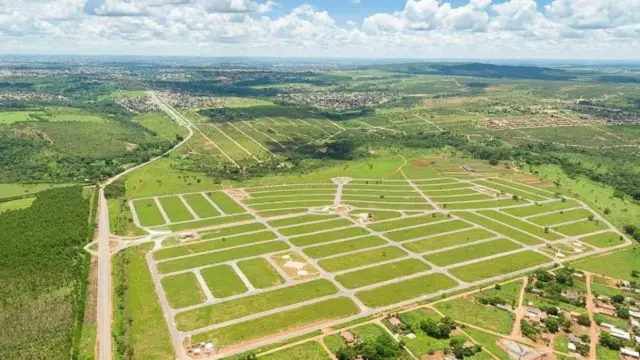
Partition Deed for Property in Karnataka: Complete 2026 Guide

Quick answer: A partition deed divides jointly held family property among co-owners and must be registered to be legally enforceable and to update revenue records. Karnataka charges stamp duty on partition deeds, generally lower than a standard sale deed rate, and each party's share should be clearly demarcated with survey details to avoid future disputes. Different deeds serve different purposes - compare in sale deed vs sale agreement in Karnataka.
Published: 1 June 2026 | Updated on: 4 September 2026 · By L K Monu Borkala, CEO & Founder, OneCity Property — 15 years of property consultancy experience and over 20 years in marketing and management at OneCity Technologies Pvt. Ltd.

A partition deed is one of the most frequently needed, and most frequently delayed, property documents in Karnataka. Families that jointly own ancestral land, inherited property or co-purchased plots often function for years on the basis of informal understanding about who owns which portion. That informality works until one family member needs to sell their share, apply for a home loan, or transfer their portion to their children. At that point, the absence of a registered partition deed becomes a significant legal obstacle.
This guide covers everything you need to know about partition deeds for property in Karnataka in 2026: what a partition deed is and when you need one, the difference between a partition deed and a release deed, the documents required, stamp duty and registration costs, the step-by-step registration process, what to do after registration to update BBMP Khata and RTC records, and the common mistakes that make partition deeds legally vulnerable.
What Is a Partition Deed and When Do You Need One?
A partition deed is a legal document executed between two or more co-owners of a property to formally divide the jointly held property so that each co-owner becomes the sole, independent owner of their specific, demarcated share. Before the partition deed is executed, all co-owners hold an undivided interest in the entire property, meaning each owner has a theoretical share of the whole, not a physical piece. After the partition deed is registered, each owner holds absolute, identifiable title to their specific portion.
You need a partition deed in these specific situations:
Ancestral property division among legal heirs: When a parent dies intestate (without a will) and the property passes to multiple legal heirs under the Hindu Succession Act, 1956 or the Indian Succession Act, 1925, the heirs initially hold the property jointly. A partition deed formally divides it among them.
Co-purchased property division: When two or more people jointly purchase a property (common among siblings, spouses buying jointly, or business partners) and later wish to separate their holdings.
Joint family property (HUF) partition: Hindu Undivided Family (HUF) property that a family wishes to partition among members requires a partition deed to separate individual shares from the HUF corpus.
Pre-sale or pre-loan partition: When a co-owner wants to sell their share of a jointly held property, or wants to mortgage their share for a home loan, lenders and buyers will require a registered partition deed showing that the specific portion being sold or mortgaged has been formally demarcated and assigned to that co-owner.
A partition deed is not needed when one sole owner wishes to transfer property to another, that is a sale deed, gift deed or will. It is specifically required when existing joint ownership is being divided.
Partition Deed vs Release Deed vs Family Settlement: What Is the Difference?
These three instruments are frequently confused in Karnataka property transactions. Understanding which applies to your situation is the first step to getting the documentation right.
Partition Deed: Used when joint property is physically divided and each co-owner receives a specific, demarcated portion. All co-owners continue to hold property, just different, separate pieces. Example: Three siblings jointly own a 2-acre agricultural plot. A partition deed divides it into three identifiable portions of approximately two-thirds of an acre each, and each sibling becomes the sole owner of their portion.
Release Deed (Relinquishment Deed): Used when one co-owner voluntarily gives up their share in the joint property in favour of one or more of the other co-owners. The releasing co-owner exits the ownership and the remaining co-owner(s) absorb their share. Example: Two brothers jointly own a flat. One brother releases his 50% share to the other. After registration, the second brother owns 100% of the flat. As of March 2026, stamp duty on a release deed in Karnataka ranges from 1 - 2% of property value for family members and up to 5% for non-family transfers.
Family Settlement Agreement: An informal or formal arrangement among family members regarding the distribution and management of property without necessarily transferring legal title. Not equivalent to a registered partition deed for the purposes of establishing independent ownership. A family settlement is useful as a precursor to a formal partition but is not sufficient on its own for title purposes. For independent, mortgageable, saleable title, a registered partition deed or registered release deed is required.
The critical distinction for Karnataka property buyers and lawyers: an unregistered family settlement does not create independent title. Section 49 of the Registration Act provides that an unregistered document that is required to be registered cannot be received as evidence of the transaction it represents. This means if a family member tries to sell their share based only on an unregistered family settlement, the buyer's title will be legally defective.
What Are the Types of Joint Property in Karnataka That Require Partition?
Ancestral property under Hindu law: Property inherited from a Hindu male's father, grandfather or great-grandfather is ancestral property in which all coparceners (male descendants by birth and daughters after the 2005 amendment to the Hindu Succession Act) have a legal share from birth. No sale, mortgage or gift of ancestral property by one coparcener is valid without either a family partition or a court decree of partition. Read our Karnataka Land Revenue Act guide for how ancestral property is treated under Karnataka law.
Self-acquired property inherited by multiple heirs: When a property owner dies leaving a self-acquired property (not ancestral) to multiple legal heirs, the heirs inherit it jointly. The property is not automatically divided, they hold it as tenants-in-common. A partition deed is required to divide it into individual holdings.
Co-purchased agricultural land: Agricultural land jointly purchased by multiple buyers, common in plot investment schemes and farm land purchases in Karnataka. The jointly held title limits each buyer's ability to use, develop or sell their portion independently until a partition deed separates the holdings.
Joint development agreement outcomes: In joint development agreements between landowners and developers, the landowner's share sometimes ends up as undivided interest in a built-up complex. A partition is required to demarcate specific units as the landowner's share before they can be sold independently.
Step-by-Step Process to Execute a Partition Deed in Karnataka
Step 1, Establish all co-owners and their legal shares. Before drafting the deed, confirm who all the legal co-owners are and what share each holds. For ancestral property under Hindu law, this requires identifying all coparceners, including daughters (equal rights under the Hindu Succession Act 2005 amendment). For inherited self-acquired property, identify all Class I legal heirs under the applicable succession law. Any co-owner whose name is in the title chain must either sign the partition deed or provide a court-backed reason for their absence. Excluding a legal heir, even unintentionally, creates a defective partition that can be challenged.
Step 2, Get a current Encumbrance Certificate. Obtain an EC from Kaveri Online Services (kaveri.karnataka.gov.in) covering at least 30 years of ownership history. The EC confirms all current legal owners and reveals any existing mortgage or encumbrance on the property. If the property is mortgaged, the mortgage holder's NOC must be obtained before partition, most lenders do not consent to partition of mortgaged property without full loan repayment or restructuring.
Step 3, Get a survey and demarcation done. For land and agricultural plots, engage a licensed surveyor to physically demarcate the proposed partition boundaries. The survey sketch (showing each co-owner's proposed portion with measurement and boundary details) becomes an exhibit in the partition deed. For apartments and buildings, the partition description must specify exactly which flat, floor, unit number and common area rights are assigned to each party.
Step 4, Draft the partition deed. Have the deed drafted by a Karnataka lawyer experienced in property matters. The deed must include: names and details of all parties, full description of the property being partitioned, the basis of each party's ownership (how they acquired their share), the proposed division with specific measurements and boundary descriptions for each party's portion, confirmation that each party is receiving their full legal share, and any consideration being paid if the partition is not perfectly equal in value. Do not use a generic template, the specific legal description of each portion must be accurate and match the survey records.
Step 5, Pay stamp duty and register. Execute the deed on correctly stamped paper and present it for registration at the Sub-Registrar's office with jurisdiction over the property. All parties (or their authorised representatives under a registered POA) must be present. Bring all supporting documents. The Sub-Registrar will verify identity, register the deed and return the original within 7 - 15 working days. Read our property registration guide for what to expect at the Sub-Registrar's office.
What Documents Are Required for Partition Deed Registration in Karnataka?
Parent title deed (the sale deed, gift deed or previous partition deed by which the co-owners acquired joint title), Encumbrance Certificate (EC) from Kaveri Online Services showing current ownership and any encumbrances, RTC / Pahani from the Bhoomi portal for agricultural land, BBMP property tax receipts for urban properties, survey sketch or measurement map showing proposed partition boundaries, Aadhaar cards and passport-size photographs of all parties, draft partition deed on stamp paper of the prescribed value, and NOC from any bank or lender if the property is currently mortgaged.
What Are the Stamp Duty and Registration Charges for Partition Deed in Karnataka 2026?
Karnataka Stamp Act Article 45 governs stamp duty on partition deeds. The rates are structured to distinguish between family partitions (lower rate) and non-family partitions (higher rate). For partitions among family members (blood relatives), stamp duty is approximately ₹1,000 per share created by the partition. For example, a partition deed creating 3 separate ownership portions among 3 siblings attracts approximately ₹3,000 in stamp duty. For non-family partitions, stamp duty is assessed as a percentage of the property value, typically 2% - 5% of the market or guidance value of the portion being demarcated, whichever is higher. Registration charges are 2% of the property value as of August 2025 (revised from 1%). Always confirm current rates with the jurisdictional Sub-Registrar or District Registrar before executing the deed, stamp duty schedules are revised periodically and rates for partition deeds specifically vary based on the nature and relationship of parties. A lawyer's confirmation before stamping is strongly advised.
After Registration: Updating BBMP Khata, RTC and Revenue Records
Registration of the partition deed is not the final step, the ownership change must be reflected in revenue and municipal records for each co-owner to exercise full, independent ownership rights.
BBMP Khata bifurcation (urban property): After registration, each co-owner applies to BBMP for an individual Khata for their portion. Submit the registered partition deed, Aadhaar, latest property tax receipt and a Khata application to the BBMP ward office or via the e-Aasthi portal. BBMP will bifurcate the existing Khata into individual entries. Read our e-Khata guide for the complete process.
RTC / Pahani mutation (agricultural land): For agricultural plots, submit the registered partition deed to the Tahsildar's office for mutation, the process of updating the Revenue records (RTC) to reflect the new individual ownership. Karnataka's Bhoomi portal supports online mutation applications. Without RTC mutation, the partition is registered but not yet reflected in the government land records used for agricultural land transactions.
Property tax bifurcation: After Khata bifurcation, BBMP separately assesses property tax for each partition. Each co-owner then pays their individual BBMP property tax. Read our BBMP property tax guide for the online payment process.
L K Monu Borkala's Expert View: Why Informal Partitions Cost Families More in the Long Run
In my experience, the families who delay formalising a partition deed usually do so for understandable reasons, reluctance to involve lawyers, cost concerns, or the belief that "we are family and everyone knows who owns what." Those reasons are completely understandable and I hear them consistently. What I also see consistently is what happens 10 - 15 years later: one family member needs to sell their portion and cannot because the title shows joint ownership; a third-generation heir discovers their grandparent's informal partition was never documented and the property is legally undivided; or a bank refuses to accept a property as mortgage security because the Khata still shows multiple joint owners for a property that was "partitioned" informally decades ago.
The cost of registering a partition deed in Karnataka, especially for family partitions, is modest. Stamp duty at approximately ₹1,000 per share plus 2% registration charges is a fraction of what a court partition suit costs in time, money and family relationships if the informal arrangement breaks down. Execute the deed while all parties are willing and present. Delay creates risk at every juncture.
Frequently Asked Questions: Partition Deed for Property in Karnataka
Is registration of a partition deed compulsory in Karnataka?
Yes. Under Section 17 of the Registration Act, 1908, a partition deed that creates, declares or extinguishes rights in immovable property valued at ₹100 or more must be compulsorily registered. An unregistered partition deed cannot be used as evidence in court and cannot be used to establish independent title for sale, mortgage or Khata transfer purposes.
What is the stamp duty for a partition deed in Karnataka?
For family partitions in Karnataka (among blood relatives), stamp duty is approximately ₹1,000 per share under the Karnataka Stamp Act. For non-family partitions, stamp duty is assessed as a percentage of the property value (2% - 5% range). Registration charges are 2% of the property value as of August 2025. Confirm current rates with the jurisdictional Sub-Registrar before executing the deed, as rates are subject to revision.
What documents are required for registering a partition deed in Karnataka?
Required documents: original parent title deed (sale deed or previous partition deed), latest Encumbrance Certificate (EC) from Kaveri Online Services showing current ownership, RTC / Pahani (for agricultural land), BBMP property tax receipts (for urban property), survey sketch showing proposed partition boundaries, Aadhaar cards and photographs of all parties, draft partition deed on stamp paper of correct value, and NOC from any bank or financial institution if the property is mortgaged.
What is the difference between a partition deed and a release deed in Karnataka?
A partition deed divides jointly held property into separate portions, all co-owners retain ownership of their individual shares. A release deed involves one co-owner relinquishing their share to the other co-owner(s), the releasing party exits the ownership. Use a partition deed when all co-owners want to continue owning property (just separately). Use a release deed when one co-owner wants to exit the joint ownership entirely.
How long does it take to register a partition deed in Karnataka?
Registration at the Sub-Registrar's office is completed on the day of the appointment if all documents are in order and all parties are present. Under SAKALA norms, the registered document is returned within 7 - 15 working days. The full process from drafting to receiving the registered deed typically takes 2 - 4 weeks depending on document preparation time and appointment availability.
Can a partition deed be challenged in court after registration?
Yes. A registered partition deed can be challenged on grounds of fraud, coercion, undue influence or if a co-owner was not given their correct legal share. Under the Hindu Succession Act, daughters have equal rights in ancestral property after the 2005 amendment, a partition deed that excludes daughters or gives them less than their legal share can be challenged. Get all legal heirs to sign or formally consent before registering.
How do I update BBMP Khata after a partition deed in Karnataka?
After registering the partition deed, each co-owner must apply for an individual Khata for their specific portion. Submit the registered partition deed, latest property tax receipt, identity proof and Aadhaar to the BBMP ward office or online via the BBMP e-Aasthi portal. Khata bifurcation creates separate Khata entries for each co-owner's portion. Read the e-Khata guide for the complete process.
Can a partition deed be executed for an apartment flat?
Yes, if multiple people jointly own a flat. However, physically partitioning an apartment (splitting it into separate habitable units) requires building plan approval and may not be practical. In most apartment partitions, the partition deed assigns 100% ownership of the flat to one co-owner (with compensation to the other) rather than physically dividing the apartment. This is functionally similar to a release deed, consult a lawyer on the correct instrument for your situation.
Can a minor's share be included in a partition deed in Karnataka?
Yes, but a minor cannot personally sign a legal document. A natural guardian (parent) or court-appointed guardian must represent the minor. For partition deeds involving significant property values and minor heirs, obtaining court approval under the Guardians and Wards Act verifies the transaction cannot be challenged later on grounds that the minor's interests were not protected.
What happens if one co-owner refuses to sign a partition deed?
If a co-owner refuses to participate in a consensual partition deed, the other co-owner(s) can file a Suit for Partition under the Code of Civil Procedure. A court-decreed partition does not require the refusing co-owner's signature, the court orders the partition and the decree serves the same legal purpose as a registered partition deed. Court partition suits take 1 - 5 years depending on complexity and the court's workload.
Contact OneCity Property at 076768 70876 for independent property advisory in Bangalore and Karnataka. Read our property verification guide and Stamp Duty Calculator. Advisory by L K Monu Borkala
Disclaimer: All project names, logos, images, floor plans, and trademarks on this page are the exclusive intellectual property of their respective developers and owners, reproduced here for informational purposes only. Prices, specifications, and possession timelines are subject to change, verify all details directly with the developer before any purchase decision. OneCity Property is an independent information portal and is not liable for any loss arising from reliance on this information. Read our full Disclaimer →
Featured Projects in This Area
Need expert property advice?
OneCity Property offers independent advisory across Bangalore, Mangalore and Mysore. Zero commission for buyers on projects under ₹1 Cr.
💬 WhatsApp Us📞 Call 076768 70876


News insight
 12/09/2026
Builder-Buyer Agreement Karnataka: Key Clauses, RERA Rules, and What to Negotiate Before Signing
Guide to builder-buyer agreements in Karnataka. Covers RERA-mandated clauses, possession delay penal...
12/09/2026Resale Flat Checklist Bangalore: 15 Documents and Verification Steps Before You Buy
Complete checklist for buying a resale flat in Bangalore. Covers title deed verification, EC, Khata...
11/09/2026Sale Deed Format Karnataka: Must-Have Clauses, Registration Process, and Common Mistakes
Complete guide to sale deed format in Karnataka. Covers the essential clauses every sale deed must c...