
Affordable Housing in Bangalore 2026: Prices, PMAY & Best Areas

Published: 14 September 2025 · Updated: 1 June 2026 · By L K Monu Borkala, CEO & Founder, OneCity Property — 15 years of property consultancy experience and over 20 years in marketing and management at OneCity Technologies Pvt. Ltd.
Quick answer:Affordable housing projects in Bangalore in 2026 sit primarily in the ₹25 - 55 lakh range for 1 - 2 BHK apartments across peripheral pockets: Attibele, Hoskote, Jigani, Devanahalli outskirts, outer Kanakapura Road, Sarjapur extensions, and Bidadi. By the Indian government's official definition, affordable housing means metro properties under ₹45 lakh with carpet area under 60 sqm (for 2 BHK) or 90 sqm (for 3 BHK). PMAY official portal-CLSS subsidies are largely sunset for new applicants after 2022, but reduced GST (1% vs 5%) on qualifying under-construction units still applies. Expect 90-minute commutes to central Bengaluru from most genuine affordable pockets, that's the honest tradeoff.
How this buyer guide is different
OneCity Property has advised Karnataka home buyers since 2006. This isn't a brochure of "luxury apartments marketed as affordable", the market is full of those. It's what we actually tell first-time buyers walking into our Bangalore office with ₹30 - 55 lakh budgets: which pockets qualify as affordable, which builder claims to verify, which PMAY/GST benefits still apply in 2026, and when "affordable" becomes a false economy because of commute costs or infrastructure gaps. We don't list apartments. We don't take builder commissions. We work for the buyer.
What "affordable housing" actually means in Bangalore 2026
The phrase gets used loosely. The official definition under Indian government policy is specific.
Government definition of affordable housing
- Price cap (metro cities, including Bengaluru):₹45 lakh per unit
- Carpet area cap:60 sqm (approximately 645 sqft) for 2 BHK, 90 sqm (approximately 970 sqft) for 3 BHK
- GST rate on under-construction units:1% without input tax credit (vs 5% for standard housing)
- Eligibility:The unit must fall within both the price and carpet-area caps to qualify
This definition matters because 1% GST versus 5% GST is a real saving on under-construction projects. On a ₹40 lakh under-construction unit, that's ₹1.6 lakh back in your pocket if the project qualifies. Always verify qualification with the builder in writing, some projects are borderline, and GST assessments happen at invoice stage.
What "affordable" means in builder marketing
Builders use "affordable" more flexibly. You'll see ₹65 lakh 2 BHK units marketed as "affordable luxury", that's marketing language, not government-defined affordable housing. For this guide, we use the government definition: under ₹45 lakh and under the carpet-area caps. Everything above that is budget housing, not affordable housing.
What changed in Bangalore's affordable housing market in 2024 - 2026
Four shifts that matter before you shortlist.
- PMAY-CLSS effectively wound down.The Credit Linked Subsidy Scheme stopped accepting new applications after March 2022. If a broker or builder tells you you'll get PMAY subsidy on your new purchase, they're outdated. The scheme still honours applications already approved before the sunset, but nothing new qualifies.
- PMAY 2.0 announced (2024) but still limited rollout.The government announced PMAY 2.0 / PMAY-U 2.0 in late 2024 with a ₹2.30 lakh crore allocation over five years. As of April 2026, rollout in Karnataka is limited, specific notified projects qualify, not any new affordable purchase. Verify project-by-project, not based on general scheme announcements.
- February 2026 guidance value revision.Karnataka raised guidance values 6 - 15% across Bengaluru. Affordable-pocket areas saw smaller increases (4 - 8%) than central zones, but stamp duty baseline still moved up. On a ₹40 lakh property, that's roughly ₹8,000 - ₹15,000 additional stamp duty.
- Peripheral connectivity improvements.The STRR (Satellite Town Ring Road) Phase 2 cleared key funding tranches in 2026. Metro Phase2B and Phase 3 DPRs approved. These push affordable pockets further from Bengaluru core but with better connectivity over 5 - 10 year horizons.
Where genuine affordable housing exists in Bangalore (2026)
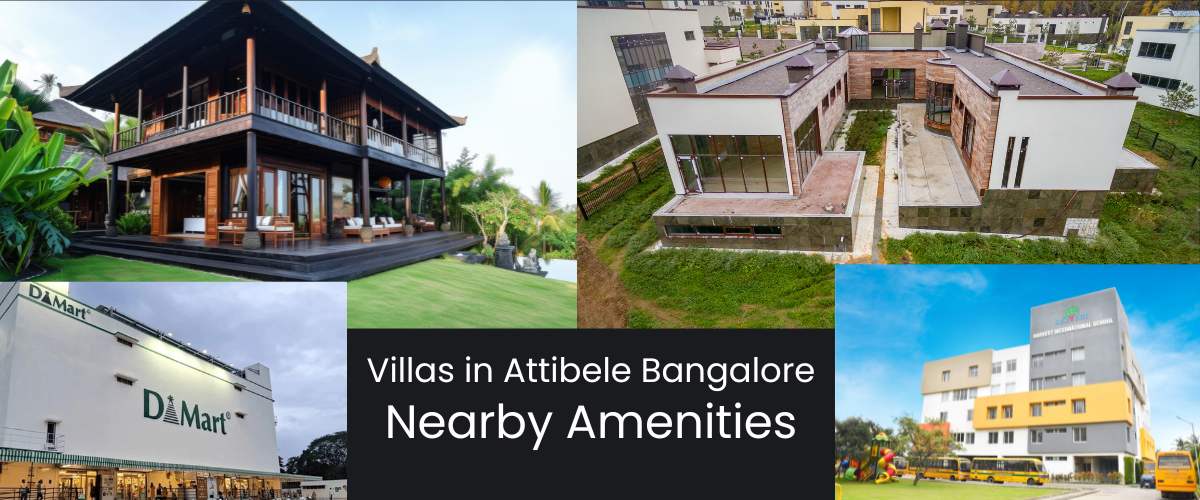
Affordable housing under the government price cap doesn't exist within the core IT corridors, Whitefield, Sarjapur Road, Electronic Cityall crossed the ₹45 lakh 2 BHK threshold years ago. Genuine affordable inventory sits in the following peripheral pockets.
Attibele
On Hosur Road, 30+ km from MG Road. New launch 2 BHK apartments: ₹28 - 42 lakh for 750 - 950 sqft carpet. 3 BHK: ₹42 - 58 lakh for 1,050 - 1,300 sqft. Reliable builders: Concorde, SNN Raj, Provident (subsidiary of Puravankara), and smaller local developers with 10+ year track records.
What works here:Proximity to Electronic Citytech parks (15 - 20 km), decent social infrastructure around Attibele town, NICE Road access for crossing to other parts of Bengaluru.
The tradeoff:Commute to central Bengaluru is 90 - 120 minutes off-peak, longer in traffic. If your workplace is outside the Hosur Road corridor, this gets tiring fast.
Hoskote
On the Bengaluru-Kolar highway, 25 km from the city. 2 BHK new launches: ₹30 - 45 lakh. 3 BHK: ₹45 - 65 lakh. The Hoskote area has seen meaningful development since 2022 because of the Kempegowda International Airport access via the Peripheral Ring Road.
What works here:Airport is 35 minutes away. The STRR connectivity improving. Good for aviation-industry buyers, airport cargo professionals, and NRIs wanting a Bengaluru base without city-core pricing.
The tradeoff:Social infrastructure (good schools, hospitals, premium retail) is still developing. Best for 7+ year holds betting on infrastructure catching up.
Jigani
South of Electronic City, 35 km from the city centre. New launch 2 BHK: ₹25 - 38 lakh for 700 - 900 sqft. The most affordable pocket in Bangalore's new launch market. 3 BHK: ₹38 - 55 lakh.
What works here:Lowest entry price anywhere in Bangalore's new launch market. Electronic City commute possible for IT professionals. Emerging industrial and pharma employment base.
The tradeoff:Infrastructure is the thinnest of any pocket on this list. Schools are basic. Medical emergency response is 30+ minutes to any major hospital. Best only if the math doesn't work elsewhere.
Devanahalli outskirts (airport corridor)
Not Devanahalli town itself, that area has crossed affordable pricing. The outer pockets (Budigere Cross, Bagalur, outer Thanisandra) still have new launch 2 BHK in the ₹38 - 52 lakh range for 800 - 1,050 sqft. 3 BHK: ₹52 - 75 lakh (crosses the affordable threshold).
What works here:Airport proximity. Cleaner air than city core. Infrastructure improving steadily because of airport-driven growth.
The tradeoff:Commute to any IT park south of Hebbalis 75+ minutes. Good for aviation/hospitality workers; challenging for IT professionals.
Outer Kanakapura Road (beyond Harohalli)
2 BHK new launches: ₹32 - 45 lakh for 800 - 1,000 sqft. Part of the Green Line Metro extension thesis, Phase 1 to Anjanapura is operational, further phases planned.
What works here:Metro connectivity thesis. Lower price than equivalent north-side pockets. Greener environment.
The tradeoff:Employment hubs are mostly in north/east Bengaluru. Reverse commute scenario.
Bidadi
35 km on the Mysuru road side. 2 BHK: ₹28 - 40 lakh. Industrial anchor (Toyota Kirloskar plant, several Japanese-origin manufacturers) provides employment base.
What works here:Mysuru-Bengaluru Expressway access for Mysuru-commuters. Industrial employment. Lower cost-of-living than core Bengaluru.
The tradeoff:Disconnected from IT employment zones. Works for specific buyer profiles (industrial, Mysuru-connected) but not generic.
Side-by-side: six affordable Bangalore pockets compared
| 2 BHK price | Distance to MG Road | Best for | |
|---|---|---|---|
| Attibele | ₹28 - 42 L | 30 km | Electronic City IT professionals |
| Hoskote | ₹30 - 45 L | 25 km | Airport / aviation workers |
| Jigani | ₹25 - 38 L | 35 km | Lowest-entry-price buyers |
| Devanahalli outskirts | ₹38 - 52 L | 40 km | Aviation / hospitality / NRI |
| Outer Kanakapura Rd | ₹32 - 45 L | 28 km | Metro-thesis buyers |
| Bidadi | ₹28 - 40 L | 35 km | Industrial / Mysuru-connected |
The hidden costs that make "affordable" expensive
Buying a ₹35 lakh apartment 30 km from your workplace looks great on paper. The hidden costs change the math.
Commute costs to model
- Fuel / rideshare:At ₹3,500 - ₹6,000 per month for 30-km each-way commutes, that's ₹42,000 - ₹72,000 per year, or ₹8.4 - 14.4 lakh over 20 years.
- Vehicle maintenance / EMI (if new vehicle):₹8,000 - ₹12,000 per month if you buy a car specifically for the commute.
- Time cost:3 hours daily commute = 750 hours per year = 4 full weeks of your life annually. For professionals earning ₹15 lakh+, the economic cost is significant.
When affordable makes real sense
- Your workplace is in or near the affordable pocket (Attibele for E-City IT, Hoskote for airport workers)
- You work remote / hybrid with 1 - 2 office days per week
- You're buying as investment for rental rather than self-occupation
- Your holding period is 7+ years and you're betting on infrastructure catching up
- You can't stretch budget and need to buy rather than rent
When affordable becomes a false economy
- Daily 5-day commutes to central or west Bengaluru IT parks from Jigani or Bidadi
- You have school-age children and no premium-school access
- Your family needs frequent tertiary healthcare (peripheral pockets are 30 - 60 min from major hospitals)
- You're stretching to maximum loan eligibility, your margin for any cost surprise is zero
PMAY, GST, and tax benefits in 2026
PMAY-CLSS, what's actually available
If you applied before March 2022 and your application is under process, your subsidy may still get disbursed. For new applications after March 2022, PMAY-CLSS is not available regardless of what brokers claim.
PMAY 2.0, the 2024 announcement
PMAY-U 2.0 was announced in late 2024 with a five-year allocation. Karnataka state-level rollout is gradual. As of April 2026, specific notified projects qualify, your broker or builder must show you the specific PMAY 2.0 sanction letter for that project. Don't trust general scheme references.
GST on affordable housing under-construction
1% GST without input tax credit, versus 5% GST for non-affordable under-construction. To qualify, both conditions must be met:
- Price cap ≤ ₹45 lakh (metro Bengaluru)
- Carpet area ≤ 60 sqm (2 BHK) or 90 sqm (3 BHK)
On a qualifying ₹40 lakh under-construction unit, GST savings are ~₹1.6 lakh. On ₹45 lakh, ~₹1.8 lakh. Ready-to-move units pay no GST regardless of affordable status.
Income tax deductions
- Section 80EEA:Additional ₹1.5 lakh interest deduction above the standard ₹2 lakh under Section 24(b), for home loans sanctioned between April 2019 and March 2022 on affordable properties. Effectively closed to new borrowers but honouring prior sanctions.
- Section 80C:Up to ₹1.5 lakh principal repayment deduction for any home loan, not specific to affordable housing.
- Section 24(b):Up to ₹2 lakh interest deduction on self-occupied property regardless of affordable status.
Builder and RERA verification for affordable housing projects
Affordable-pocket new launches have historically seen more delivery issues than core-market projects. Margins are tighter, so builders cut corners on timelines and finishes. Verification matters more here, not less.
RERA verification, mandatory before token
- Visit rera.karnataka.gov.inand search by project or promoter name
- Check registration number, approved plans, quarterly progress (Form 4), and complaints filed
- Cross-check RERA carpet area against builder brochure, they must match exactly
- Download the latest quarterly update. Slippage versus previous quarter is a warning signal
- Check the complaints section. Affordable-pocket builders with multiple open complaints = walk away
Which builders have stronger track records in affordable pockets
Credible affordable-pocket developers in our client history include Concorde Group, SNN Raj, Provident (Puravankara's affordable arm), Shriram Properties (for some Electronic City extensions), and a handful of local developers with 15+ year public track records. Newer brands marketing "affordable" without proven delivery history require extra verification.
Red flags specific to affordable-pocket projects
- Gram Panchayat land khata:Some peripheral pockets are on gram-panchayat-jurisdiction land. This complicates future home loans and resale. Always verify whether khata is BBMP / BDA / BMRDA or Gram Panchayat before token.
- Land conversion status:Many affordable-pocket projects sit on recently-converted agricultural land. Verify conversion order is clean and on record.
- "No EMI till possession" schemes:Sometimes legitimate, often a way for under-capitalised builders to defer cost recognition. Run the math against non-subvention equivalents.
- Plan approval documentation:Peripheral pockets sometimes operate on in-principle approvals pending final nod. Only transact when final approved plan is on RERA record.
Karnataka legal essentials for affordable housing purchase
Stamp duty and registration
- Stamp duty: 5% of consideration or guidance value, whichever is higher
- Cess: 2% on stamp duty
- Registration: 2% of consideration
- Effective total: ~7.6%
On a ₹40 lakh property, registration costs approximately ₹2.64 lakh. Peripheral pocket guidance values are lower than core Bengaluru, so actual stamp duty paid is usually close to 7.6% of sale consideration rather than being pushed up by guidance value.
Khata and title verification
Apply the same standards as core-market purchases, Khata A (not Khata B), 30-year encumbrance certificate, clean title chain. Peripheral pockets have more documentation gaps historically, so verification is more important, not less.
Home loan LTV
For properties ≤ ₹30 lakh: up to 90% LTV. For ₹30 - 75 lakh: 80% LTV. On a ₹40 lakh affordable property, you can borrow up to ₹32 lakh, need ₹8 lakh down payment plus ₹2.64 lakh registration, total upfront ₹10.64 lakh minimum.
Rental yield outlook in affordable pockets
Affordable-pocket rental yields run higher than core Bengaluru because capital values haven't caught up with rents as aggressively.
- Attibele, Electronic City extensions:Gross 4.0 - 4.5% on 2 BHK new launches. Net after maintenance and vacancy: 3.2 - 3.7%.
- Hoskote:Gross 3.8 - 4.3%. Net: 3.0 - 3.5%.
- Jigani:Gross 3.5 - 4.0% but vacancy periods are longer (tenant demand thinner). Net closer to 2.8 - 3.2%.
- Devanahalli outskirts:Gross 3.5 - 4.0% for aviation-industry tenants. Stable but thinner pool.
Tenant profiles are more price-sensitive than in core Bengaluru, which means more rent negotiation and slightly higher turnover. Build that into your yield calculation.
Common mistakes we've seen affordable-housing buyers make since 2006

Twenty-two years of Karnataka buyer files give you pattern recognition. Five most common avoidable mistakes when buying affordable housing in Bangalore.
- Underestimating commute costs over 20-year horizon.Saving ₹10 lakh on entry price versus a closer-to-work purchase often gets erased by commute costs over 5 - 7 years. Model this in practice before you decide.
- Believing "PMAY subsidy applicable" marketing.CLSS is sunset. PMAY 2.0 has limited notified projects. Verify specific scheme eligibility in writing; don't trust scheme name-drops in brochures.
- Ignoring Gram Panchayat khata risk.Some affordable-pocket apartments sit on gram-panchayat-jurisdiction land with khata complications. Always verify khata authority in writing before token.
- Picking lowest-price builder without track record check.Affordable-pocket margins are tight. Under-capitalised builders go bankrupt mid-project more often here than in core Bengaluru. 10 - 15% lower price with 5-year delay is a terrible trade. Stick to builders with 10+ year public delivery histories.
- Not factoring social infrastructure maturity.School quality, medical access, and retail density take 5 - 10 years to mature in developing pockets. If you have young kids, this matters more than the ₹5 lakh you'll save on entry price. Visit the pocket with your family before committing.
Our experience helping affordable-housing buyers in Bangalore
OneCity Property has been advising Karnataka home buyers since 2006. Our first-time buyer files skew heavily toward ₹30 - 55 lakh budgets, this is where the largest demand pool sits. The patterns we see repeat:
- Buyers who match the pocket to their workplace (Attibele for E-City, Hoskote for airport) stay happy 5 years later. Buyers who optimise purely for lowest price often regret the commute reality within 18 months.
- PMAY expectations cause significant disappointment when buyers discover the scheme's limited 2026 availability. Reset expectations early.
- Builders with 15+ year track records rarely fail buyers in affordable pockets; newer brands fail more often. Pay the small premium for delivery certainty.
- Rental-yield math works best in Attibele and Hoskote; worst in Jigani because of thinner tenant pool.
We don't list apartments. We don't take builder commissions. Our buyer advisory work is transparent and billed to the buyer. If you're evaluating a specific affordable-housing project in Bangalore, RERA deep-dive, builder track-record analysis, khata verification, or commute-cost modelling, write to us at reach@onecityproperty.comor call the Bangalore team.
Disclaimer:All project names, logos, images, floor plans, and trademarks on this page are the exclusive intellectual property of their respective developers and owners, reproduced here for informational purposes only. Prices, specifications, and possession timelines are subject to change, verify all details directly with the developer before any purchase decision. OneCity Property is an independent information portal and is not liable for any loss arising from reliance on this information. Read our full Disclaimer →
Featured Projects in This Area
Need expert property advice?
OneCity Property offers independent advisory across Bangalore, Mangalore and Mysore. Zero commission for buyers on projects under ₹1 Cr.
💬 WhatsApp Us📞 Call 7676870876


News insight
 26/07/2026
Luxury Apartments in Mangalore: Real Projects Compared
Five real tracked luxury Mangalore projects compared - whole-floor towers, sea view units, and genui...
 26/07/2026
Affordable Housing in Mangalore: The Real Rules
Mangalore is not classified as metro for affordable housing rules, giving buyers a bigger carpet are...
