
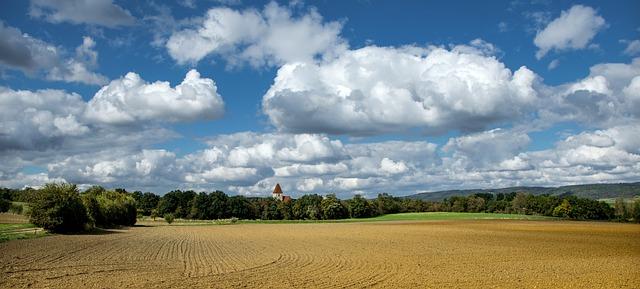
Agricultural Land Conversion in Karnataka: Benefits & Process

Quick answer: Converting agricultural land to non-agricultural use in Karnataka requires a conversion order from the Deputy Commissioner under Section 95 of the Karnataka Land Revenue Act of the Land Revenue Act. You submit the RTC, mutation extract, survey sketch and encumbrance certificate, pay the conversion fee based on land value and district, and receive the DC conversion order. Building on unconverted land is not legal.
Published: 31 July 2024 · Updated on: 30 August 2026 · By L K Monu Borkala, CEO & Founder, OneCity Property — 15 years of property consultancy experience and over 20 years in marketing and management at OneCity Technologies Pvt. Ltd.

Agricultural landsitting unused on the outskirts of Bangalore or in Karnataka's rapidly urbanising corridors represents both an opportunity and a legal constraint. The opportunity is obvious, land near growing cities appreciates consistently. The constraint is equally clear, without DC (Deputy Commissioner) conversion under Section 95 of the Karnataka Land Revenue Act 1964, that agricultural land cannot be built upon, cannot attract a bank loan, cannot receive a building plan, and cannot be sold as residential property without complications for the buyer. The conversion process removes all five of these constraints simultaneously.
This guide covers the ten specific benefits of converting agricultural land to non-agricultural use in Karnataka, the ROI calculation that makes the case financially, the conversion process and documents required, the categories of land where conversion is difficult or restricted, and the consequences of attempting to use unconverted agricultural land for non-agricultural purposes.
What Is DC Conversion Under Karnataka Law?
DC conversion is the legal process of obtaining a Deputy Commissioner's order under Section 95 of the Karnataka Land Revenue Act 1964, formally changing a piece of land's official classification from agricultural (wet or dry) to non-agricultural (residential, commercial, or industrial). The term "DC conversion" reflects the fact that the Deputy Commissioner of the district is the authority that grants the conversion order for most land areas and purposes.
Agricultural land in Karnataka's revenue records is classified by its primary use, paddy, garden, dry crop, plantation, and cannot be legally used for any purpose other than farming unless converted. The conversion order is the government's formal permission to change that use. Until the order is issued and reflected in the Bhoomi portal RTC (Record of Rights, Tenancy and Crops), the land remains legally agricultural regardless of its physical location in an urban area or the fact that construction may have begun on it.
The key legal provision, Section 95 of the Karnataka Land Revenue Act 1964, states that any person wanting to use agricultural land for a non-agricultural purpose must obtain prior permission from the prescribed authority. Using agricultural land for non-agricultural purposes without this permission is an offence under the Act and subjects the owner to penalties, demolition notices for any unauthorised construction, and cancellation of any permissions granted by other authorities.
Benefit 1, Legal Permission to Construct Any Building
The most fundamental benefit of DC conversion is the most obvious: legal permission to build. A house, apartment complex, commercial shop, office building, or warehouse cannot be legally constructed on agricultural land without a conversion order. The BBMP, BDA, BMRDA, DTCP, and every other building authority in Karnataka will not issue a building plan sanction for an unconverted agricultural site regardless of the application's quality or the proposed building's design.
Without a building plan sanction, any construction that occurs is unauthorised. BBMP and BMRDA have the authority, and the stated intention in periodic enforcement drives, to demolish unauthorised constructions on agricultural land. The demolition does not require court proceedings; it can be ordered administratively by the relevant local body's executive engineer. The construction investment, whatever it cost, is lost when demolition occurs.
The DC conversion order is the starting point that makes every subsequent construction approval possible. Building plan, Occupancy Certificate, RERA registration for a developer layout, apartment Khata, and bank loan for the buyer, all of these downstream processes require the conversion order to already be in place for the land they cover.
Benefit 2, Bank Loan Eligibility for Buyers
Unconverted agricultural land is effectively unlendable by any scheduled bank in India. SBI, HDFC, ICICI, Axis Bank, and every major private bank will decline a home loan or plot loan application where the underlying land is still classified as agricultural in revenue records. The bank's legal team, which reviews the property title before approving any loan, will flag the agricultural classification as a fundamental obstacle to lending, the land use is not consistent with the proposed residential use, and the building plan that would make the loan collateral valuable cannot exist without conversion.
When the DC conversion is completed, the RTC on the Bhoomi portal shows the land as converted (non-agricultural). This is the entry that bank legal teams verify. A converted RTC opens the door to standard home loan processing at normal LTV ratios (up to seventy to eighty percent for residential plots in approved layouts) and at standard interest rates without any additional risk premium for land classification issues.
For farmers and agricultural landowners near Bangalore who want to monetise their land by selling to developers or buyers, DC conversion is the single action that makes the land eligible for the home loan financing that ninety percent of buyers use. Unconverted land sells to cash buyers only, a dramatically smaller market at significantly lower prices. Converted land sells to all buyers, the full market at full prices.
Benefit 3, E-Khata and BBMP Registration Eligibility
BBMP E-Khata, the digital municipal ownership record that became mandatory for property registration in Bangalore from September 2024, requires DC conversion as a precondition for properties that were originally agricultural land. BBMP will not issue E-Khata for a plot whose Bhoomi RTC shows agricultural classification, because the municipal body does not assert jurisdiction over agricultural land for urban property tax and approval purposes.
Without E-Khata, a property in BBMP jurisdiction cannot be registered at the Sub-Registrar Office (since E-Khata became mandatory for registration), cannot support BBMP building plan approval, and cannot be used as loan security with most lenders. DC conversion → Bhoomi RTC update → E-Khata application → building plan → OC, this is the sequential chain that determines whether a plot can go through the full development process cleanly. Breaking this chain at the first step by skipping DC conversion blocks every subsequent step.
Benefit 4, Significant Increase in Land Market Value
The value uplift from DC conversion is one of the most compelling financial arguments for completing it promptly. Agricultural land near Bangalore without conversion transacts at the agricultural land market rate, typically twenty to forty percent below the equivalent price for converted residential land in the same location. This discount reflects the legal risk and the limited buyer pool for unconverted land.
The financial impact near Bangalore: agricultural land within fifty kilometres of central Bangalore (along the STRR belt, Sarjapur outer, Devanahalli) costs approximately fifty lakh to one point five crore per acre in the agricultural market. DC conversion costs approximately thirty to eighty lakh per acre depending on proximity to the city, guidance value, and land area. The converted land then sells in the residential plot market at a price that reflects its full development potential.
The effective financial return on conversion near Bangalore's growth corridors: a one-acre agricultural plot at sixty lakh per acre, with conversion costs of forty lakh, becomes a converted residential plot worth approximately ninety to one hundred and twenty lakh per acre in the residential market, a thirty to fifty percent appreciation on the total investment from conversion alone, before any physical development takes place.
For landowners in Devanahalli, Hoskote, Anekal, and Sarjapur outer belt who purchased agricultural land ten to fifteen years ago at significantly lower prices, the conversion cost represents a small fraction of the total appreciation already embedded in the land. Completing conversion now captures that value in the more liquid residential market rather than leaving it locked in the more illiquid agricultural market.
Benefit 5, RERA Registration for Developer Layouts
Any developer who wants to create a residential plotted layout in Karnataka needs DC conversion as one of the foundational documents for RERA registration. RERA Karnataka requires developers to disclose all approvals on the project's RERA page, and the DC conversion order for the land is a core approval in that list. Without DC conversion, RERA registration for a plotted layout cannot be completed, which means the developer cannot legally market or sell plots from the layout.
For individual landowners who want to partner with a developer in a joint development agreement (JDA), the DC conversion status of their land directly determines which developers will engage. A developer approached with an unconverted agricultural parcel for a JDA must either complete the conversion themselves (adding cost and timeline to their project) or pass on the opportunity. A landowner who has already completed DC conversion presents a more development-ready proposition that attracts better JDA terms.
Benefit 6, Utility Connections: Water, Electricity, and Sewage
BWSSB (Bangalore Water Supply and Sewerage Board) and BESCOM (Bangalore Electricity Supply Company) require property documentation as part of connection applications. For a property on agricultural land, the absence of a building plan (which requires DC conversion) and E-Khata creates obstacles to obtaining legitimate BWSSB and BESCOM connections.
Properties that have been illegally constructed on unconverted agricultural land and have obtained utility connections through informal channels carry these connections as illegal connections, subject to disconnection during enforcement drives and not transferable to new owners through normal processes. DC conversion and the subsequent legitimate building plan and OC create the documentation trail that produces legal utility connections that transfer cleanly on sale.
Benefit 7, Clear and Transferable Title for Future Sale
When a landowner sells unconverted agricultural land to a buyer who builds on it, the title complications begin immediately. The buyer's building is on agricultural land. The buyer cannot get a building plan, cannot get OC, cannot get a home loan. If the buyer then tries to sell to a third party, that buyer faces the same obstacles plus the additional complication of a structure existing on land that legally should not have any structure. Each successive sale without conversion makes the title more complicated, not less.
DC conversion breaks this cycle by providing a clean, government-authorised use classification that makes every subsequent transaction clear. A converted plot has a clear chain: DC conversion → E-Khata → building plan → OC → sale deed → buyer's home loan. Each document in this chain is standard and verifiable. The title is transferable without the friction that unconverted agricultural land creates for buyers, their lawyers, and their banks.
Benefit 8, Protection Against Demolition and Regulatory Action
Karnataka's local bodies, BBMP, BMRDA, CMC, conduct periodic enforcement drives targeting unauthorised constructions on agricultural land. Properties that were built without building plans on unconverted agricultural land are the primary target of these drives. Demolition notices issued during these drives do not require court proceedings, the local body can demolish using its own enforcement mechanism after giving the statutory notice period.
DC conversion and the subsequent legitimate building approvals provide complete protection against this category of enforcement action. A building constructed after DC conversion, with a valid BBMP building plan and OC, cannot be demolished by BBMP for land classification reasons. The protection is not probabilistic, it is absolute. DC conversion converts the property from one that carries demolition risk into one that carries none.
Benefit 9, Access to Government Schemes and Subsidies
Several Karnataka government housing schemes, PMAY (Pradhan Mantri Awas Yojana) benefits, and low-income housing initiatives require that the beneficiary property be on legally converted residential land. Agricultural land is ineligible for most of these schemes because the subsidy or loan is tied to the legal residential classification of the land. Conversion opens access to these schemes for landowners who qualify on income and other criteria.
Additionally, properties on DC-converted land with legitimate building plans and OCs are eligible for Karnataka government's various incentive schemes for residential construction, first-time homebuyer programmes, and women-owner concessions that require clean documentation as a qualification criterion.
Benefit 10, Higher Rental Income Potential After Development
Developed properties on DC-converted land command significantly higher rental income than comparable properties without proper documentation, because tenants, particularly corporate tenants, IT professionals, and NRIs, actively screen for legal properties when signing rental agreements. A property with valid OC, legitimate electricity connection, and BBMP-registered address has access to the full rental market. A property on unconverted agricultural land with an illegal connection and no OC is confined to tenants who do not screen for legal status, a smaller and more risk-prone tenant pool.
For landowners planning to develop agricultural land near Bangalore's IT corridors (Electronic City, Whitefield, Sarjapur, Devanahalli) as rental properties, DC conversion is the prerequisite that makes the developed property rental-eligible across the full tenant market.
The DC Conversion Process in Karnataka, Step by Step
Step 1, Verify the land's current classification on Bhoomi:Before applying, confirm the current classification of your specific survey number and hissa on landrecords.karnataka.gov.in. The RTC must show agricultural (dry, wet, garden, or plantation) classification for the conversion to be applicable. If it already shows converted, verify that the conversion was registered for your specific hissa.
Step 2, Prepare the application and documents:The application is submitted to the Deputy Commissioner's office (or online through the Bhoomi/Kaveri portal). Required documents include the RTC/Pahani for the specific survey hissa, title deed showing current ownership, survey sketch (Podi sketch) from the licensed surveyor, land tax paid receipt, a statement of the proposed use of the land after conversion, and NOC letters from relevant departments (Agriculture Department, Town Planning, Forest Department if near forest land, Water Resources if near a water body).
Step 3, Submit and pay the application fee:Submit the complete application at the DC office or upload through the online portal. Pay the application processing fee, typically in the range of two thousand to five thousand rupees depending on the area.
Step 4, Site inspection and departmental NOCs:The DC office forwards the application to the relevant departments for NOCs. The Agriculture Department verifies that the land does not qualify for any agricultural protection scheme. Town Planning verifies that the proposed use is consistent with the Master Plan zoning for the area. A field inspection by a revenue official confirms the land's physical condition and boundaries match the application.
Step 5, DC issues the conversion order:If the application is approved, the DC issues the formal conversion order specifying the survey number, hissa, extent of land converted, and the permitted non-agricultural use (residential, commercial, or industrial). The conversion order also specifies any conditions, such as set-back requirements, permissible FAR, or payment of betterment charges.
Step 6, Update Bhoomi RTC:After receiving the conversion order, apply to the village accountant or the Bhoomi portal for a mutation of the RTC to reflect the non-agricultural classification. The converted RTC is the document that all subsequent authorities (BBMP, banks, BMRDA) use to verify conversion status. This step must be completed after the conversion order, the order alone is not sufficient; the RTC must also be updated.
Timeline:Thirty to ninety days for standard applications with complete documentation and no departmental objections. Applications near forest boundaries, water bodies, or classified wetlands may take significantly longer due to additional departmental review requirements.
Which Land Types Have Restricted or Difficult Conversion in Karnataka?
Wet land (paddy/paddy assessed land):Karnataka imposes significantly more scrutiny and higher fees on conversion of wet land, land that has historically been used for paddy cultivation and is assessed as wet in revenue records. The Agriculture Department is reluctant to approve paddy land conversions because of Karnataka's food security concerns. Applications for wet land conversion near Bangalore take longer, face higher rejection rates, and carry higher conversion fees when approved. If you are considering purchasing agricultural land specifically for conversion, verify whether it is dry or wet assessed, dry land has substantially better conversion prospects.
Land near forest boundaries:The Forest Department's NOC is required for any land within a specified distance from a forest boundary. In Karnataka's districts with significant forest cover (Mysore, Kodagu, Chikkamagaluru, Uttara Kannada), conversion of land near forests is subject to forest clearance requirements that significantly increase both timeline and cost.
Land near water bodies (lakes, tanks, rivers):Properties within the buffer zone of a notified water body, typically fifty to seventy-five metres from the boundary, face conversion restrictions under the Karnataka Lake Development Authority notifications and National Green Tribunal orders. BBMP has notified specific buffer zones around Bangalore's lakes where construction is prohibited even after conversion. Verify that the land is outside these buffer zones before initiating the conversion process.
Land in the catchment area of reservoirs:Certain taluks in Karnataka fall within the catchment protection zones of major reservoirs (KRS, Kabini, Bhadra). Agricultural land in these zones faces conversion restrictions under the respective project authority notifications.
For the complete documentation framework after DC conversion: Legal Checklist Before Buying Plots in Bangalore 2026
What Happens If You Use Agricultural Land Without Conversion?
The consequences of using agricultural land for non-agricultural purposes without DC conversion are specific and serious. Under Section 95 of the Karnataka Land Revenue Act, violation is a compoundable offence, the officer can order the owner to either restore the land to agricultural use, regularise through a post-facto conversion (where permitted), or pay a fine and demolish the unauthorised construction.
The practical consequences in the Bangalore context: BBMP issues notices under Karnataka Municipal Corporations Act for unauthorised constructions. Buildings on unconverted agricultural land within BBMP limits are routinely included in demolition drives when BBMP conducts ward-level enforcement. Electricity connections obtained without building plan are classified as illegal and subject to disconnection. Home loans against unconverted agricultural land, if somehow processed, constitute fraud on the lender's part and can lead to the loan being called in. Future sale without conversion requires the buyer to either accept the title risk or negotiate a substantial price discount that reflects the legal liability they are inheriting.
Frequently Asked Questions: Agricultural Land Conversion in Karnataka
What is DC conversion and why is it needed in Karnataka?
DC conversion is the formal order from the Deputy Commissioner under Section 95 of the Karnataka Land Revenue Act 1964, changing a piece of land's classification from agricultural to non-agricultural (residential, commercial, or industrial). It is needed because agricultural land cannot legally be used for any non-agricultural purpose, including building a house, without this order. Without DC conversion, no building plan, bank loan, E-Khata, or OC is possible for the property.
How much does DC conversion cost for land near Bangalore?
Conversion costs near Bangalore (within fifty kilometres) range from approximately thirty to eighty lakh per acre depending on proximity to the city, the land's guidance value, its classification (dry or wet), and the proposed non-agricultural use. Residential use conversion is typically less expensive than commercial or industrial conversion. The converted land's market value in the residential plot market exceeds the agricultural land price plus the conversion cost by thirty to fifty percent in most Bangalore-adjacent corridors, making the conversion investment financially positive.
How long does DC conversion take in Karnataka?
Standard applications with complete documentation and no departmental objections take thirty to ninety days. The Bhoomi portal's online application facility has reduced processing time compared to the earlier fully physical process. Applications involving wet land, forest-adjacent land, water body buffer zones, or areas with pending Master Plan revisions take significantly longer, sometimes six to twelve months or more in complex cases.
Can a non-agriculturist apply for DC conversion in Karnataka in 2026?
Yes. The 2020 amendment to the Karnataka Land Reforms Act repealed Sections 79A and 79B, which previously restricted non-agriculturists from owning agricultural land. Non-agriculturists can now own agricultural land and apply for DC conversion. The conversion application is filed by whoever is the registered owner of the land at the time of application, agriculturist or non-agriculturist.
Is wet land (paddy land) harder to convert than dry land in Karnataka?
Yes, significantly. Wet land (paddy-assessed land) faces higher scrutiny from the Agriculture Department because of Karnataka's paddy cultivation protection policies. Applications for wet land conversion take longer, have higher rejection rates, and attract higher conversion fees when approved. If you are purchasing agricultural land with the intent to convert, always verify whether the Bhoomi RTC classifies it as wet or dry, dry land has substantially better conversion prospects, lower costs, and shorter timelines.
Conversion approval for agricultural land does not override APMC Act restrictions on sale, the APMC Act impact on rural property in Karnatakacatches many buyers off guard, particularly those purchasing converted panchayat land near Bangalore periphery without checking market yard zone restrictions.
Disclaimer:All project names, logos, images, floor plans, and trademarks on this page are the exclusive intellectual property of their respective developers and owners, reproduced here for informational purposes only. Prices, specifications, and possession timelines are subject to change, verify all details directly with the developer before any purchase decision. OneCity Property is an independent information portal and is not liable for any loss arising from reliance on this information. Read our full Disclaimer →
Featured Projects in This Area
Need expert property advice?
OneCity Property offers independent advisory across Bangalore, Mangalore and Mysore. Zero commission for buyers on projects under ₹1 Cr.
💬 WhatsApp Us📞 Call 076768 70876




News insight
 12/09/2026
Builder-Buyer Agreement Karnataka: Key Clauses, RERA Rules, and What to Negotiate Before Signing
Guide to builder-buyer agreements in Karnataka. Covers RERA-mandated clauses, possession delay penal...
12/09/2026Resale Flat Checklist Bangalore: 15 Documents and Verification Steps Before You Buy
Complete checklist for buying a resale flat in Bangalore. Covers title deed verification, EC, Khata...
11/09/2026Sale Deed Format Karnataka: Must-Have Clauses, Registration Process, and Common Mistakes
Complete guide to sale deed format in Karnataka. Covers the essential clauses every sale deed must c...